The Monthly Schedule Maker That Makes Every Month Work
PlanWiz is a customizable monthly schedule maker that helps you plan every month with structure and zero setup stress. Choose from 1,000+ ready-made monthly schedule planner templates for work deadlines, personal goals, habit building, and project tracking so you never start from a blank page again.
What Is the Best Monthly Schedule Maker in 2026?

The best monthly schedule maker in 2026 is one that removes blank-page paralysis, connects your monthly goals to daily tasks, and makes it easy to recover when a week goes sideways.
Here is what a genuinely useful monthly schedule maker should do:
- Ready-made structure from day one, no setup needed.
- Monthly goals connected to daily tasks automatically.
- Works for work, study, and personal planning in one app.
- Export a printable monthly schedule for accountability.
- Reschedule in seconds when plans change mid-month.
Who Is This Monthly Schedule Maker Built For?
Professionals managing project-heavy work months
who need a monthly work schedule that maps deadlines across all four weeks, not just this week. When three projects overlap in week three, you need to have seen that collision in week one, not discovered it on the 18th.
People who set monthly goals but lose them by week two.
The goal planner app inside it keeps those goals anchored at the top of your monthly view every single day, not buried in a notes app you stop opening.
Students managing semester-paced deadlines
need a layout that shows the full month of assignments, exams, and study sessions at once. Pair it with the study schedule maker for course-level planning that connects directly to the monthly view.
People with ADHD
need a monthly structure that does not punish them for a hard week. The ADHD planner app templates inside this are built for brains that need color-coded monthly weeks, simplified daily connections, and fast re-entry after a week that went sideways without guilt and without rebuilding from scratch.
Freelancers and creators
who need a customizable monthly schedule that holds client deadlines, content calendars, and personal commitments in one place, because when your work and personal life run on the same calendar, losing track of one means losing track of both.
Teachers planning curriculum across full months
need to see the whole month before they can plan any single lesson. The lesson planner app connects subject-level planning directly into the monthly structure, so nothing gets squeezed into the last week.
Why Does Every Month Start With a Plan and End With a Scramble?
The problem is not that people are bad at planning. The problem is that most monthly planning tools are built for the 1st of the month, not the 14th.
A Blank 31-Day Grid Is the Wrong Starting Point
When you open a monthly schedule maker and see 31 empty boxes, your brain has to make hundreds of micro-decisions before placing a single task: which week does this project belong to, how long will this actually take, which goals are realistic this month? That decision overhead before any planning has happened is enough to make most people either fill the grid optimistically and abandon it, or avoid it altogether.
Monthly Goals Have No Daily Address
You write "launch the new proposal" under your monthly goals. But there is no mechanism connecting that goal to Tuesday morning's task list. The goal lives in the monthly view. Tuesday lives in your inbox. They never meet. By week three, you look back at the monthly goals you wrote and realize you have been busy all month, just not on what mattered.
The First Disruption Breaks the Whole Month
Week one goes well. Week two, a project runs over, an unexpected meeting eats up a full afternoon, and suddenly the plan is two days behind. Most monthly planners have no recovery mechanism. The grid sits there, visually broken, and the natural response is to stop looking at it. A plan you stop looking at cannot help you finish the month.
Monthly Schedule Management Requires Thinking Four Weeks Ahead
and most people only plan one week at a time. The whole point of a monthly view is to see collisions before they happen: the deadline in week three that needs groundwork in week one, the personal commitment in week four that means week three needs to be cleared early. Browse the schedule planner templates to find a monthly layout that solves this from day one.
Why Does Your Brain Struggle With Monthly Planning?
Monthly planning fails for specific, documented reasons, and understanding them is the first step to building a system that holds up past week two.
The planning fallacy hits hardest at the monthly level. Research shows that people consistently underestimate how long tasks take and overestimate what fits into a given period. At the weekly level, reality corrects you quickly. At the monthly level, the consequences arrive slowly; you do not feel the overload until week three, by which point the month is already broken.
Temporal distance makes monthly goals feel unreal. Tasks that are three or four weeks away feel abstract and easy to defer. You build a monthly schedule for work that looks perfectly manageable from the 1st. The deadlines in weeks three and four feel far away until they are not.
🧠 What behavioral research actually shows works: Monthly plans that break into weekly milestones, connect each week's milestones to daily tasks, and build in explicit mid-month review points produce dramatically better follow-through than open goal lists. The structure is not restrictive; it removes the daily friction of wondering what to work on next. This is built on exactly this model. The monthly view breaks into four weekly sections automatically. Each weekly section connects to daily tasks. A mid-month check-in is built into every template. The academic planner templates take this structure even further for students managing semester-long deadlines alongside monthly goals.
How PlanWiz Works as a Monthly Schedule Maker That Holds Up All 30 Days
Layer 1: The month starts structured, not blank. Every PlanWiz template arrives pre-built with a monthly goal section, four weekly breakdown columns, and daily task connectors already in place. You fill in the month you do not design the system.
Layer 2: Goals stay connected to daily work all month long. The most common monthly planning failure is not abandoning the plan. It is completing the plan in your head on the 1st and then living the rest of the month reactively. It connects every monthly goal to a weekly milestone and every weekly milestone to a daily task. When you open Tuesday morning, you can see exactly which monthly goal today's task is serving. The work schedule maker inside PlanWiz syncs with the monthly view, so the week is always a chapter of the month, not a separate story.
Layer 3: Mid-month recovery is built in, not bolted on. Week two goes sideways. This is not exceptional; it is normal. It treats mid-month disruption as an expected event, not a failure.
What Makes PlanWiz the Monthly Schedule Maker You Will Actually Use Past Week One?
PlanWiz wasn't built by shrinking a desktop app onto a smaller screen and calling it a monthly schedule maker. It was designed from the ground up for people who need their planning to produce real results, not just create the feeling of being organized while the actual work piles up.
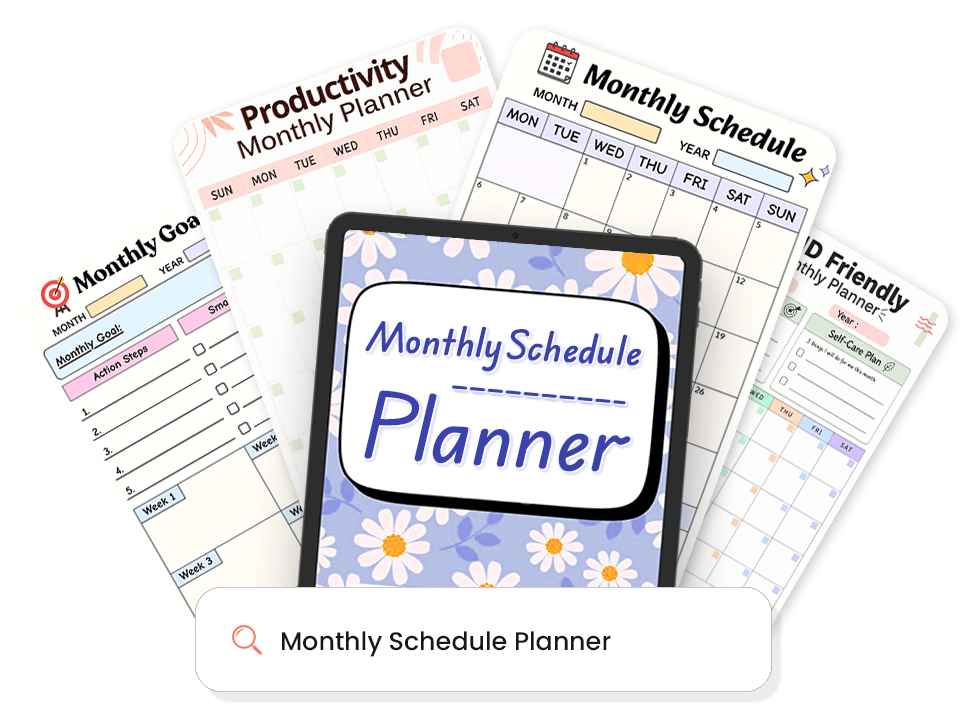
1,000+ Monthly Templates, Ready Immediately
No blank page. No setup. Browse 1,000+ monthly schedule planner templates and pick the layout that matches what this month requires, pre-built with weekly sections, goal space, and daily task connectors already in place.
- The monthly goal section at the top of every week's view.
- Four weekly columns linked to daily tasks.
- The mid-month checkpoint is built into every template.
- Full touch optimization for iPad.
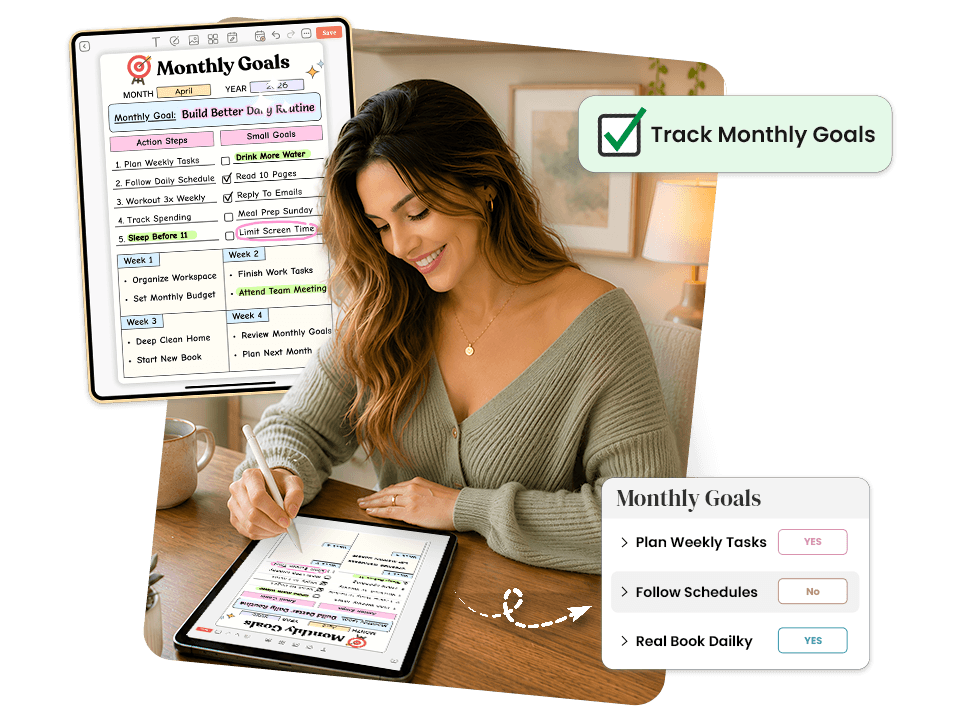
Goal Tracking That Stays Visible All Month
PlanWiz keeps monthly goals in your line of sight every single day, not buried in a separate notes app or forgotten in last week's journal.
- The monthly goal section is anchored at the top of the planning view.
- Weekly milestone checkpoints showing progress toward each goal.
- Incomplete goals carry forward to the next month automatically.
- Pairs with the daily planner app for daily goal connection.
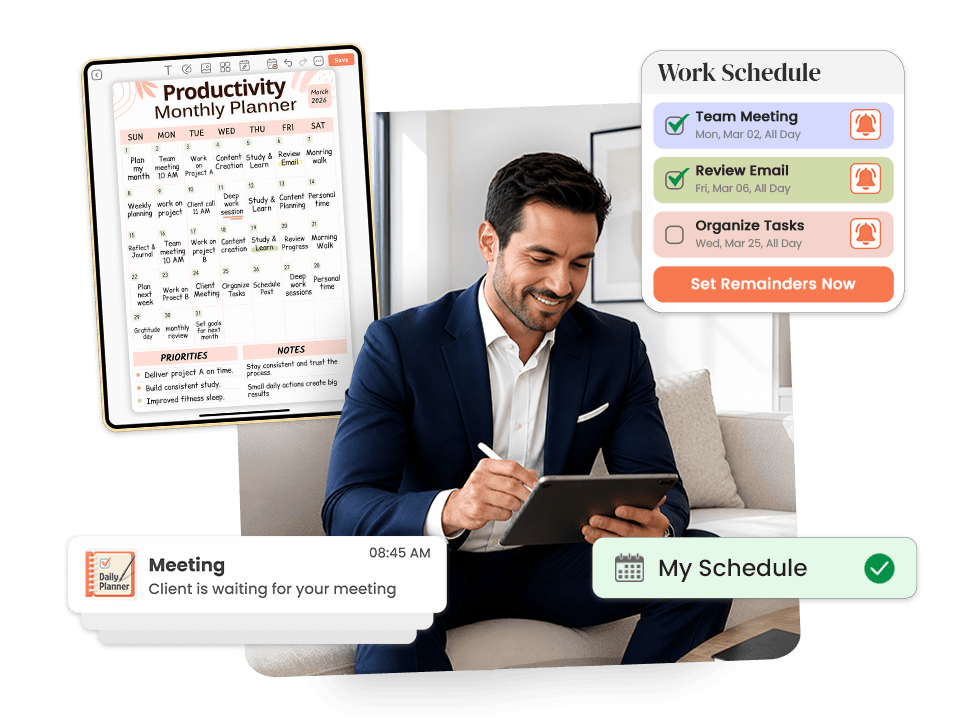
Monthly Schedule for Work With Four-Week Visibility
A monthly schedule for work has to show you what is coming before it arrives. PlanWiz maps every deadline, milestone, and dependency across the full month so you can see week three's collision in week one.
- Four-week project timeline with milestone markers.
- Full-month deadline visibility, not just the current week.
- Buffer blocks are built in for unplanned work.
- Connects to the task planner app for task-level management.

Daily Task Connection That Keeps the Plan Alive
When the monthly plan and the daily task list live in separate tools, the monthly plan always loses. PlanWiz connects them so the daily view is always an expression of the monthly plan.
- Every monthly block connects to a daily task list inside the app.
- Completed tasks update the monthly progress automatically.
- Works with the daily schedule templates for an hour-by-hour structure.
- Incomplete tasks surface in the next day's view automatically.

Fully Customizable Monthly Schedule
Not every month is the same. A customizable monthly schedule adapts to what this month actually requires, not what last month needed.
- Switch between goal-heavy, project-heavy, or habit-focused layouts.
- Adjust sections, colors, and time structures without rebuilding.
- Add budget tracking, mood check-ins, or weekly reviews to any month.
- Pairs with productivity planner templates and habit tracker planner templates .

Download, Export, and Share
PlanWiz's free tier includes full access to core monthly templates, weekly breakdown structure, daily task connection, and PDF export from the first session.
- Hundreds of monthly templates free, no card required.
- Full customization on free tier.
- Export as PDF or image at any time.
- Upgrade when your planning needs grow, not before.
Monthly Schedule Maker Templates Built for Real Monthly Planning
Pick the Template That Matches How You Feel Today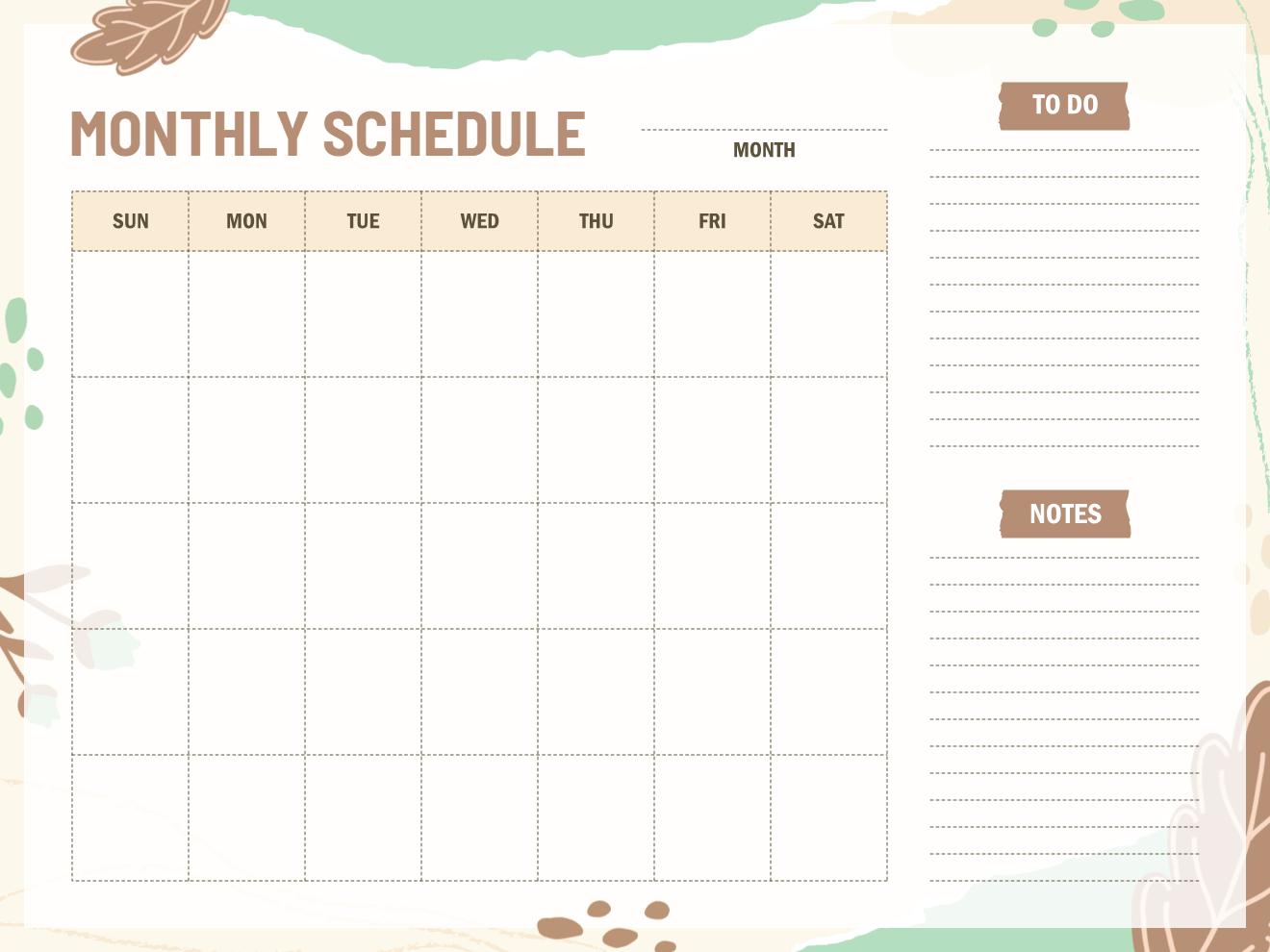
Botanical Monthly Schedule
A landscape monthly calendar that pairs planning with a built-in to-do list and notes section. The warm, earthy tones and botanical accents make it feel calm to look at every single day.
Best For: Anyone who wants a monthly overview with task and note tracking on the same page.
Key Features:
- Full 7-day monthly calendar grid
- To-do list section on the right
- Notes section below to-do
- Earthy green and brown botanical design
Why It Works: Having the to-do list and notes right beside the calendar means you never need a second page to capture what needs to get done that month.
Use This Template →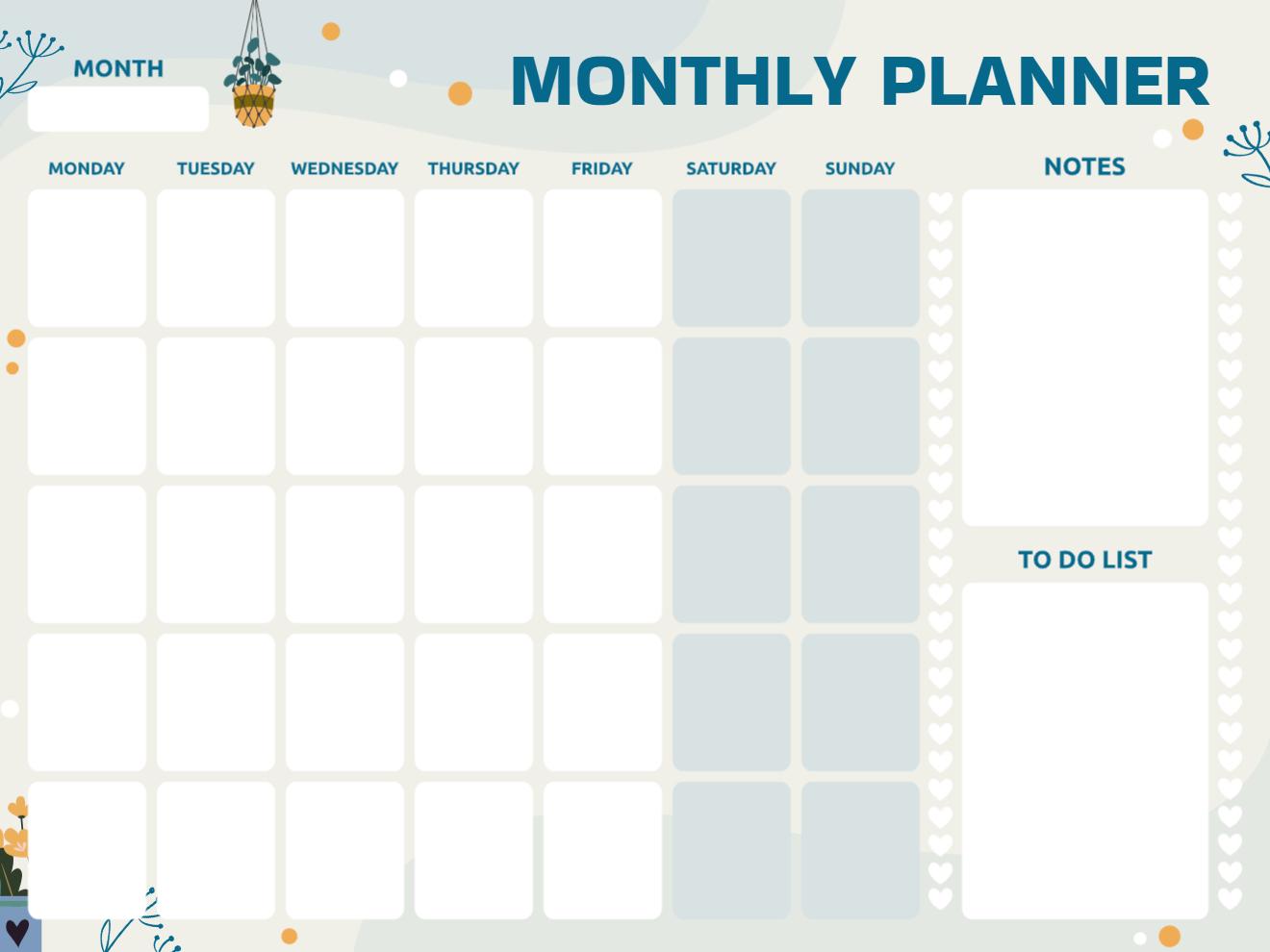
Boho Plant Monthly Planner
Wide open day boxes give plenty of room to write; nothing feels cramped. The weekend columns are lightly shaded, so weekdays and weekends are easy to tell apart at a glance.
Best For: People who write detailed daily notes and need generous space per day.
Key Features:
- Large open-day boxes for the writing room
- Weekend columns in a soft grey shade
- Notes column on the right side
- To-do list below notes
- Boho plant illustration design
Why It Works: The shaded weekend columns are a small but smart touch; your brain instantly separates work week from personal time without reading any labels.
Use This Template →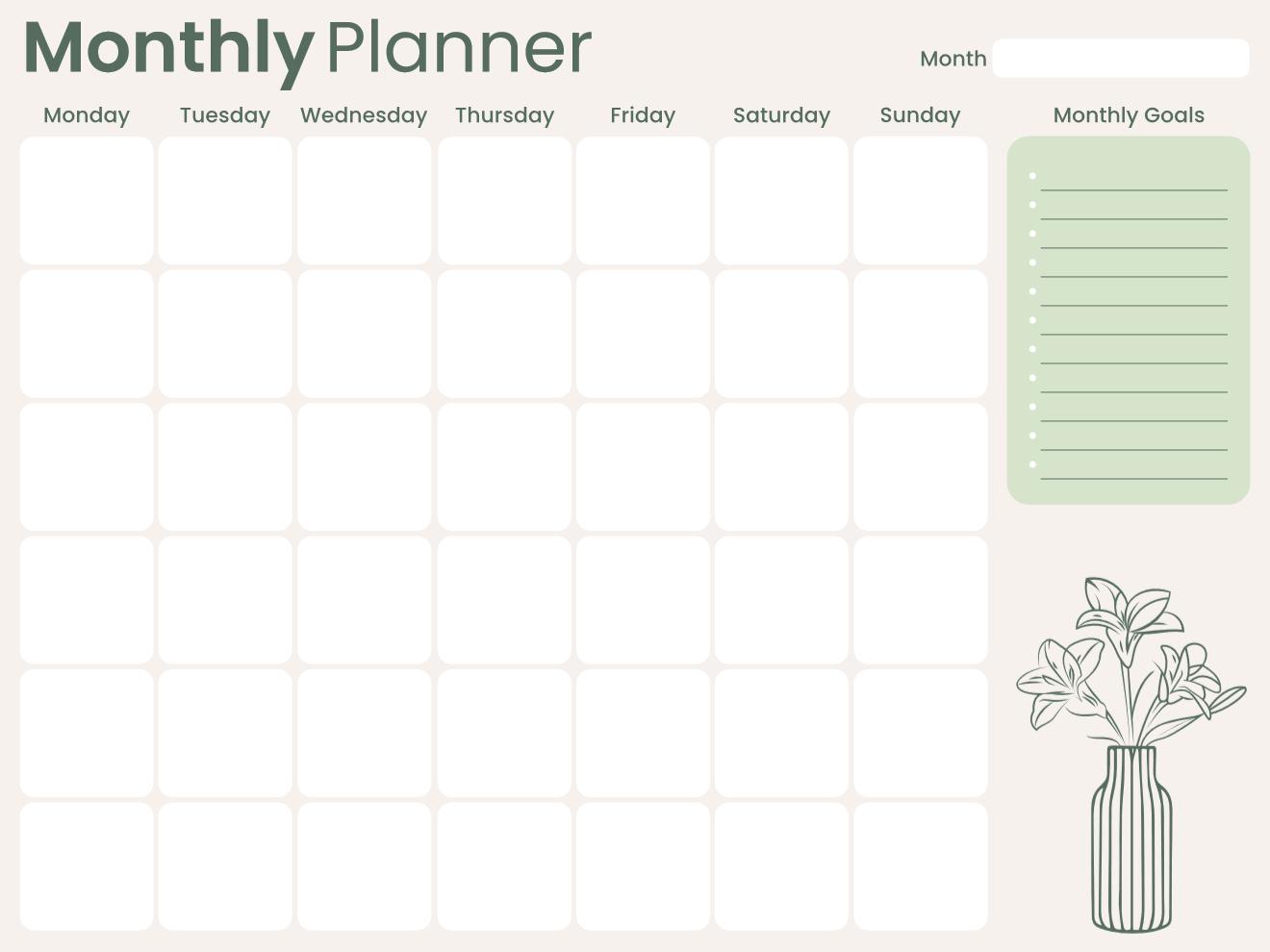
Green Goals Monthly Planner
Clean and calm with a monthly goals list sitting right next to the calendar. It keeps your big-picture intentions visible every time you check what day it is.
Best For: Goal-oriented people who want monthly targets always in sight.
Key Features:
- Full 7-day monthly grid with rounded day boxes
- Monthly goals bullet list on the right
- Minimalist sage green design
- Botanical flower vase illustration
Why It Works: Most monthly planners skip goals entirely. Having them on the same page as the calendar means you're reminded of them every single time you plan your day.
Use This Template →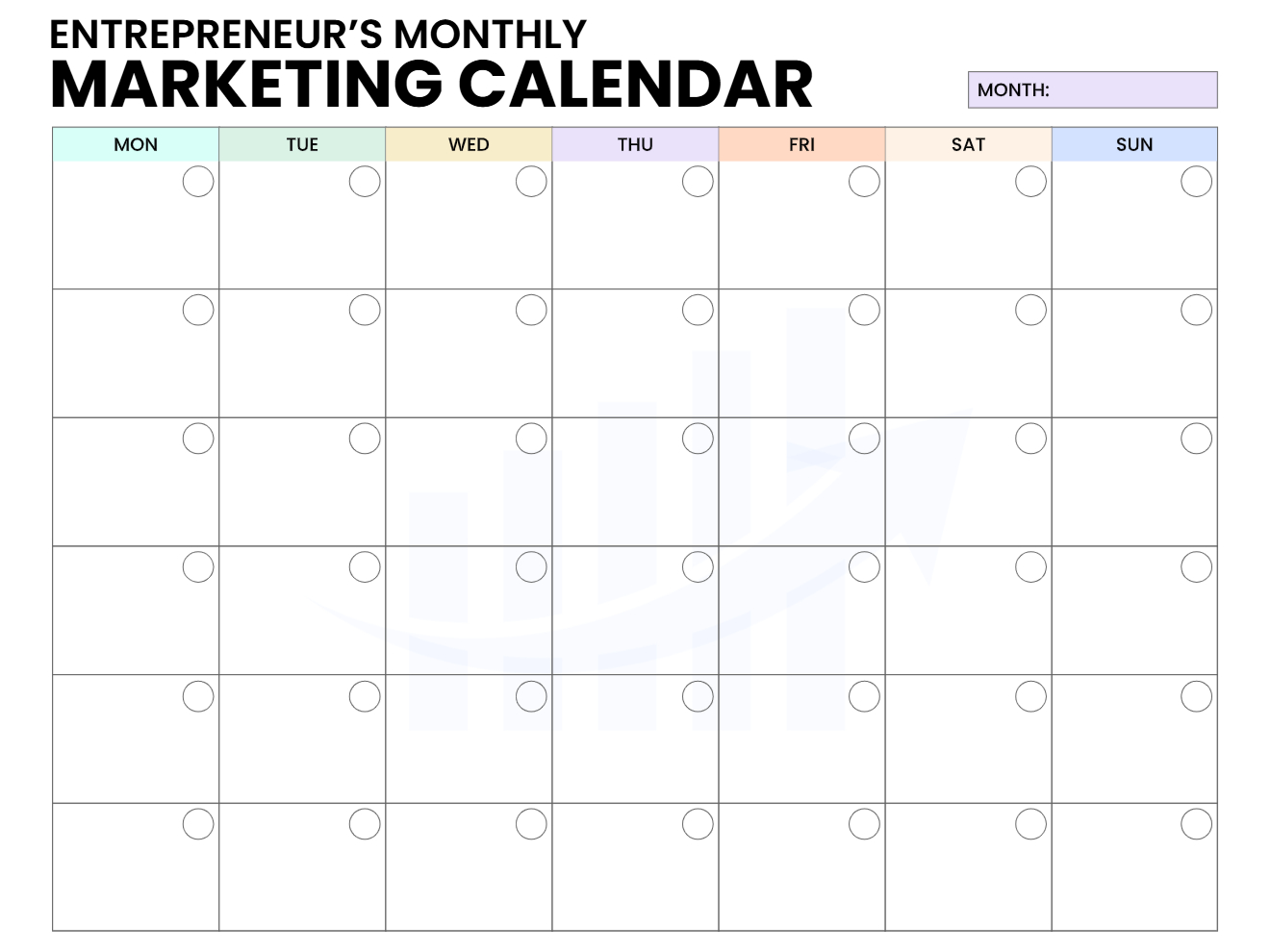
Entrepreneur's Monthly Marketing Calendar
Built for business owners who need to plan marketing content, campaigns, and launches day by day. Clean and no-nonsense, every day has a circle for status tracking.
Best For: Entrepreneurs, content creators, and marketers planning monthly campaigns.
Key Features:
- Full 7-day monthly calendar grid
- Daily status circle per date box
- Color-coded day header columns
- Large open boxes for campaign notes
- Undated, reusable every month
Why It Works: The daily status circle lets you mark completion or progress without cluttering the box. It keeps the calendar clean even when the month gets busy.
Use This Template →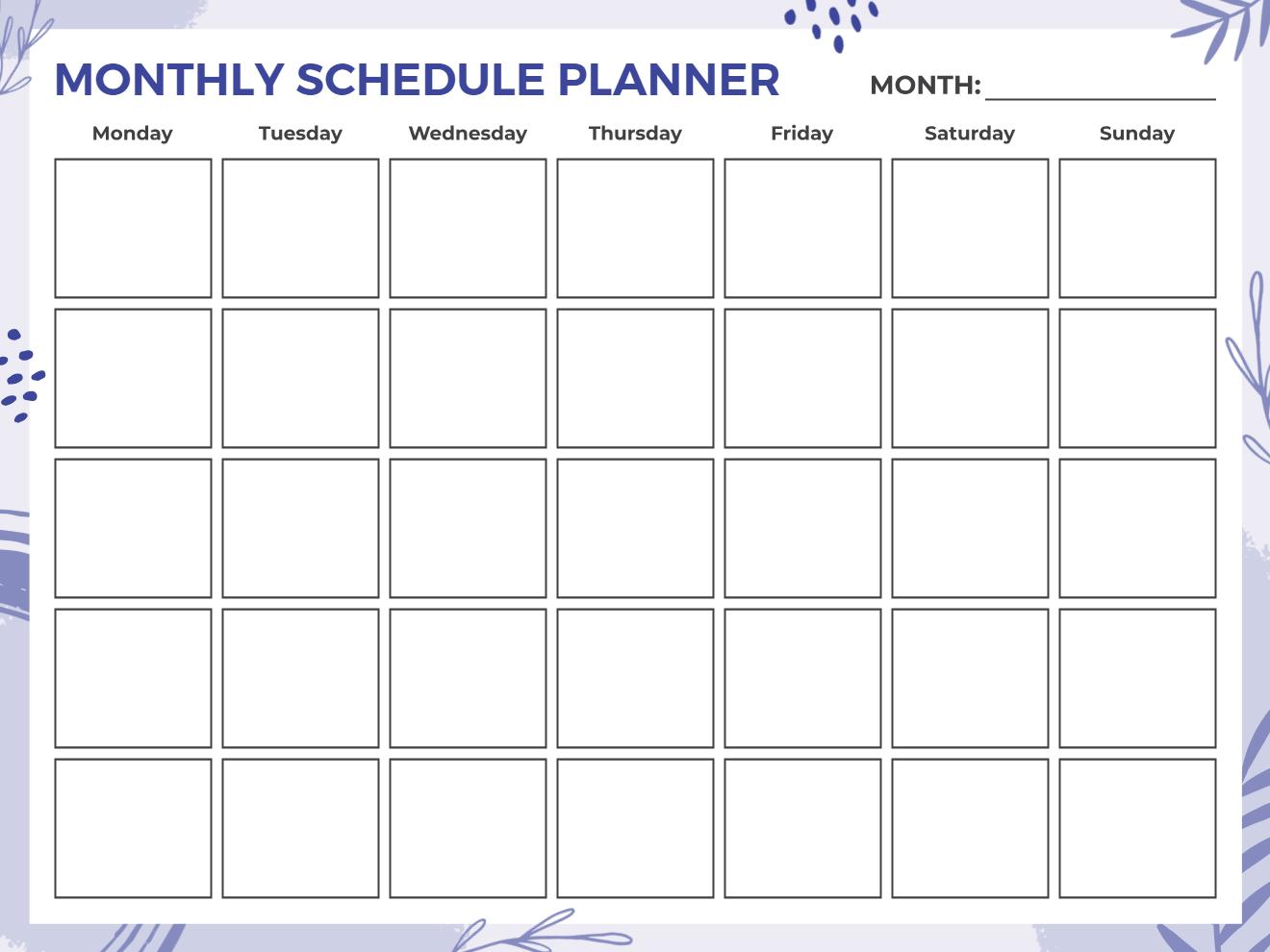
Purple Botanical Monthly Schedule
Simple and spacious, five rows of large open boxes across all 7 days. The purple botanical border adds personality without getting in the way of the planning.
Best For: Anyone who wants a clean, no-extras monthly calendar layout.
Key Features:
- Full 7-day monthly grid
- Large open date boxes, plenty of writing space
- The month field at the top
- Purple and blue botanical border design
- Undated and reusable
Why It Works: Sometimes less is more. No extra sections means nothing distracts from what you actually need to plan that month.
Use This Template →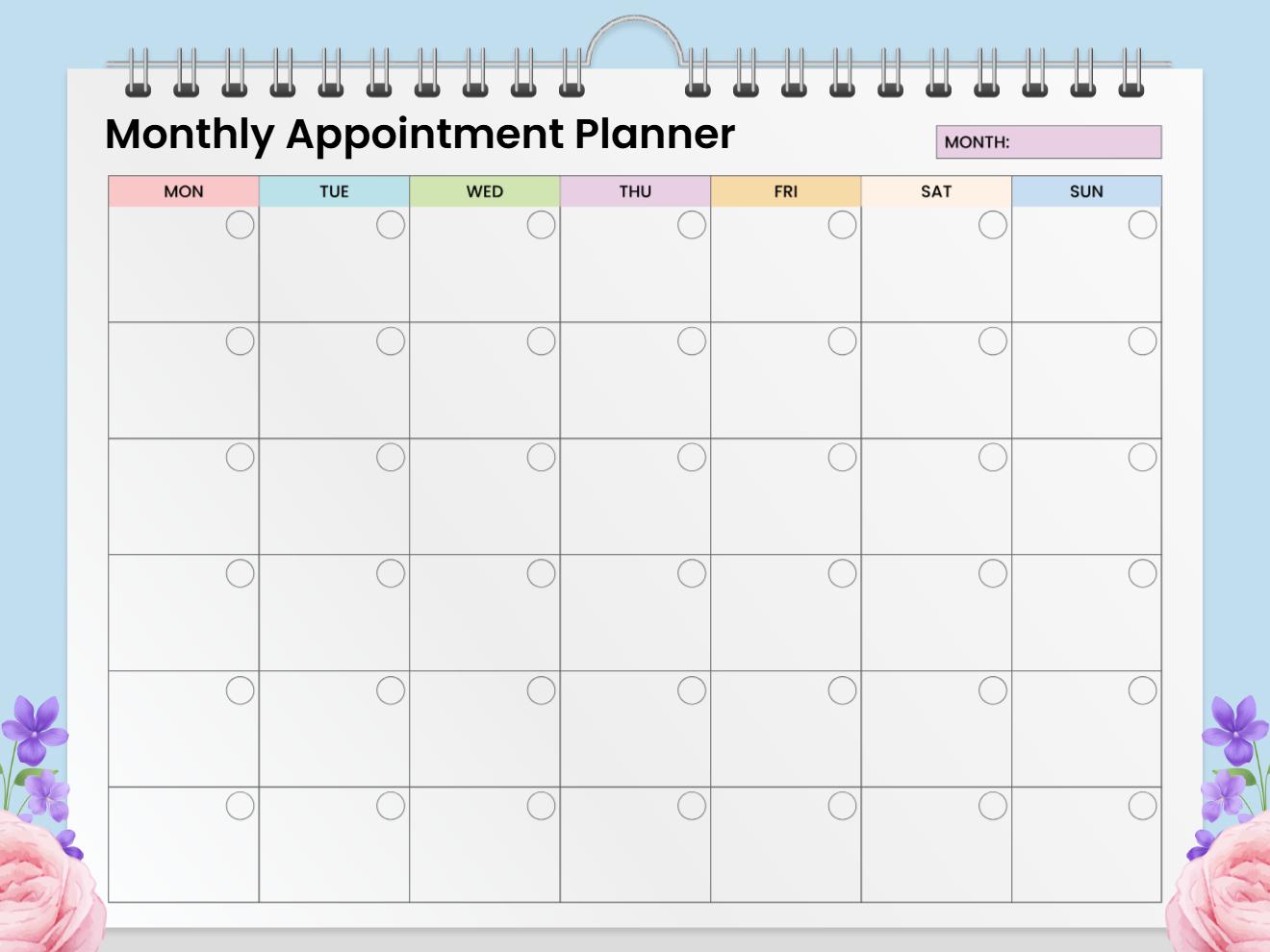
Monthly Appointment Planner
Designed specifically for tracking appointments, each date box has a circle in the corner for quick status marking. Spiral-bound design with a soft floral border makes it feel like a real desk calendar.
Best For: Anyone managing regular appointments, bookings, or client schedules monthly.
Key Features:
- Full 7-day monthly grid
- Status circle in every date box
- Color-coded day column headers
- The month field at the top
- Spiral-bound style with floral border design
Why It Works: The circle in each date box acts as a quick visual check of confirmed, pending, or completed without needing to write full status notes inside.
Use This Template →The Best Monthly Schedule Maker Does Not Turn a Hard Week Into a Failed Month
Here is what happens with most monthly planners: week one is strong. Week two hits a disruption, a sick day, an unexpected project, a week where focus just does not show up. The monthly grid, which was already optimistic, is now visually behind. By week three, opening the planner feels like reading a list of things you failed to do. By the 30th, you have decided that monthly planning does not work for you.
The problem is not you. The problem is a tool that has no answer for a week that goes wrong.
The most consistent monthly planners are not the ones who never have a hard week. They are the ones whose tool makes it easy to come back when they do.
"When week two falls apart, you carry forward. Incomplete tasks move to week three. No missed-streak counter. No visual wall of red. Just a clean second half of the month."
How to Start Using PlanWiz as Your Monthly Schedule Maker?
No complex onboarding. No configuration. Your first month ready in under five minutes.
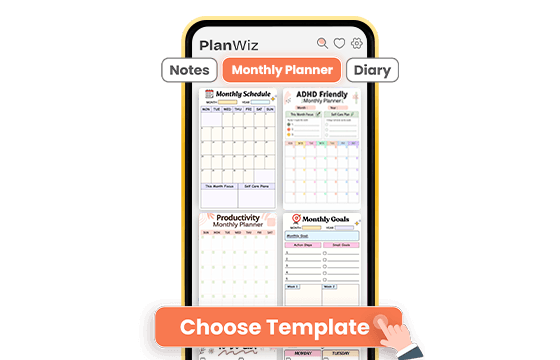
Choose a Template That Fits Your Month
Browse 1,000+ layouts in PlanWiz and choose the one that fits. This month, a project-heavy month needs a four-week milestone view, and a habit-building month needs a 30-day tracker. Use the work schedule planner template or any ready-made layout as your monthly schedule maker starting point; the structure is already there, you just fill it in.
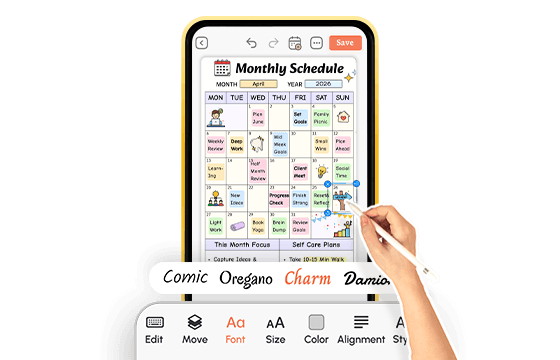
Customize It to Your Monthly Goals and Commitments
Add your monthly goals at the top, drop in deadlines, appointments, and recurring tasks, and adjust the layout to reflect your real life. It breaks the month into four weekly sections with milestone space and daily task connectors so "launch by the 28th" automatically translates into weekly steps without manual planning.
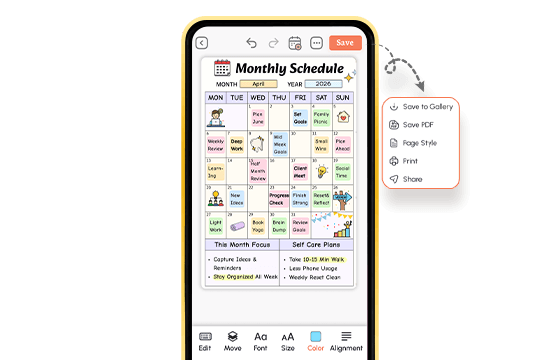
Download, Share, or Open It Every Morning
Export your monthly schedule maker as a PDF to print and post somewhere visible, share it with a teammate or partner, or use PlanWiz as your daily opening view, with a monthly overview alongside today's task list, every single day. When a week goes sideways, carry forward and keep moving.
A monthly schedule maker that is ready before you are.
What Do Real People Say About This Monthly Schedule Maker?
Ready for a Monthly Schedule Maker That Actually Holds Up All Month?
If you have ever written out a strong monthly plan and watched it quietly collapse by week two you are exactly who PlanWiz was built for. Not a planner for the 1st of the month. A real monthly schedule maker built for all 30 days of it.
Free to start. No credit card. Your first month structured in under five minutes.
Start Free → planwiz.app

Frequently Asked Questions
A monthly schedule maker is a planning tool that organizes your goals, projects, tasks, and habits across a full 30-day period in one structured view. The best ones come pre-built with templates so you skip the blank page, break the month into four weekly sections, and connect monthly goals to daily tasks so the plan stays active all month not just on the 1st.
Start by setting three to five monthly goals at the top, not twenty. Assign each goal to a specific week, not just "this month." Block non-negotiable commitments first, then place your most important project work in weeks one and two, so week three is not already overwhelmed before it starts. Use a monthly schedule planner template that has this structure already built in, so you are filling it, not designing it from scratch every month.
A reliable rule is three to five priority goals per month, broken into one to two milestones per week. Overloading the monthly view with every possible task guarantees that any disruption in week one creates a cascade through the rest of the month. Start with less than you think you need. A monthly schedule with realistic targets is used. One with aspirational task loads gets abandoned by the 10th.
The best free monthly schedule maker gives you enough structure to actually test whether it changes how you plan, not a crippled demo that forces a purchase before you see any results. PlanWiz's free tier includes full access to core monthly templates, a four-week breakdown structure, daily task connection, and PDF export from the first session with no credit card required.
Most monthly planning apps give you a calendar grid and leave the structure to you. PlanWiz provides pre-built monthly schedule planner templates for different planning styles, work deadline months, habit-building months, goal-focused months, and recovery months, and connects monthly planning to daily tasks, weekly milestones, and goal tracking in one system. You spend less time building your planner and more time using it.
A monthly schedule for work should include all project deadlines mapped across four weeks, buffer blocks for unplanned work in each week, a priority goal section visible at the top of the monthly view, and weekly milestone markers so you know whether you are on track before the deadline arrives, not after.
Yes. Export any monthly layout as a PDF or image with one tap. Print it and post it somewhere you will actually see it on your wall, your desk, or your fridge. A printed monthly schedule creates physical accountability that a digital-only tool often cannot match. A plan on your wall cannot be swiped away by a notification.