The Best Schedule Maker for Work, Study, and Personal Routine
PlanWiz is a schedule maker that helps you plan, organize, and actually follow through on every week without setup stress, blank-page paralysis, or guilt when things go sideways. Choose from 1,000+ ready-made schedule planner templates built for work schedules, study plans, personal routines, habit stacks, and more.
What Is the Best Schedule Maker in 2026?
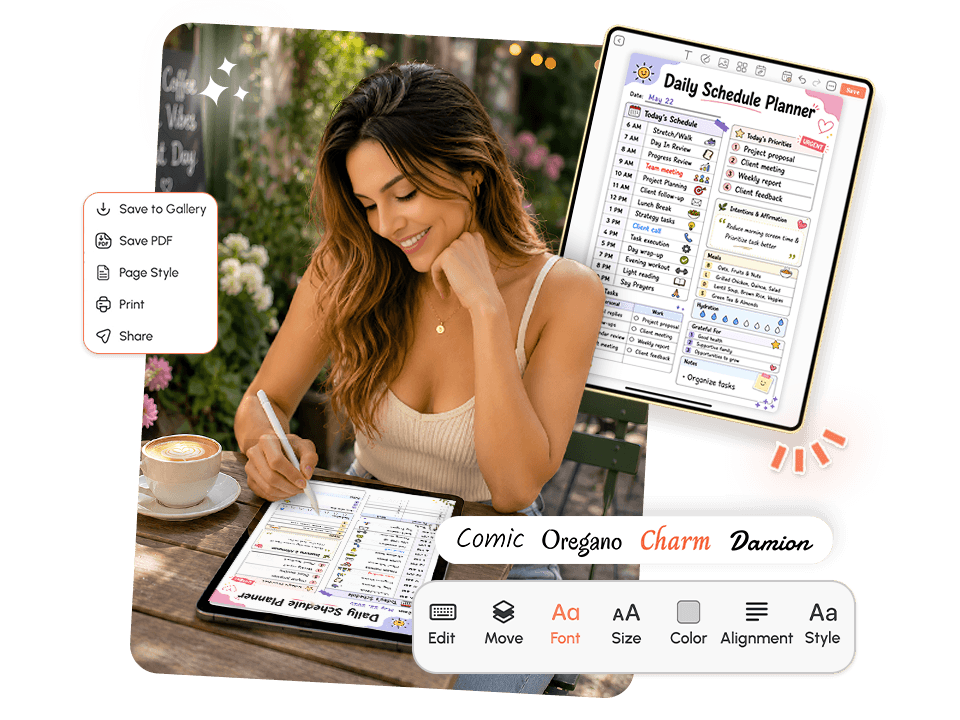
The best schedule maker in 2026 is not the one with the most features. It is the one you actually open on Wednesday, not just Sunday night.
Here is what a genuinely useful online schedule maker should do:
- Give you a ready-made structure from day one, no setup required.
- Connect your weekly plan to your daily tasks automatically.
- Work for work, study, and personal life in one place.
- Let you export a printable schedule for offline accountability.
- Let you recover in seconds when a day falls apart.
Who Is This Schedule Maker Built For?
Professionals managing full workweeks
who need a reliable weekly schedule for work, one view that holds meetings, deep work blocks, and personal priorities without collapsing the moment a call runs over.
Students
who need a single layout that connects their class timetable to assignments, deadlines, and study sessions, not three separate apps doing three separate jobs. The study planner template is built exactly for this.
People with ADHD
need a visual, low-friction structure that works with how their brain actually operates. The ADHD planner app templates use clear time blocks, minimal decision points, and fast rescheduling for focus that drops mid-week.
Parents
who are managing their own schedule alongside everyone else's and need something quick to fill and even quicker to update.
Freelancers and side hustlers
who juggle client work and personal goals need one tool that holds both without forcing them to switch between multiple tools.
Why Does Every Schedule You Make Fall Apart by Wednesday?
Most people have built a weekly schedule. Most people have also watched it collapse by Tuesday afternoon. This is not a willpower problem. It is a design problem.
Blank pages drain energy before planning even begins.
You open an online schedule maker, stare at an empty grid, and suddenly you are making fifty micro-decisions before writing a single task. What goes first? How long does each block need? Which priorities go on which days? That decision load exhausts your planning energy before any real planning happens.
A weekly plan that is not connected to your daily view is decoration, not a tool.
You look at it Monday morning, feel organized for about eleven minutes, then switch to your inbox and lose the thread completely. Without a live daily connection, your daily planner app and your weekly schedule become two separate things you manage instead of one system that manages itself.
No recovery path means no return.
When Wednesday goes wrong, most planning tools have no answer. The plan just sits there, outdated, accusatory, full of things you did not do. So you stop opening it. And a tool you do not open cannot help you.
Why Does Your Brain Keep Abandoning the Plan You Made Sunday Night?
The problem is not discipline. It is how the human brain actually handles time, effort, and competing demands.
Time blindness makes it nearly impossible to estimate how long things actually take. You fill your weekly planner with optimistic guesses, and by Tuesday, the real week has proved every single one of them wrong.
Present bias makes today's noise feel more urgent than the plan you built in a quiet Sunday moment. Unless your schedule is specific, visible, and easy to interact with, it loses to whatever is loudest right now.
Planning fallacy is the documented human tendency to underestimate how long tasks take and overestimate how much fits into a week. A planning app that builds in no buffer time is one that is designed to fail.
🧠 What the research says: Time-blocked weekly plans that connect to specific daily tasks, include realistic buffers, and make re-engagement frictionless produce significantly better follow-through than open-ended goal lists. The structure does not restrict you. It removes the mental load of deciding what to do next every single time. Templates come pre-loaded with time blocks, task areas, and review sections already in place. Your brain focuses on the work, not on building the container for the work.
How Does PlanWiz Work as a Schedule Maker That Holds Up All Week?
Layer 1: Structure before you start. Every template arrives pre-built. Time blocks, priority sections, and task areas are already there. You fill it in; you do not architect it from scratch. That single change removes the blank-page problem entirely. Explore the weekly planner templates to see the range.
Layer 2: A daily connection that keeps the plan alive. Your weekly overview connects directly to your daily task view. What is scheduled for Tuesday shows up on Tuesday morning. The plan stays relevant all week, not just the day you made it. Pair this with the time blocking planner templates for hour-level daily precision.
Layer 3: Recovery that does not punish you. When a day goes sideways, you do not rebuild from zero. The app lets you reschedule in seconds, switch to a simplified three-priority view for a chaotic afternoon, or open a fresh weekly template while keeping every completed task already marked. The system bends. You do not break.
What Makes PlanWiz a Schedule Maker Worth Using Every Day?
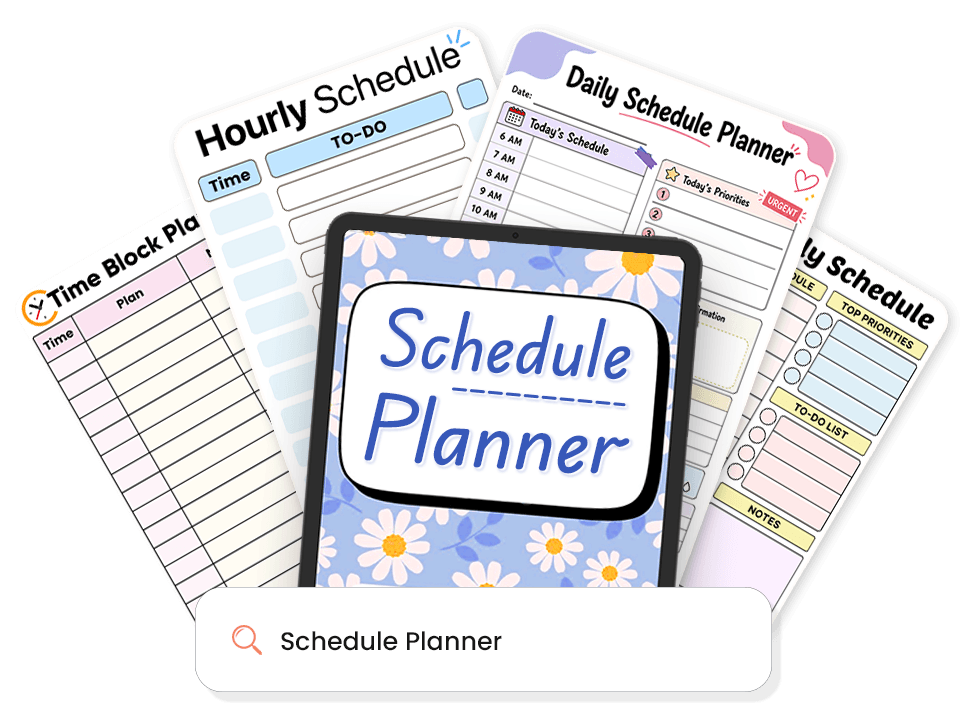
1,000+ Schedule Templates, Zero Setup
No blank page. No setup. No decisions before planning begins. Every layout is pre-structured and ready the second you open the app.
- Time-blocked layouts for heavy professional workweeks.
- Student layouts combining class timetables with task tracking.
- Routine templates with habit rows inside each day.
- Printable layouts ready to export and post.
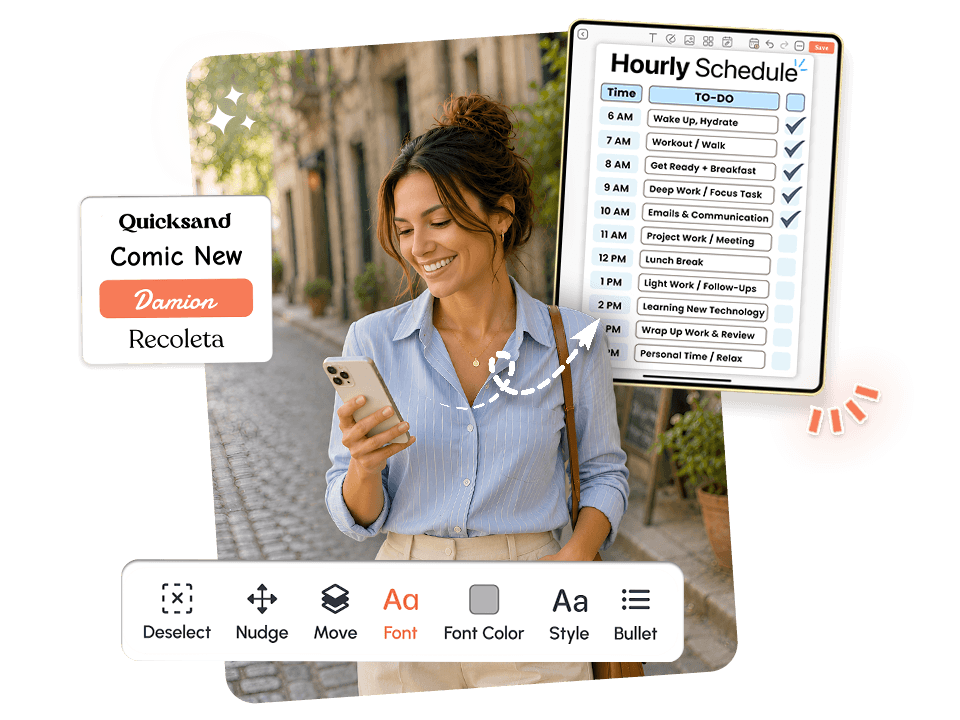
A Customizable Schedule Maker for Every Brain
No two people manage a week the same way. This schedule planning app adapts to your real life, not a generic template built for a hypothetical, organized person.
- Time-blocked, task-by-day, or priority-based layouts.
- Adjust colors, fonts, and sections to match how you think.
- Works on iPad, Android, and desktop, with the same experience everywhere.
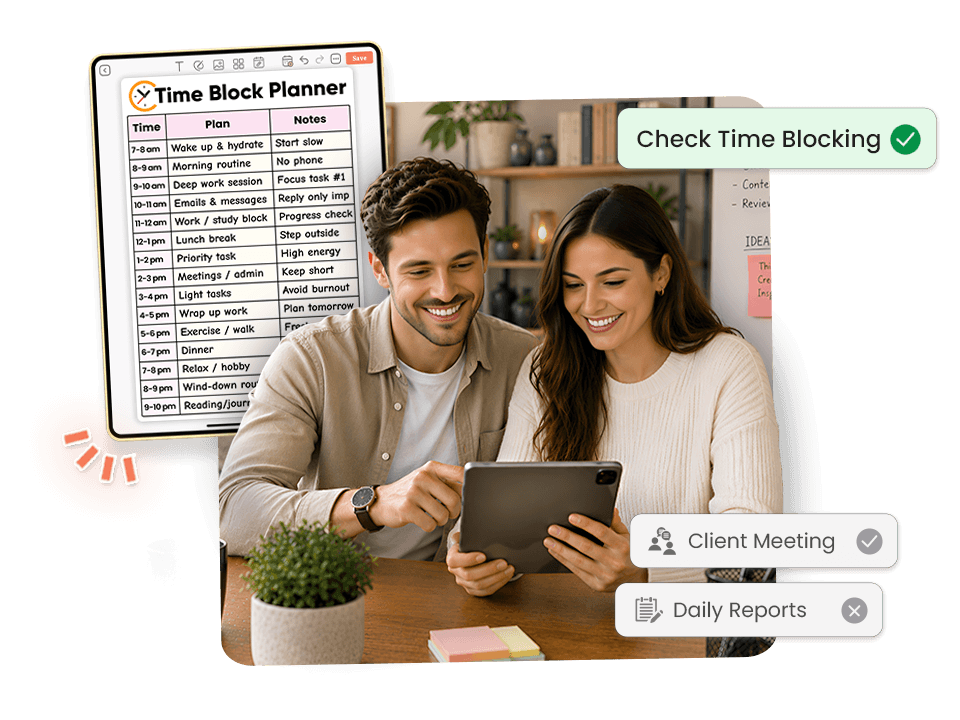
Time Blocking Built Into Every Template
The most effective schedule for work is one that assigns tasks to specific hours, not just lists them somewhere and hopes for the best. Time blocking is built directly into every layout.
- Drag-and-drop blocks across any day in seconds.
- Buffer blocks are included by default for unexpected tasks.
- Repeating blocks for recurring meetings are set once and done every week.
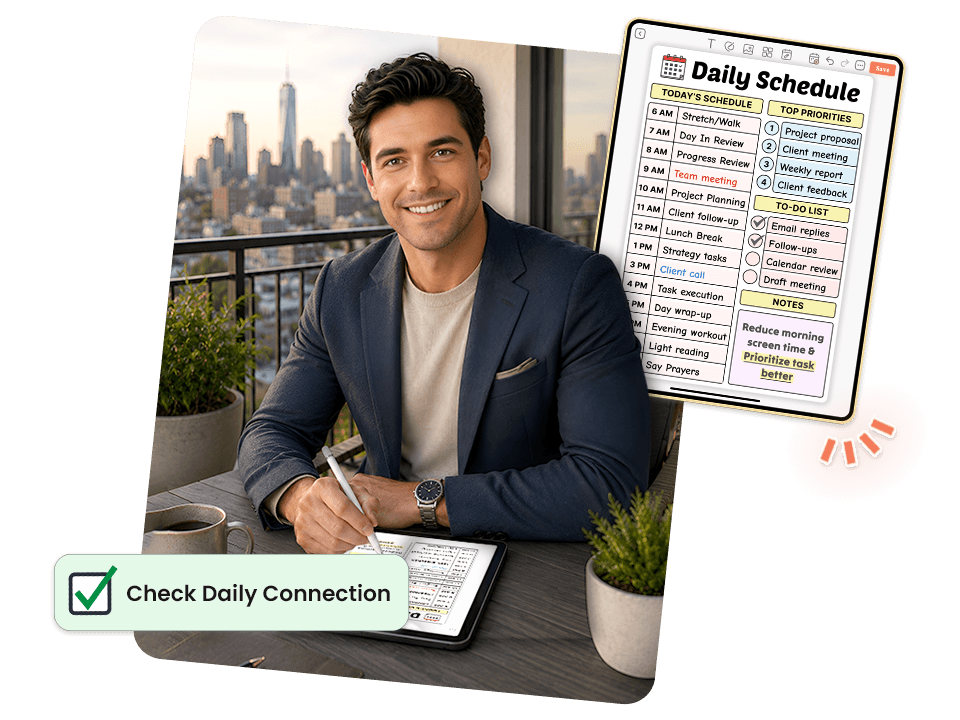
Daily Schedule Connection That Keeps the Plan Alive
An online schedule maker that is only relevant on Sunday is not a tool; it is a document. The app connects your weekly view to your daily task view, so the plan stays active across every day of the week.
- Every weekly block connects to a live daily task list.
- Completing a daily task updates the weekly view automatically.
- Works alongside the task planner app for deep daily management.
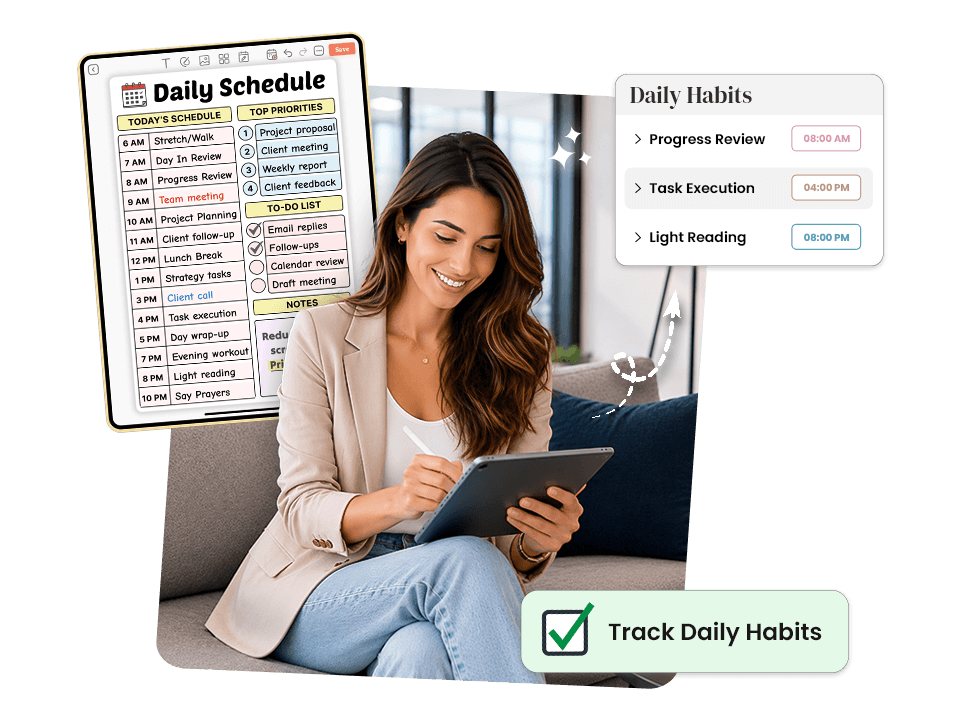
Habit and Schedule Tracking in One View
A habit tracker that lives in a separate app from your weekly schedule is a second system you have to manage. The app puts habits and a schedule in the same place.
- Habit rows are built into each day column inside weekly templates.
- The seven-day completion grid visible alongside your scheduled tasks.
- Connect to the habit tracker planner templates for deeper streak tracking.
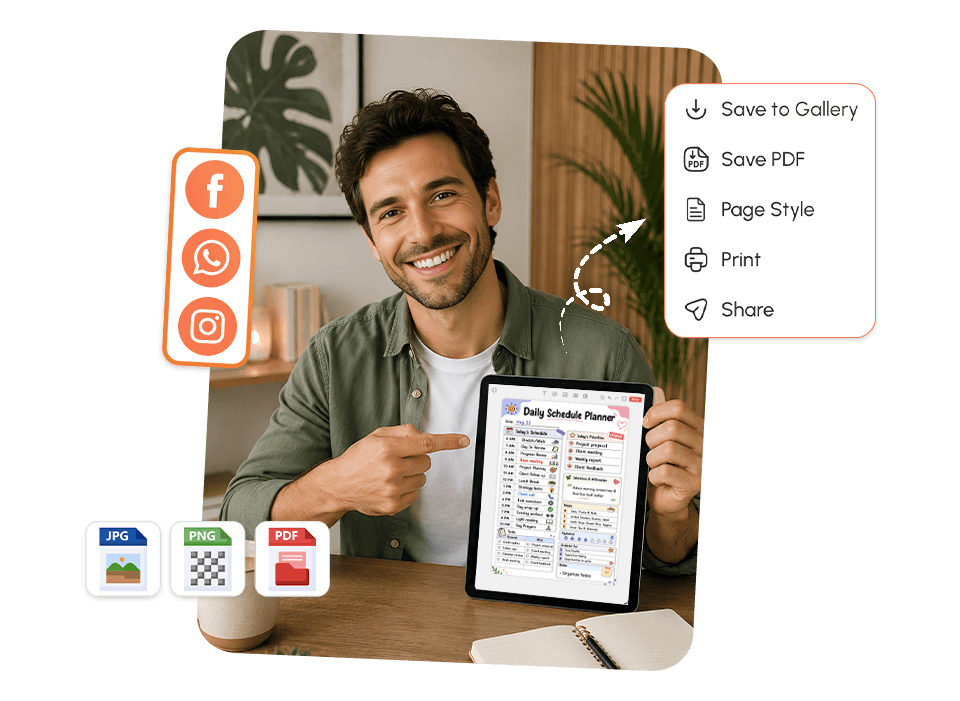
Printable Schedule Export for Real-World Accountability
A schedule that lives only inside a screen is easy to ignore, minimize, or swipe past. The app makes it effortless to bring your plan into the physical world.
- Export any layout as a PDF or image with one tap.
- Print and post it somewhere you will see it every morning.
- Share instantly with a manager, coach, or study partner.
Explore Schedule Planner Templates That Work for Your Schedule
Pick the Template That Matches How You Feel Today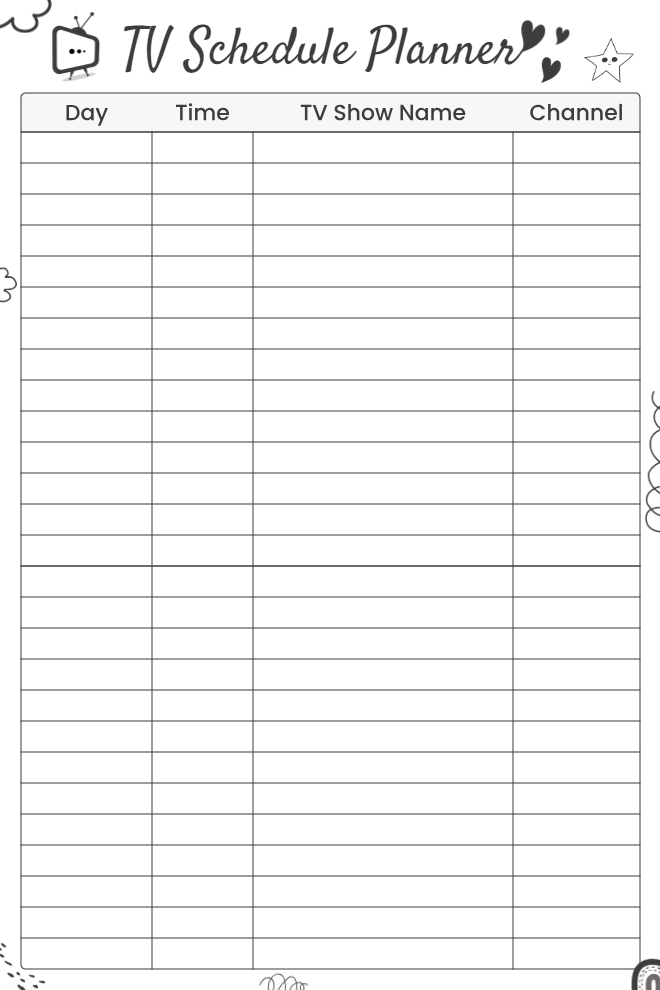
TV Show Schedule Planner
Never miss an episode again. This simple tracker logs every show by day, time, channel, and name, all in one clean list you can actually refer to.
Best For: TV lovers and binge-watchers who follow multiple shows across different channels.
Key Features:
- 4-column layout: Day, Time, TV Show Name, Channel
- Plenty of rows for a full week of shows
- Minimal white design, easy to read
- Cute TV and star doodle design
Why It Works: Simple list format means you can scan the whole week's lineup in seconds, no flipping pages or searching through apps.
Use This Template →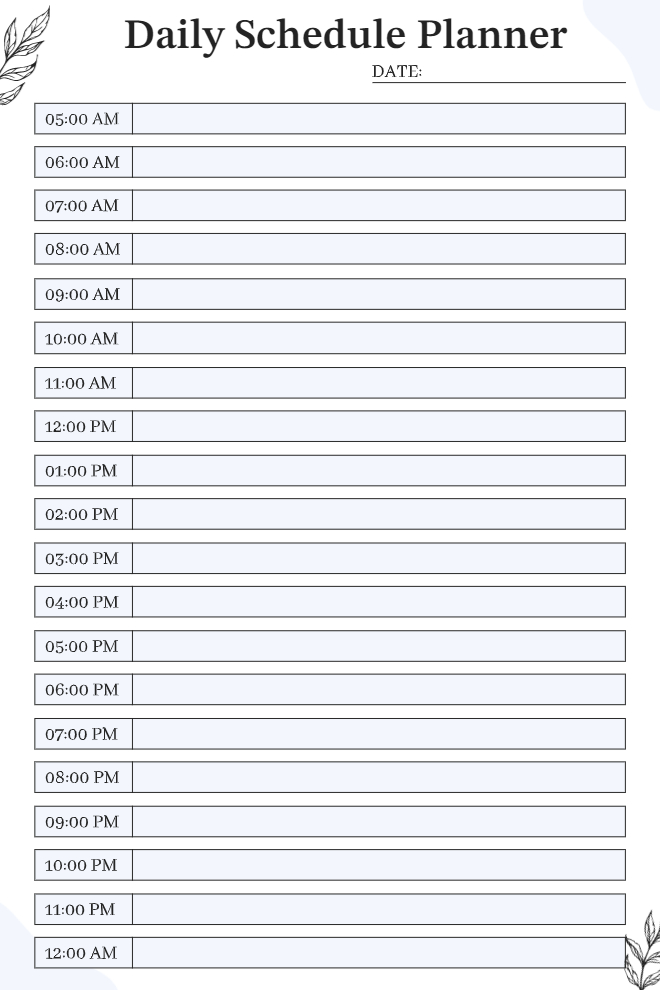
Minimal Daily Schedule Planner
Clean, no-distraction hourly planner from 5 AM to midnight. Every hour gets its own row, straightforward and easy to fill in each morning.
Best For: Anyone who wants a simple hourly, daily schedule without extra sections.
Key Features:
- Hourly time slots from 5:00 AM to 12:00 AM
- Wide writing space per hour
- Date field at the top
- Minimal white and soft blue design with leaf accents
Why It Works: No extra boxes or trackers, just your day laid out hour by hour, so there's nowhere for tasks to hide.
Use This Template →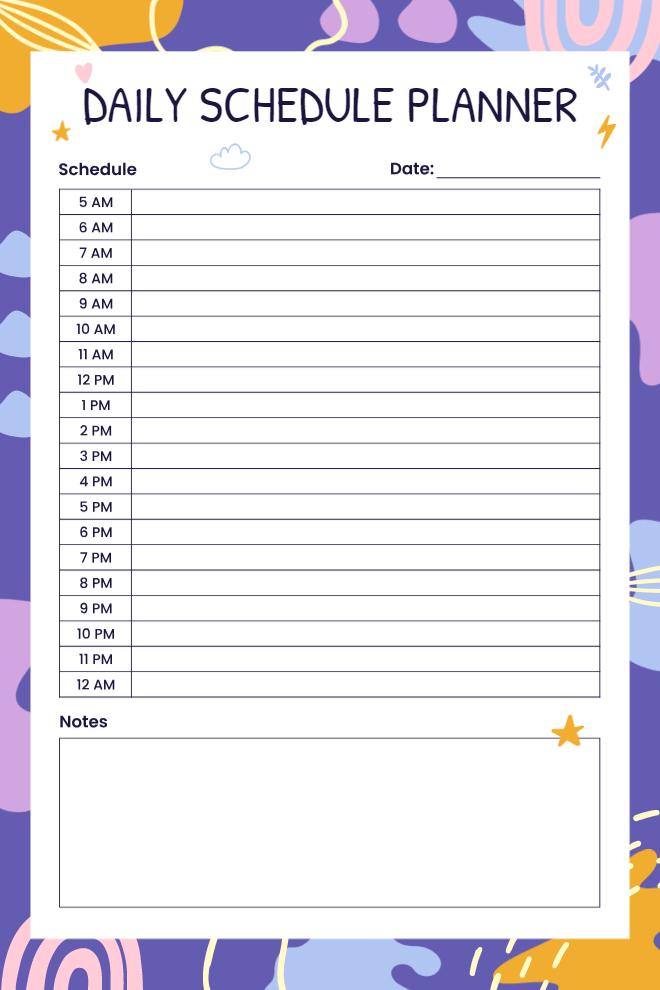
Colorful Daily Schedule Planner
Bold purple design that makes daily planning feel less like a chore. Covers the full day from 5 AM to midnight with a notes box at the bottom for anything extra.
Best For: Students and creatives who like bright, energetic planner designs.
Key Features:
- Hourly schedule from 5 AM to 12 AM
- Notes box at the bottom
- Date field at the top
- Vibrant purple abstract border design
Why It Works: The notes box at the bottom is easy to overlook, but incredibly useful; it catches everything that doesn't fit neatly into a time slot.
Use This Template →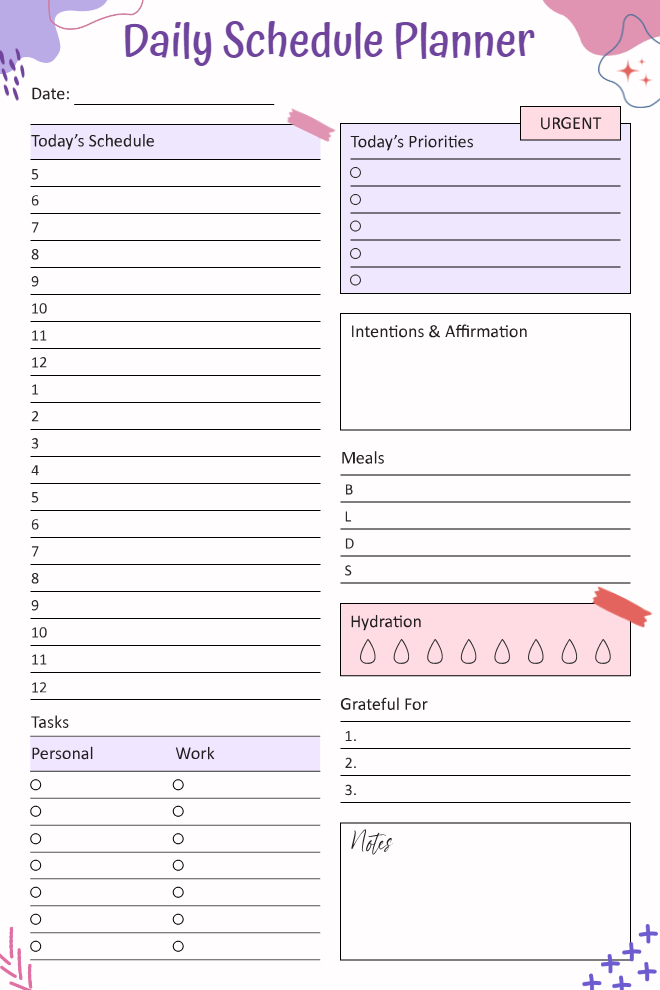
All-in-One Daily Schedule Planner
This one covers everything: your schedule, priorities, meals, hydration, gratitude, intentions, and tasks, all on a single page. It's a full daily life system, not just a schedule.
Best For: People who want a complete daily planning and wellness routine on one page.
Key Features:
- Hourly schedule from 5 AM to 12 AM
- Today's priorities + urgent flag
- Intentions & affirmation box
- Meals tracker (Breakfast, Lunch, Dinner, Snack)
- Hydration tracker + grateful for section
- Personal and work task columns
Why It Works: Combining schedule, wellness, and mindset on one page means you only need to open one thing to plan your entire day.
Use This Template →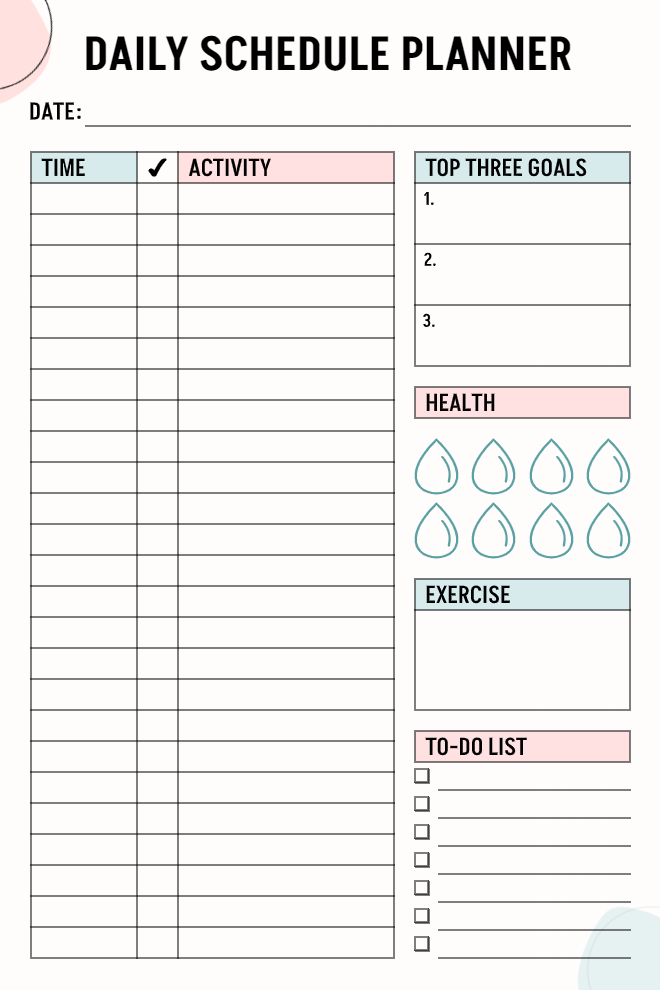
Health-Focused Daily Schedule Planner
Balances productivity with wellness time and activity tracking on the left, goals, health, exercise, and to-do list on the right. A proper daily planner for people who care about both output and health.
Best For: Health-conscious individuals who want productivity and wellness tracked together.
Key Features:
- Time + activity log with completion checkboxes
- Top 3 goals section
- Water intake tracker (8 drops)
- Exercise notes box
- To-do checklist
Why It Works: The activity completion checkbox next to each time slot turns your schedule into an accountability tool, not just a plan.
Use This Template →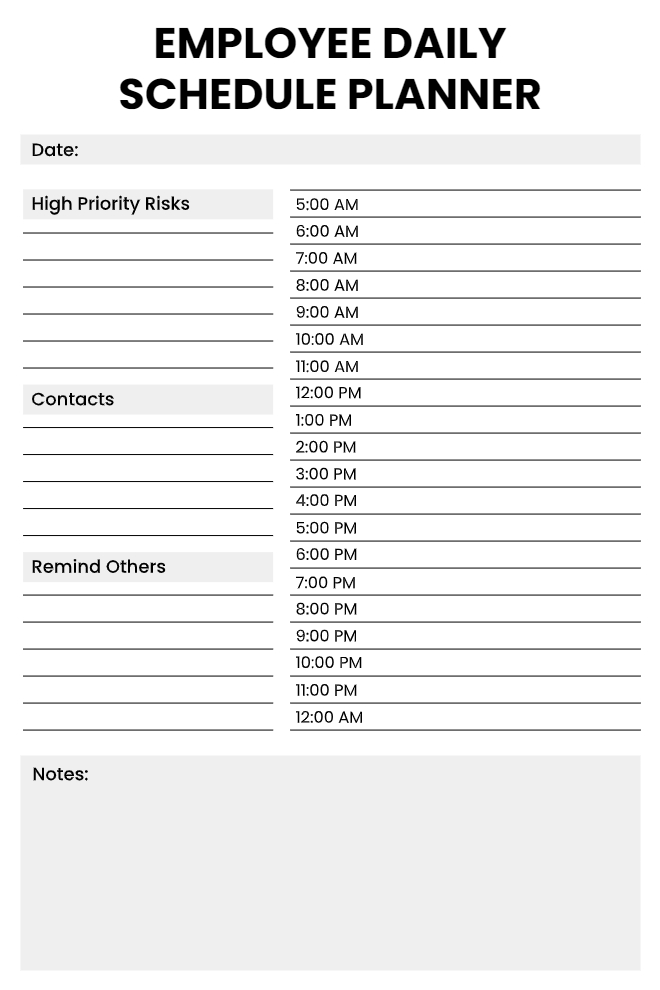
Employee Daily Schedule Planner
Built for workplace use combines an hourly schedule with high-priority risks, contacts, reminders for others, and a notes section. Everything a working professional needs to stay on top of their day.
Best For: Employees and professionals managing tasks, calls, and daily work schedules.
Key Features:
- Hourly schedule from 5:00 AM to 12:00 AM
- High priority risks section
- Contacts log
- "Remind Others" section
- Notes box at the bottom
Why It Works: The "Remind Others" section is what sets this apart; it stops important follow-ups from slipping through the cracks at work.
Use This Template →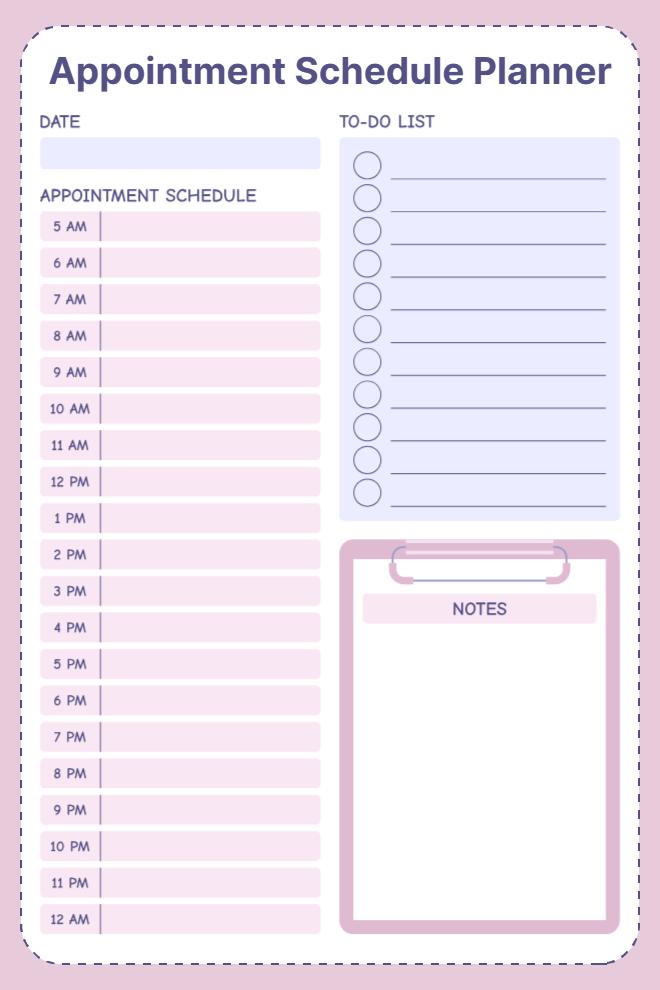
Appointment Schedule Planner
Two-column layout with appointments on the left and a to-do list plus clipboard notes on the right. Designed to handle a busy day of bookings without losing track of other tasks.
Best For: Service providers, freelancers, and anyone managing daily appointments alongside tasks.
Key Features:
- Hourly appointment slots from 5 AM to 12 AM
- To-do list with circle checkboxes
- Clipboard-style notes section
- Soft purple and pink design with dashed border
Why It Works: Running appointments and tasks on the same page means you never double-book yourself or forget a task while caught up in back-to-back bookings.
Use This Template →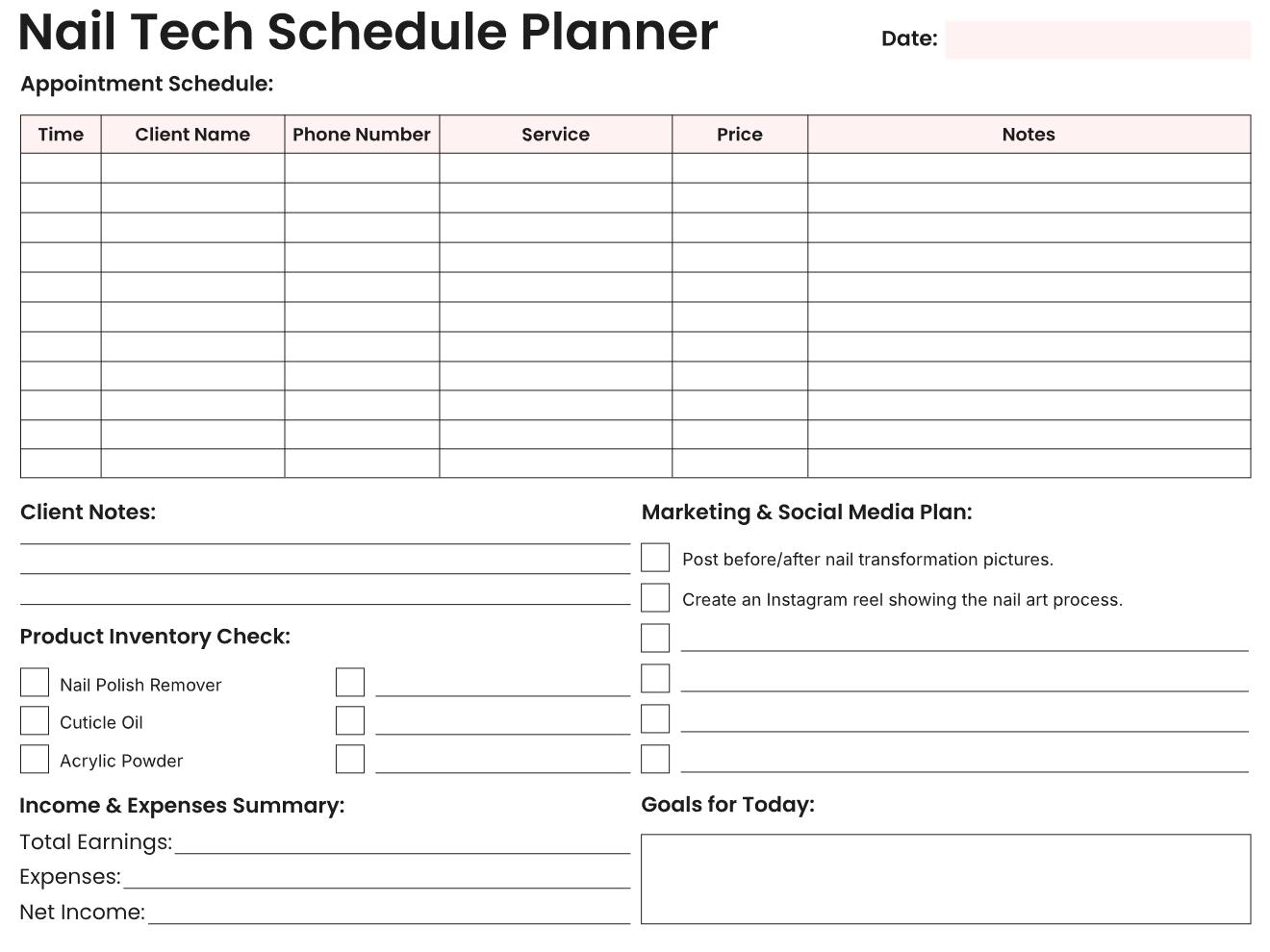
Nail Tech Schedule Planner
Purpose-built for nail technicians, tracks clients, services, and pricing while also covering inventory, marketing plans, income summary, and daily goals.
Best For: Nail technicians and beauty professionals managing clients and business operations daily.
Key Features:
- Appointment table: Time, Client Name, Phone
- Client notes section
- Product inventory checklist
- Marketing & social media plan checkboxes
- Income & expenses summary
Why It Works: Most schedule templates ignore the business side; this one tracks income and marketing alongside appointments, so nothing about running the business gets pushed aside.
Use This Template →The Best Schedule Maker Does Not Punish You for a Hard Week
Most planning tools treat every missed task like evidence of failure. By Thursday, the plan is behind schedule. By Friday, you feel worse than before you made it. By Sunday, you dread opening it again.
That is not a planning system. That is a guilt delivery mechanism.
This planner works differently. Miss a day or an entire week, and you open a fresh template. No red missed-task badges. No broken-streak counter. No wall of greyed-out items you never touched. Just a clean new page and a carry-forward button that moves unfinished tasks forward with one tap.
The most consistent planners are not the ones who never fall behind. They are the ones who know how to come back without ceremony.
"The most consistent planners are not the ones who never fall behind. They are the ones whose tool makes it easy to come back when they do."
How to Start Using PlanWiz as Your Schedule Maker?
No lengthy onboarding. No tutorial videos. No setup is required before you can start. Pick a template, fill in your week, and go.
Choose a Template That Matches Your Actual Week
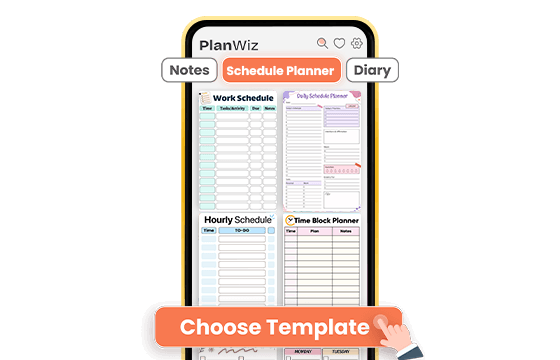
Browse 1,000+ ready-made templates and pick the layout that fits the week you actually have in front of you: a packed time-block layout for a heavy week, or a minimal three-priority layout for a recovery week. The structure is already there. You show up and fill it in. Start with the full schedule maker templates library.
Customize and Fill In Your Schedule
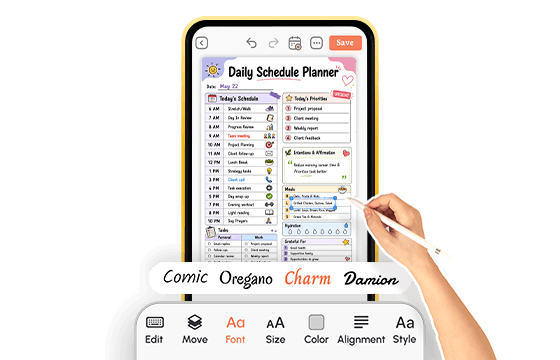
Adjust colors, fonts, or sections, or leave the template exactly as it is and just start filling it in. Add tasks, time blocks, habits, and priorities. On a high-energy week, go deep. On a difficult week, strip it back to three priorities. The smart schedule maker adapts to what your week actually needs.
Export, Print, and Stay Accountable
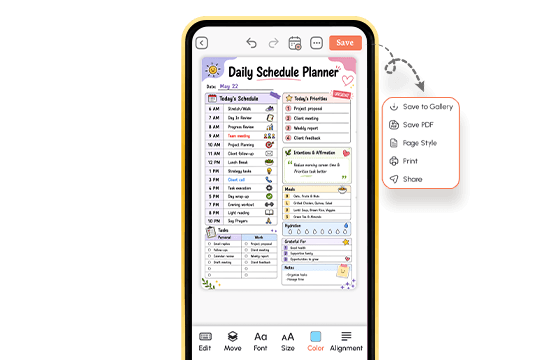
Export your finished schedule as a PDF or image with one tap. Print it and put it somewhere you will actually see it. Share it with a manager, coach, or accountability partner. When the week goes off plan, some will open a fresh template and keep moving. No guilt. No rebuilding from scratch.
A schedule maker that is ready before you are.
What Do Real People Say About This Schedule Maker?
Ready for a Schedule Maker That Actually Holds Up All Day?
Most schedules die by Wednesday. PlanWiz is a schedule maker built around how real people plan, lose track, and get back on track, without guilt, without starting over.
Free to start. No credit card. Ready in under three minutes.
Start Free → planwiz.app

Frequently Asked Questions
A schedule maker is a planning tool that organizes your tasks, time blocks, habits, and priorities across seven days in one structured view. The best ones arrive pre-built so you skip the blank page entirely, connect to your daily task view so the plan stays active all week, and include a recovery path so a bad Tuesday does not end the whole week. All three are built into the app.
Three documented patterns cause this: time blindness (underestimating how long things take), present bias (today's noise always feeling more urgent than Sunday's plan), and planning fallacy (overloading the week in the first place). A good planner addresses all three with pre-built buffers, daily task connections, and simple recovery tools, not just a prettier grid.
Three to five priority tasks per day are the reliable upper limit for most people. Overloading your schedule planning app guarantees that a single Monday interruption cascades into missed tasks every day through Friday. Start with less than you think you need. A schedule with a realistic load gets completed. An aspirational one gets abandoned.
Start with a pre-built template so you skip the blank page. Assign tasks to specific time slots instead of listing them loosely. Build in at least one buffer block per day for unexpected work. Keep your daily task view connected to your weekly schedule so the plan stays visible every morning, not just the day you made it.
Yes. The best schedule makers let you manage both in one view: work meetings, deep focus blocks, personal errands, and family commitments in a single layout. Keeping work and personal life in separate tools creates blind spots. A unified schedule maker shows you the full picture so nothing gets double-booked or forgotten.
Time blocking is the practice of assigning each task a specific start and end time on your schedule, treating tasks like appointments rather than items on a list. In a schedule maker, time blocking works by dividing your day into dedicated blocks for focused work, meetings, breaks, and buffer time. Tasks with a time slot are dramatically more likely to get done than tasks on an open list.
Yes. The app works as a full personal schedule planner on iPad, Android tablets, Android phones, and desktops. The same planner syncs across all your devices, so your week is always accessible wherever you are.