The Online Timetable Maker That Turns a Scattered Week Into a Structured One
Most people aren't losing hours because they're lazy. They're losing them because nothing in their week is connected: classes on one app, shifts in a screenshot, study blocks that exist only in their head. PlanWiz is the online timetable maker that closes that gap with 1,000+ ready-made planner templates, time-blocking tools, and a structure that bends to your real week, not the perfect version of it.
What Is the Best Online Timetable Maker in 2026?

The best online timetable maker in 2026 is PlanWiz. It helps students, teachers, and professionals build clear weekly schedules using 1,000+ ready-made templates, time-blocking tools, and smart reminders all in one place.
A genuinely useful online timetable maker should:
- Build a complete weekly schedule in minutes using structured schedule planner templates , not after an hour of setup.
- Give you ready-made layouts for classes, study blocks, and work shifts so you're not designing from scratch every week.
- Show gaps and conflicts before your week falls apart instead of after.
- Adapt to changes without making you rebuild everything from scratch.
- Work for students, teachers, and professionals without needing a tutorial.
Who Is This Online Timetable Maker For?
This online timetable maker was built for the people that generic scheduling tools always leave behind:
Students managing lectures, labs, and deadlines
who need a class timetable maker that doesn't fall apart halfway through the semester.
Teachers planning lessons and weekly curricula
who need more than a blank spreadsheet the lesson planner template inside PlanWiz was built specifically for this.
Working professionals managing shifts and back-to-back meetings
who need a digital timetable planner that shows the full week in one honest view.
Parents balancing school runs, appointments, and careers
who need something that accounts for real disruptions.
People with ADHD
who lose track of time and need a visual, structured system that makes the week feel manageable rather than overwhelming.
Anyone who makes a solid plan on Sunday
and has no idea where it went by Tuesday. If your week keeps running you instead of the other way around, this was built for you.
Why Does Every Online Timetable Maker Feel Like It Creates More Work?
Most scheduling tools solve the wrong problem. They give you a blank grid and expect you to figure out the rest. The real challenge isn't finding a place to write your schedule; it's building one you'll actually follow when life starts moving.
Building a Timetable Takes Longer Than Using One
You open a free timetable maker. There's a blank grid. No structure. No guidance on how to split study time from break time. So you spend forty minutes designing a layout, run out of energy before Tuesday's column is done, and close the tab. The setup cost exceeds the benefit. This isn't a lack of commitment. This is a blank-page problem. A real online timetable maker has the structure ready before you sit down, so the only thing you're doing is filling it in.
A Timetable That Doesn't Match Real Life Gets Abandoned
Most people build timetables for their best week: eight focused study hours, consistent sleep, and no unexpected calls. Then Tuesday arrives. Because the template had no flexibility, missing one block feels like the whole system failed. So they stop. The gap between the schedule you plan and the week you actually live is where most scheduling tools lose people. A good online timetable maker closes that gap with flexible layouts that account for how real days actually go.
Scattered Schedules Across Too Many Places
Your class timetable is a screenshot. Your study blocks are in your phone calendar. Your work schedule arrives by email every Friday. Nothing connects. You miss things not because you forgot but because they were in the wrong place at the wrong moment.
The Mental Load of Running Everything in Your Head
When your schedule isn't written somewhere trusted, your brain carries it. Every unscheduled block becomes a quiet anxiety. You end up exhausted, not from the work itself but from the invisible effort of tracking when everything needs to happen.
Why Does Your Brain Struggle to Follow a Schedule Even When You Built It Yourself?
This is not a discipline issue. It is a design issue.
The human brain is not built to hold a full week of time-sensitive commitments in working memory while also doing the actual work those commitments require. When your schedule isn't externalized into a trusted visible system, your brain treats every unplaced block as an unresolved loop, a low-level cognitive load that drains attention throughout the day, even when you're not consciously thinking about it.
Psychologists call this the Zeigarnik Effect: unfinished or unplaced tasks stay active in working memory, creating a persistent drag that follows you from morning to evening.
The result? Scattered attention, decision fatigue, and a constant sense of being behind, even on days when you're genuinely trying.
🧠 The research: Studies on implementation intentions show that when people specify not just what they need to do but when and where, follow-through rates increase significantly. The structured templates inside an online timetable maker do exactly this: they move time commitments from vague mental notes into specific, placed blocks your brain can act on cleanly.
PlanWiz was built around this science. The templates don't just give your schedule a place to live. They give every hour a home inside a structure that removes the cognitive overhead that causes most timetables to collapse before Wednesday.
How Does a Good Online Timetable Maker Turn a Scattered Week Into a Clear One?
PlanWiz turns a disorganized weekly schedule into a structured, followable timetable using pre-built templates, time-blocking tools, and flexible layouts that adapt to your actual week, not the one you planned.
Layer 1: Start with the structure already built. Every week starts with a layout that's already designed. Class slots, study blocks, work periods, and breaks the sections are ready before you type a single thing. You're filling in a plan, not building one. The weekly schedule planner template and daily schedule planner template handle the structure so your energy goes into scheduling, not designing the page.
Layer 2: Connect Your Timetable to Your Full Week. Your class schedule doesn't exist in isolation from study sessions and personal time. PlanWiz lets you see everything in one view and use a study planner template alongside your class grid, so academic planning and personal scheduling are never running in separate places.
Layer 3: Flexibility That Survives a Real Week Plan Change. A class gets rescheduled. A shift swap. Its templates absorb that without requiring a full rebuild. Adjust one block, carry forward what still applies, and keep moving. The system bends to your week, not the other way around.
What Features Should an Online Timetable Maker Have?
The best online timetable maker should include ready-made templates, time-blocking tools, daily and weekly views, flexible customization, smart reminders, and easy sharing. PlanWiz includes all of these.
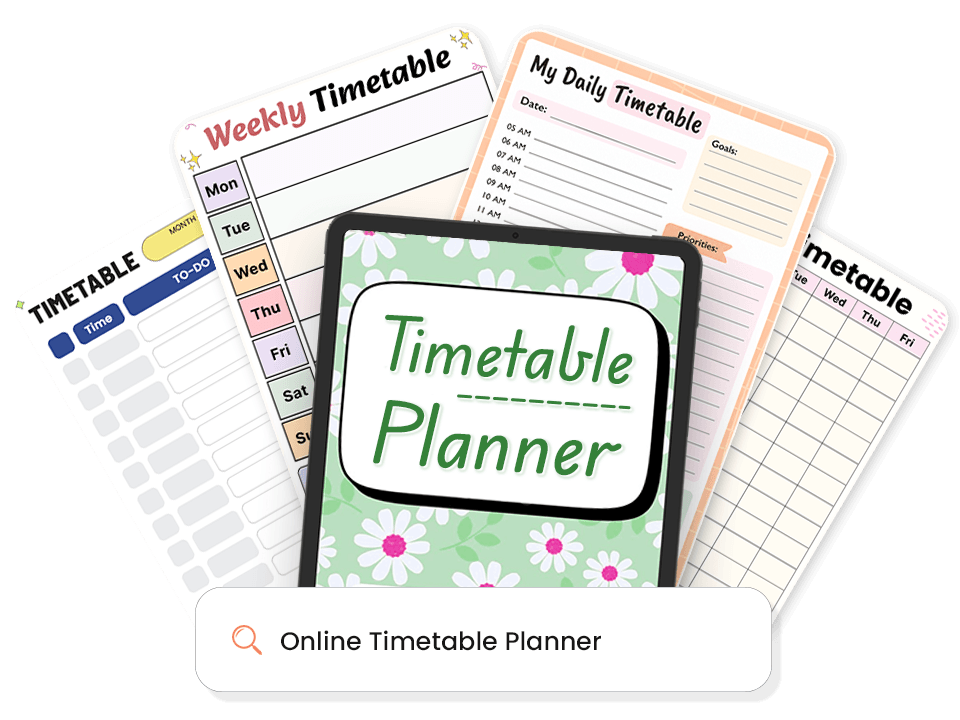
1,000+ Ready-Made Timetable Templates
Most scheduling tools hand you a blank grid and leave you to build the structure yourself. PlanWiz does the opposite. Every template is pre-structured for a specific type of week, class schedules, study timetables, and work shifts, so you can go from a blank slate to a working schedule in minutes, not after an hour of setup.
- Weekly planner templates to see your full week before Monday begins.
- Class timetable layouts with time slots, subject columns, and day grids are already built.
- Study block templates with daily focus goals so each session has a clear target.
- Work schedule maker for shift workers and freelancers managing variable hours.
- Hourly grids for anyone who needs every block of the day accounted for.
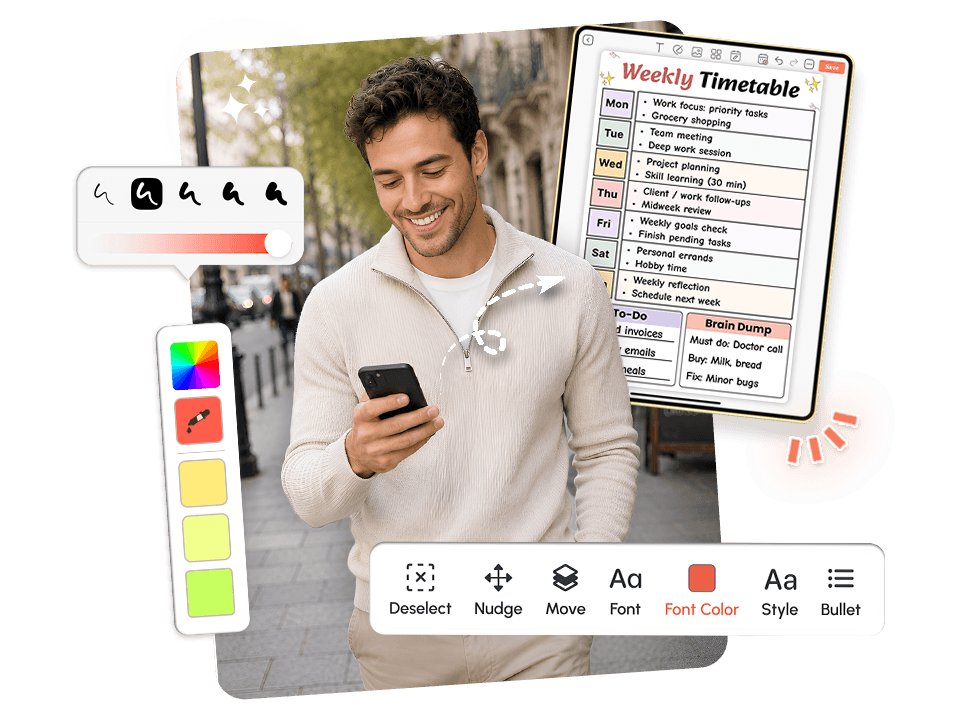
Fully Customizable Your Timetable Every Week
A real week doesn't look the same every Monday. Exam periods are different from regular ones. A heavy project week looks nothing like a slow one. A real online timetable maker has to flex around that reality rather than locking you into a format that only fits the week you first set it up.
- Change time slots, section labels, colors, and layout in minutes no design skills needed.
- Add or remove blocks as your weekly load shifts.
- Use a detailed hourly layout during exam weeks; switch to a simple overview when the pace slows.
- Your timetable bends to your schedule, never the other way around.
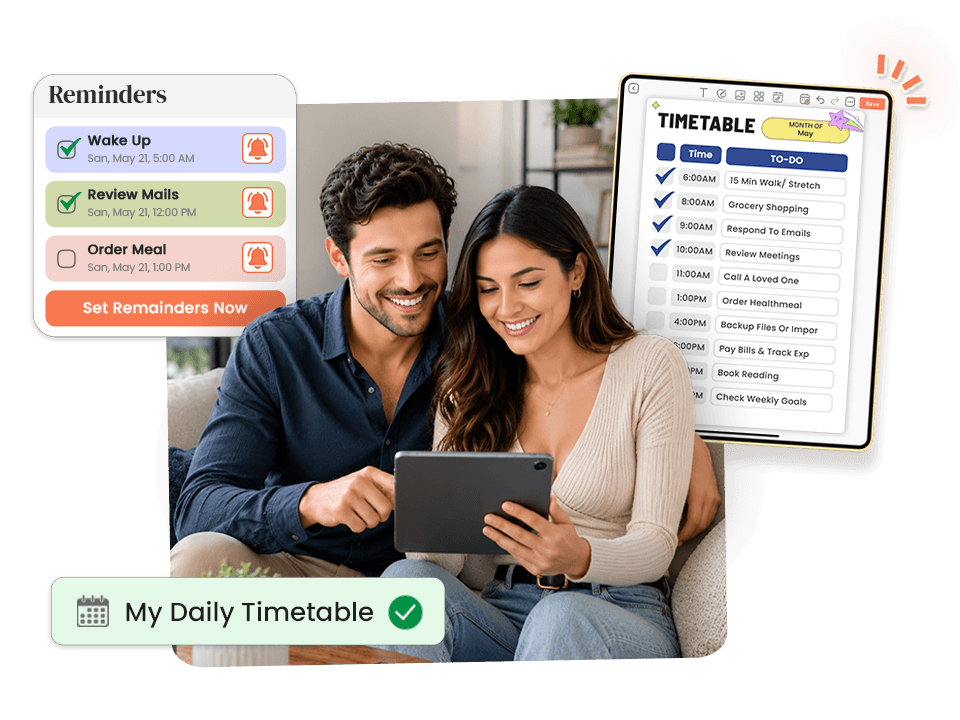
Smart Timetable Reminders Without Relying on Memory
You can build the most detailed timetable and still miss every block if the plan disappears from your awareness the moment your day picks up speed. For most people, out of sight means out of mind, not because they don't care, but because attention is finite.
- Set reminders on individual time blocks directly inside your timetable no separate app needed.
- Reminders appear in context alongside the scheduled block, so you always know what you're being nudged about.
- Use daily planning reminders to protect the ten minutes you'd otherwise skip on busy mornings.
- Get pulled back into your schedule before a block slips past you unnoticed.
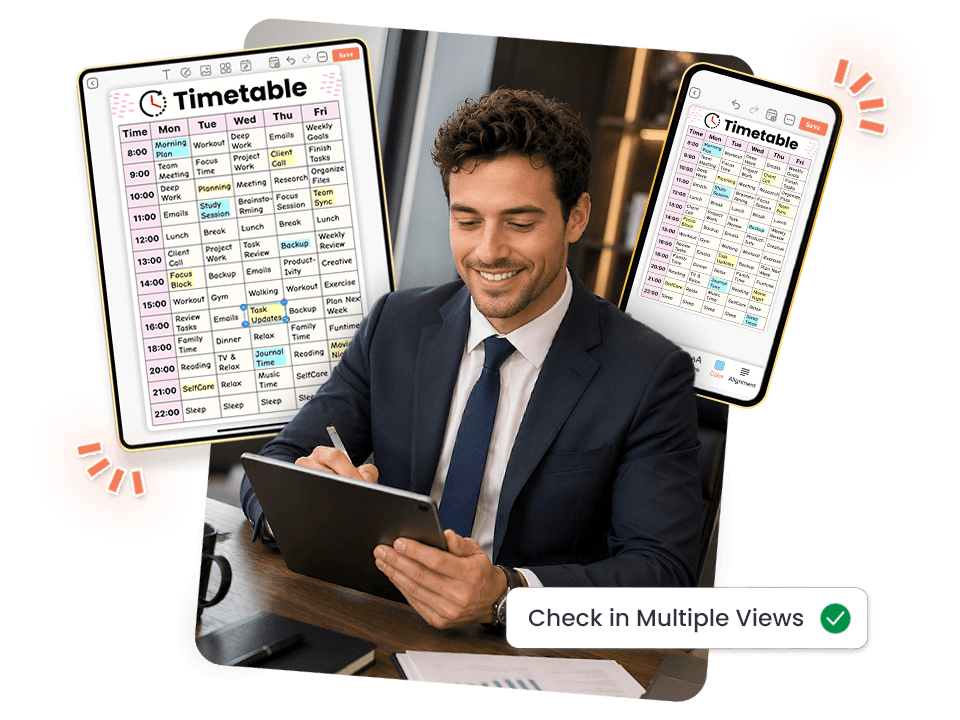
Daily, Weekly, and Monthly Timetable Views
Most people don't need a more detailed timetable. They need to see the right view at the right moment, zoomed in for today, zoomed out for the week's bigger picture.
- Daily view for single-day execution: what's on the schedule and in what order.
- Weekly view using the weekly schedule maker layout for planning and catching conflicts before they arrive.
- Monthly overview using the monthly schedule planner template for semester milestones and recurring commitments.
- Class-specific views for students managing multiple subjects and labs across the week.

Download and Share Your Timetable
A timetable that only lives inside an app is one missed notification away from being completely invisible when it matters. Making your schedule visible physically or to someone else is one of the most underrated strategies for actually following it.
- Download any timetable page as a PDF to save, print, or file.
- Share your weekly schedule with a study partner, manager, or accountability group in one tap.
- Print your layout and place it somewhere you'll actually see it your desk, your notebook cover.
- Export your academic planner overview to share with teachers or teammates at the start of a term.
Explore Timetable Templates That Work for Your Week
Pick the Template That Matches How You Feel Today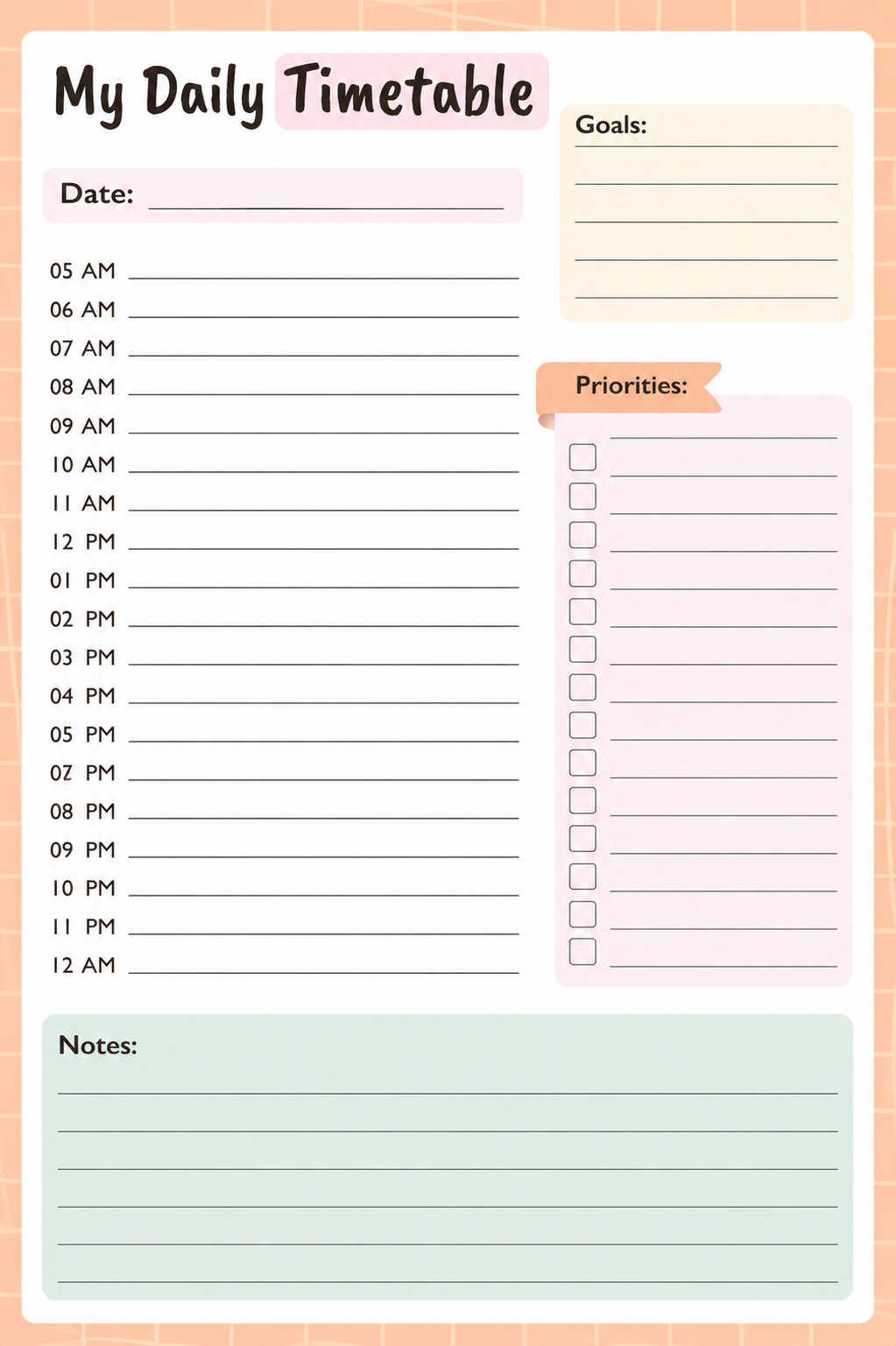
My Daily Timetable
A full day laid out hour by hour, with goals and priorities right alongside it. Simple enough to fill in every morning, detailed enough to actually keep you on track.
Best For: Anyone who time-blocks their day and wants goals and priorities on the same page.
Key Features:
- Hourly schedule from 5 AM to 12 AM
- Goals section at the top right
- Priorities checklist with tick boxes
- Notes block at the bottom
- Warm peach and mint color design
Why It Works: Goals and priorities sit right next to your schedule, so you're not planning in one place and tracking in another.
Use This Template →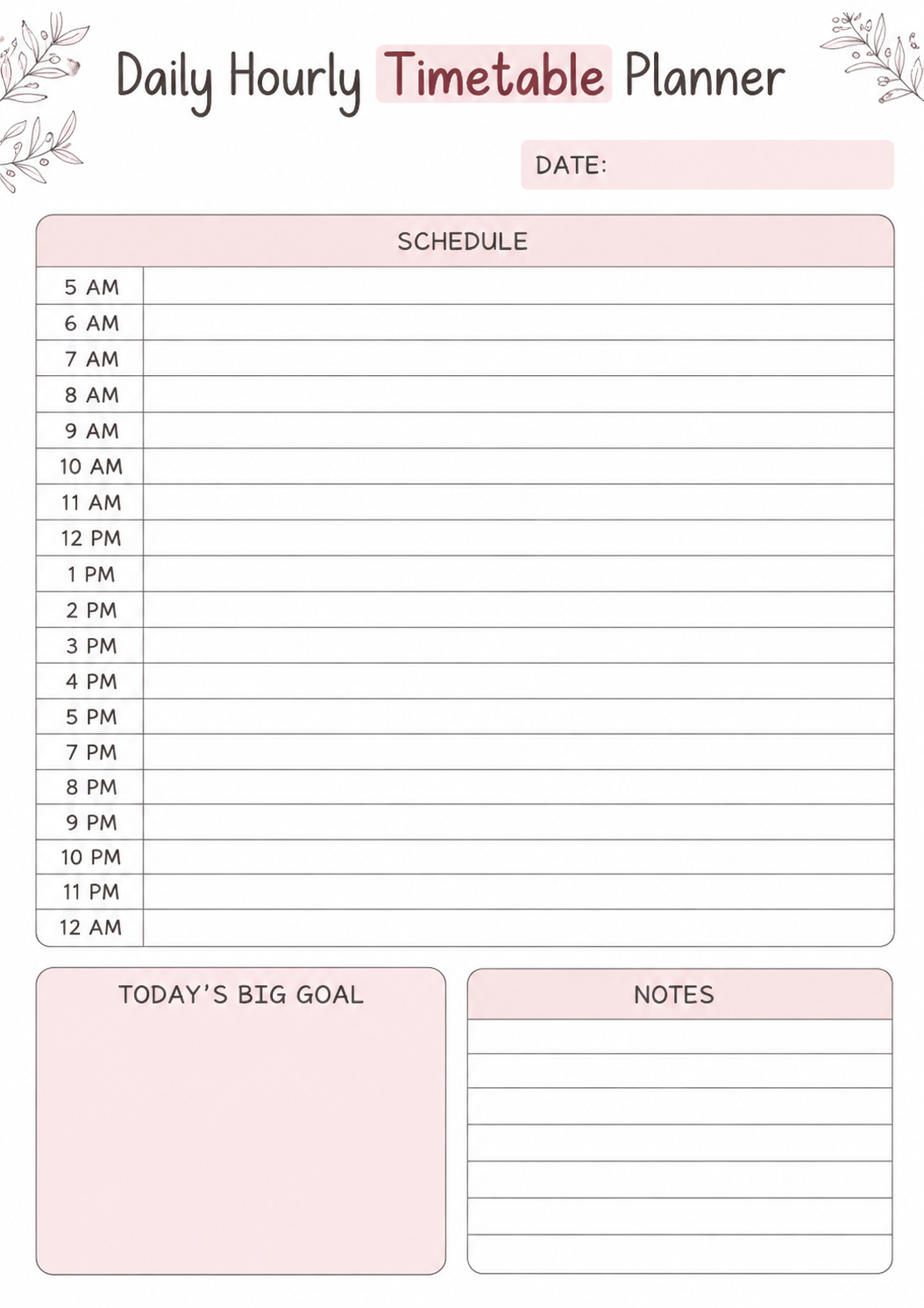
Daily Hourly Timetable Planner
Clean, botanical, and completely focused on the schedule. One big goal for the day, one notes section, and a full hour-by-hour layout nothing extra to distract you from just getting the day planned.
Best For: People who want a no-fuss hourly planner with space for one clear daily goal.
Key Features:
- Full hourly schedule from 5 AM to 12 AM
- Today's Big Goal section
- Notes block side by side with the goal
- Date field at the top
- Soft pink botanical design
Why It Works: Naming just one big goal for the day not three, not five keeps your focus from getting spread too thin.
Use This Template →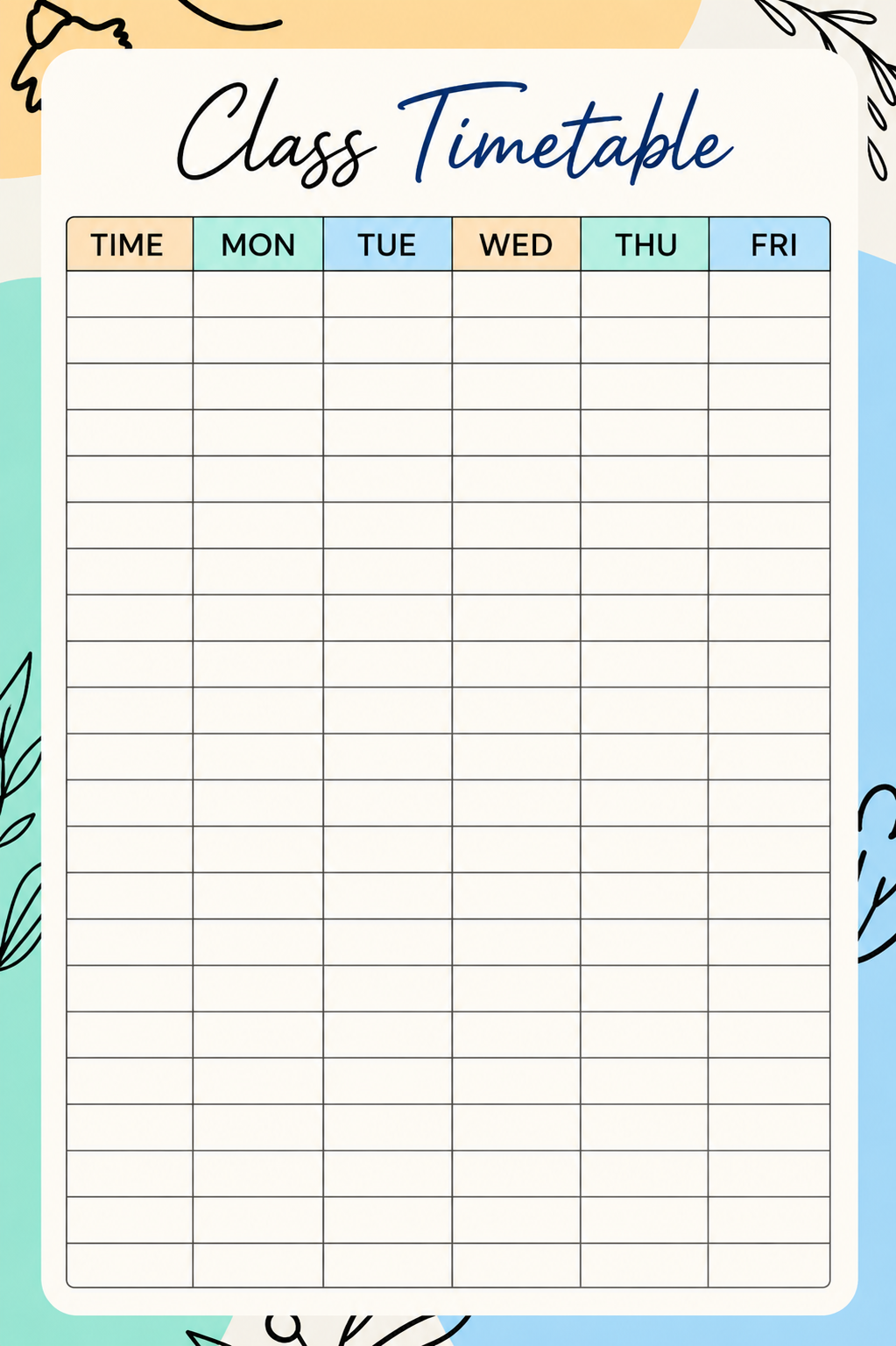
Class Timetable Planner
A straightforward weekly class grid with time slots on the left and Mon-Fri columns across the top. Fill in your subjects once and refer to them all semester no app needed.
Best For: Students who want a simple, reusable weekly class schedule they can pin up or keep in a notebook.
Key Features:
- 6-column grid: Time, Mon, Tue, Wed, Thu, Fri
- Plenty of rows for a full day of classes
- Clean cream background with color-coded headers
- Botanical border design
- No extra sections, just the schedule
Why It Works: Sometimes a plain grid is exactly what you need. No extras, no clutter, just your weekly classes at a glance.
Use This Template →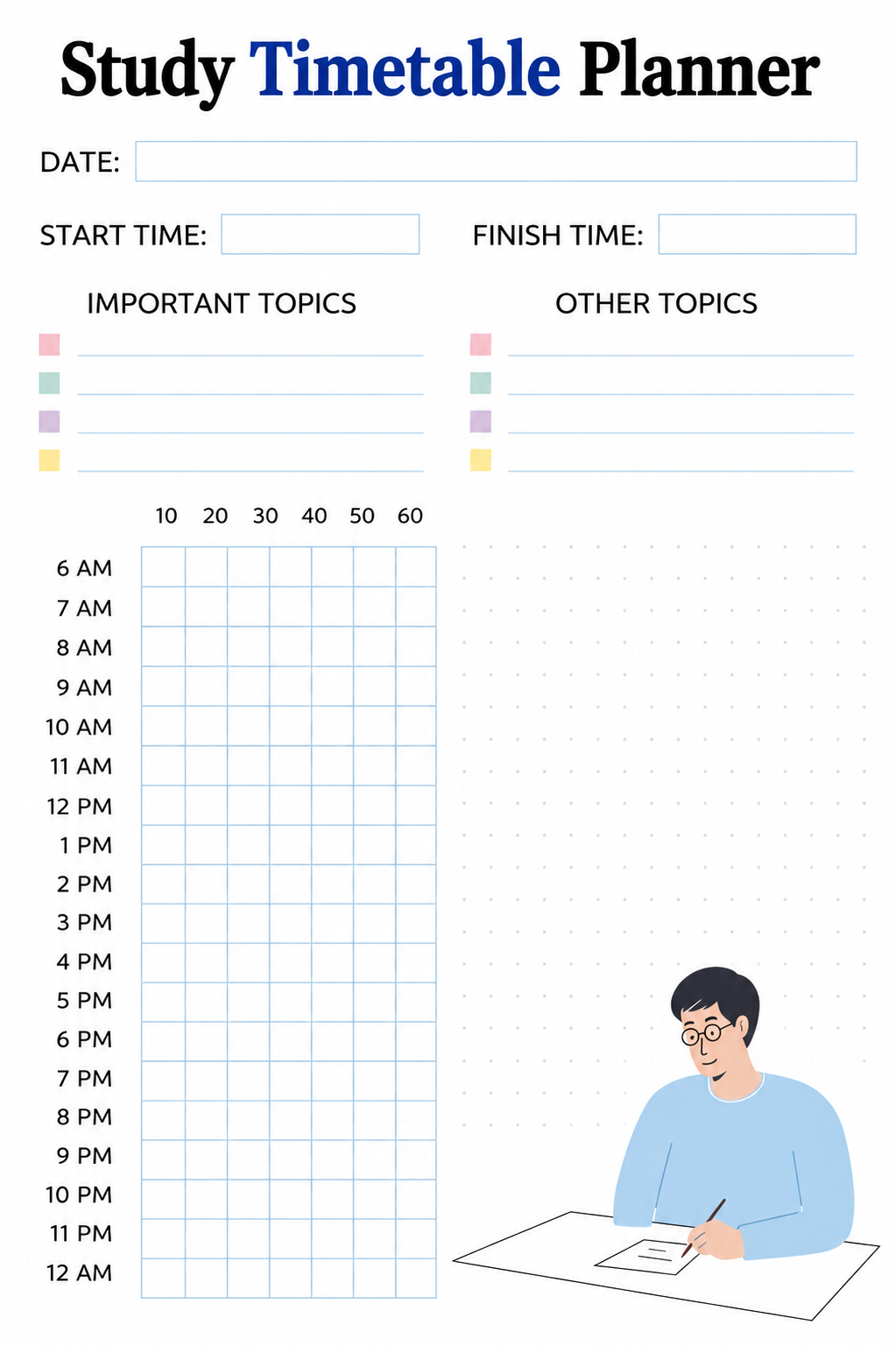
Study Timetable Planner
This one tracks not just when you study, but how many minutes per hour you actually put in. The 10-minute block grid next to each hour slot makes it easy to see where study time is being used well and where it isn't.
Best For: Students who want to track actual study time per hour alongside their topic list.
Key Features:
- Start and finish time fields
- Important Topics and Other Topics side by side
- Minute-block grid (10-60 mins) per hour slot
- Hourly schedule from 6 AM to 12 AM
- Dotted notes area on the right
Why It Works: Tracking minutes, not just hours, shows you exactly how focused each study block really was.
Use This Template →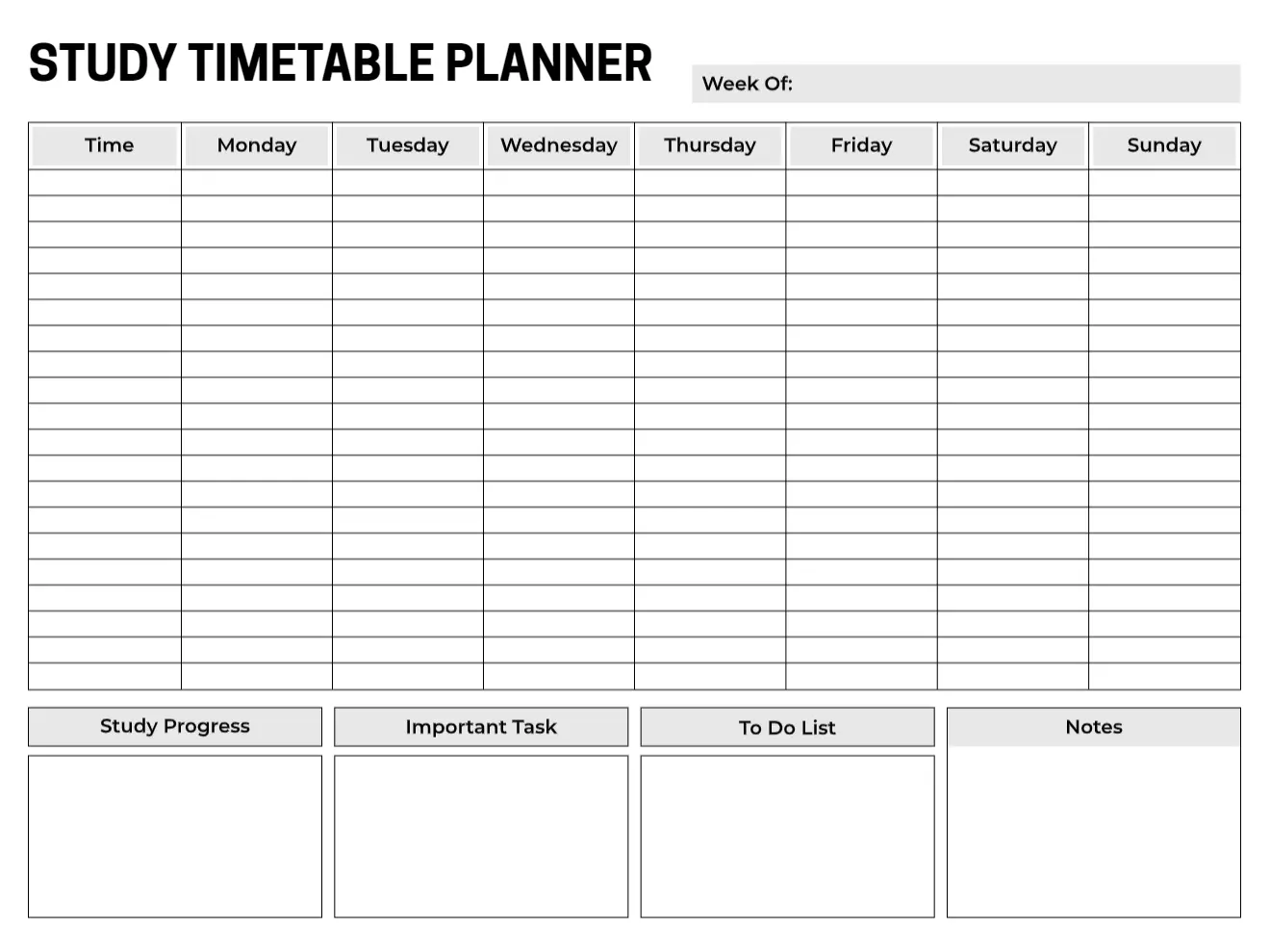
Weekly Study Timetable Planner
A full Mon–Sun weekly grid for mapping out study sessions across every day, with four summary blocks at the bottom to track progress, important tasks, to-dos, and notes all in one place.
Best For: Students planning study sessions across a full week and tracking overall progress.
Key Features:
- 8-column grid: Time + Monday through Sunday
- Week of the field at the top
- Four bottom sections: Study Progress, Important Task, To Do List, Notes
- Clean black and white landscape layout
- Plenty of rows for a full day
Why It Works: Seeing the whole week in one grid makes it easy to spot gaps and overloaded days before they happen.
Use This Template →
School Lunch Timetable For Moms
Planning school lunches for multiple kids across a full week used to mean a lot of mental juggling. This template puts each child's lunch plan in their own row with a shopping list built right in on the side.
Best For: Moms planning weekly school lunches for multiple children with a grocery list in the same place.
Key Features:
- Kids' Name column with Mon-Fri lunch slots
- Rows for up to 5 children
- Shopping list section on the right
- Light blue, clean design
- Landscape format for easy viewing
Why It Works: Having the shopping list next to the meal plan means you build your grocery list as you plan, not after.
Use This Template →
Weekly Timetable Planner
A five-day school week planner that goes beyond just classes. Each day has space for the lesson, activity, and homework and there are two reflection blocks at the bottom for achievements and next week's prep.
Best For: School students tracking lessons, activities, and homework across the week with end-of-week reflection.
Key Features:
- Five-day columns: Mon-Fri
- Three fields per day: Lesson, Activity, Homework
- Achievements and For Next Week blocks at the bottom
- Week and month fields at the top
- Pink and teal floral design
Why It Works: Combining the weekly schedule with a reflection section turns it into a learning tool, not just a planner.
Use This Template →Why the Best Online Timetable Maker Doesn't Punish You for a Week That Went Sideways?
Most scheduling tools are accidentally punishing.
You miss two days. You open the app. The unfilled blocks sit there highlighted, greyed out, or stacked with overdue indicators. Instead of picking up where you left off, you feel the weight of what you didn't do. You close the tab. A rough few days become a permanent break from the system.
This is not a motivation problem. It is shame-triggered avoidance, and it is one of the most predictable failure points in scheduling. Systems that treat missed blocks as failures guarantee inconsistency.
The most consistent people aren't the ones who never miss a day. They're the ones who know how to start again after they do.
With PlanWiz, when a hard week happens and it will you open a fresh template, carry forward what still matters, and keep moving. No guilt summary. No overdue badges. Just a clean structure waiting for where you actually are now.
"The most consistent people aren't the ones who never miss a day. They're the ones who know how to start again after they do."
How Do You Actually Get Started With PlanWiz?
PlanWiz works by helping you choose a template, add your schedule, and follow a structured weekly plan that adapts to your real week, not the one you planned.
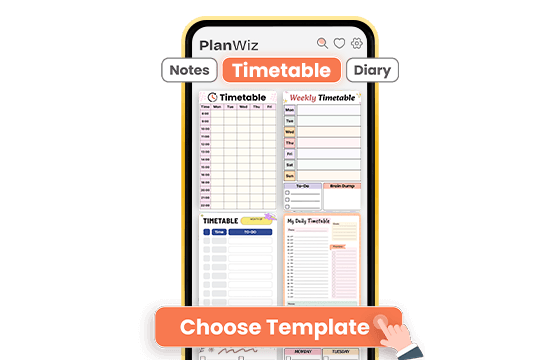
Step 1: Choose a Template That Fits Your Timetable
Browse from 1,000+ ready-made timetable templates and pick one that matches your week type and energy. Packed semester ahead? Go into detail with a full class timetable layout with color-coded subjects and hourly blocks. Just need to map three focused study days? Pick the minimal weekly timetable view. Either way, the structure is already built you're not starting from zero.
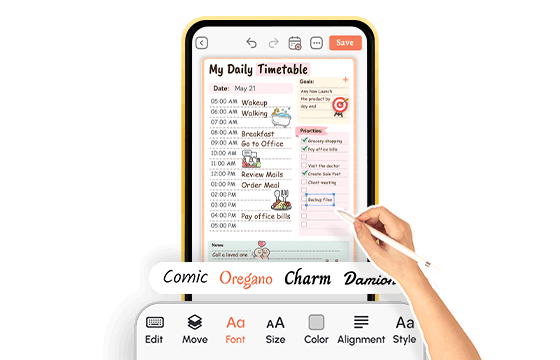
Step 2: Build Your Timetable in Minutes
Type in your classes, study sessions, work shifts, or personal time blocks adjust any sections if you want, and set a reminder on any slot that needs one. Or use the online timetable maker template exactly as it is. Either way, you have a working weekly timetable within a few minutes, not after an hour of setup that used up the focus you needed for actual planning.
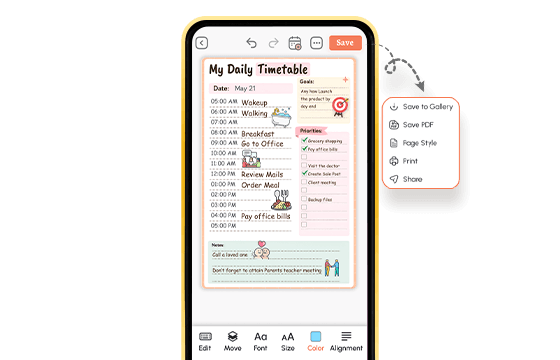
Step 3: Follow Your Timetable, Adjust It, and Come Back After Hard Weeks
Once your timetable is set, don't let it live only inside an app. Download any timetable page as a PDF, print it, and place it somewhere you actually look every morning your desk, your notebook cover, or your door. Share your weekly timetable with your study partner, teacher, or accountability group directly from the app in one tap. When a slot shifts or a whole week goes sideways, adjust the timetable and keep going. When you fall off entirely, open a fresh timetable page no guilt, no starting over, just forward. That's the whole system.
An online timetable maker that is ready before you are.
What Real People Say About This Online Timetable Maker?
Ready to Try the Online Timetable Maker That Works With Your Real Schedule?
PlanWiz is the online timetable maker designed for real weeks, real workloads, and real scheduling challenges. If you're looking for the best way to organize your classes, study sessions, or work shifts into a plan you'll actually follow, it gives you the structure without the complexity.
Free to start. No credit card. Ready in under three minutes.
Start Free → planwiz.app

Frequently Asked Questions
The best online timetable maker for students removes the blank-page problem before you've typed a single class, connects study sessions directly to your class schedule, and never punishes you for a week that went sideways. PlanWiz does all three with 1,000+ pre-built templates, so there's always a ready structure and a no-shame reset, so a missed week never becomes a reason to abandon the system entirely.
Look for ready-made templates that eliminate blank-page paralysis, multiple planning views for daily and weekly scheduling, block-level reminders that keep your timetable visible throughout the day, flexible customization that adapts to different weeks, and a recovery system that doesn't treat missed days as failures. Avoid tools that make inconsistency feel like a personal flaw.
Yes. It works as a free timetable maker with access to a wide range of templates at no cost. Premium features, including advanced customization, expanded template libraries, and additional download formats, are available on upgraded plans, but the core scheduling functionality is completely free without a credit card.
An online timetable maker improves your week by reducing decisions before each day begins. When your classes, study sessions, and work blocks are already placed into a visible weekly structure, your brain spends energy on execution instead of figuring out where to be and when. Research on implementation intentions consistently shows people follow through significantly more when they've planned not just what to do, but when and where.
Open a fresh template and start from where you actually are not from where you planned to be. The biggest mistake after falling behind is trying to catch up on everything at once. Pick the most important blocks for today, let the rest go, and move one day forward at a time.
Yes. It works as a timetable planner app across iOS, Android, and desktop. The experience is especially strong on tablet, where the weekly timetable view gives you more layout space for full class grids, study blocks, and detailed planning without losing any of the template library or customization available on mobile.