The Work Schedule Maker Your Whole Team Will Actually Follow
PlanWiz is a customizable work schedule maker that helps individuals, managers, and teams build clear, organized schedules in minutes. Choose from 1,000+ ready-made work schedule planner templates for weekly shifts, monthly rosters, daily task blocks, hourly time planning, and team coordination. Whether you are managing a full team, planning your own work week, or handling rotating shifts.
What Is the Best Work Schedule Maker in 2026?
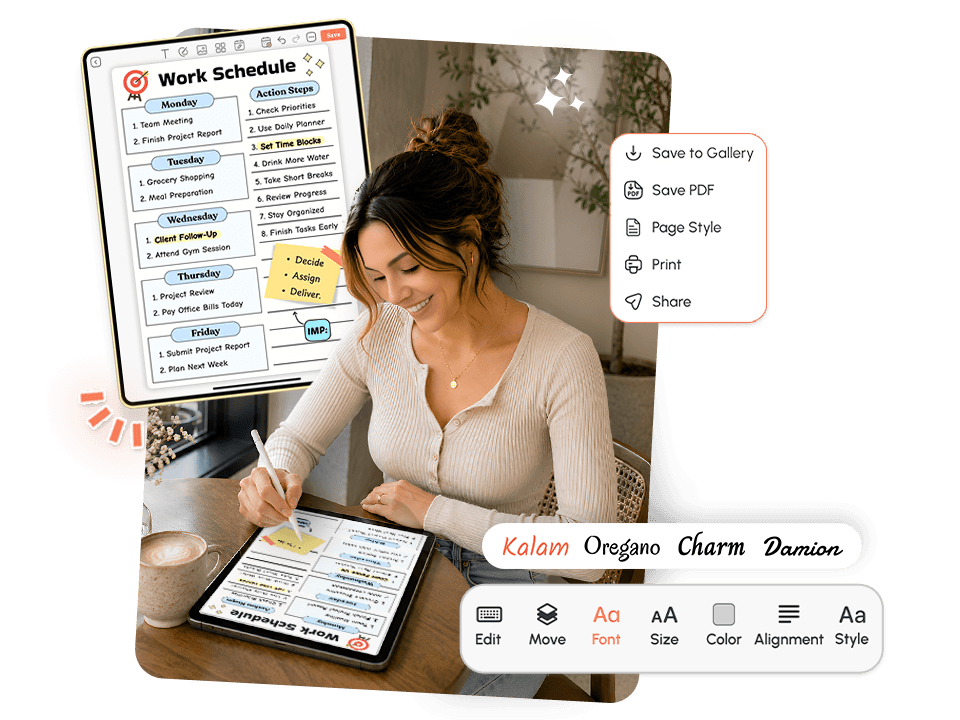
The best work schedule maker in 2026 is one that helps you plan shifts, assign tasks, track hours, and adjust quickly when things change without rebuilding your entire schedule from scratch every week.
Here is what a genuinely effective work schedule maker should do:
- Break the full work week into clear daily blocks without creating confusion across your team.
- Remove the guesswork with a ready-made structure from day one, so scheduling takes minutes instead of hours.
- Keep everyone's hours, shifts, and tasks visible in one place at a glance.
- Adapt instantly when someone calls in sick or a deadline moves, without starting from zero.
- Make it easy to share, print, or export the schedule so the whole team stays aligned.
Who Is This Work Schedule Maker For?
Small Business Owners and Managers
who are manually building employee work schedules in spreadsheets every week are losing hours they will never get back.
Freelancers and Independent Workers
who need a reliable weekly work schedule to protect their focus time and stop letting client work eat into everything else.
Shift-Based Teams
in retail, hospitality, healthcare, and logistics who need a work shift planner that handles rotating hours, split shifts, and coverage gaps without confusion.
Remote and Hybrid Teams
who struggle to coordinate across time zones and need a digital work schedule everyone can access, understand, and follow.
People with ADHD
who need structured time blocks and a visual layout that makes their work week manageable. The ADHD planner app experience inside PlanWiz is built exactly for that.
Why Does Every Work Schedule Maker Fall Short?
Most scheduling tools fail because they help you create a schedule, but do not help you maintain it when reality gets in the way. A useful work schedule maker should handle shift changes, task assignments, team visibility, and fast adjustments without turning into a second job.
Building the Schedule Takes Longer Than the Work Week Itself
You open a blank spreadsheet on Sunday, start typing names and hours, realize you forgot two shift swaps, fix those, realize the totals are wrong, fix those, and by the time you are done, an hour has disappeared. That is not scheduling; that is survival. This is not a time management problem. It is a tool problem. When your work schedule maker does not have a ready-made structure, you rebuild everything from scratch every single week. Pre-built templates eliminate that. You fill in the details. The structure is already there.
Shift Changes Break the Entire Plan
Someone calls in sick on Monday morning. You adjust their shift, which affects coverage, which affects someone else's break time, which you now have to manually recalculate across the whole sheet. By the time you have sorted it, you have three messages asking what the updated schedule looks like. Without a flexible work shift planner, one change creates a cascade of confusion. A good scheduling tool lets you update one block, share the updated schedule instantly, and move on.
Nobody Knows What the Current Schedule Is
You sent the schedule on Friday. Someone printed the old version. Someone else is going off memory. Your group chat has four different versions of who is covering the afternoon shift. When the employee's work schedule lives in a place nobody consistently checks, an email thread, a shared drive folder, or a WhatsApp message, it stops being a schedule and starts being a source of conflict. A centralized, shareable scheduling tool solves this before it starts.
Hourly Planning Gets Ignored Until It Is Too Late
You have the week mapped out at a high level. But nobody has blocked time for the actual work. Meetings fill in. Reactive tasks take over. By Thursday, the priorities from Monday are still sitting untouched. A work schedule maker that only shows shift times but does not support task-level time blocking leaves a critical gap. Without an hourly planner template built into the workflow, the schedule exists, but the real work gets squeezed out.
Why Does Your Team Keep Missing Deadlines Even With a Schedule in Place?
Teams often miss deadlines not because they are unorganized, but because their scheduling system only handles the surface layer of the work week. A few well-documented patterns explain why.
Cognitive overload builds up when people have to mentally translate a high-level shift schedule into actual daily tasks. If the schedule shows "8 am-4 pm shift" but does not show what needs to happen inside that window, each person is doing hidden planning work every single day. That invisible effort drains focus before the real work even begins.
Coordination failure happens when one person's update does not reach the rest of the team in time. Research on team performance consistently shows that shared visibility, knowing what others are working on and when, significantly reduces duplicated effort and missed handoffs.
Scheduling gaps appear when the plan covers the big picture but leaves the in-between moments unstructured. Those gaps are exactly where reactive, low-priority tasks fill in, and high-priority work gets pushed.
🧠 Why this matters: Research in organizational psychology suggests that teams with clearly visible, shared schedules where each person can see their own tasks alongside their teammates' complete coordinated work faster and with fewer errors than teams relying on individual tracking alone. PlanWiz is built around this principle. The weekly schedule planner template gives your team a shared, visual layout where every shift, task block, and deadline is visible in one place, so the mental overhead of figuring out who is doing what and when disappears before the week even starts.
How Does a Good Work Schedule Maker Fix the Scheduling Gap?
The biggest failure point in work scheduling is not that people forget to plan; it is that the plan never connects to the actual hours of the actual day. Most tools help you write down the schedule. Very few help you make it work when real life shows up.
1. Schedule clarity: Templates that define not just who is working when, but what needs to happen during each block. Vague schedules get ignored. Specific ones get followed.
2. Team visibility: Your work schedule connects directly to a shared view where shifts, task assignments, and coverage gaps are visible to everyone at once. No more chasing updates through group chats or email threads. The task planner app layer inside PlanWiz ensures individual tasks stay connected to the bigger team schedule.
3. Fast recovery: When a shift changes or a deadline moves, update one block and reshare in seconds using the monthly schedule planner template. The system adjusts around your reality. It does not demand a perfect week from you.
What Features Should a Work Schedule Maker Have?
PlanWiz was not built by adding a scheduling tab to a generic productivity app. It was designed from the ground up for people who need to manage real work hours, real shifts, and real teams with the structure, flexibility, and clarity to keep everything running even when the week goes sideways.
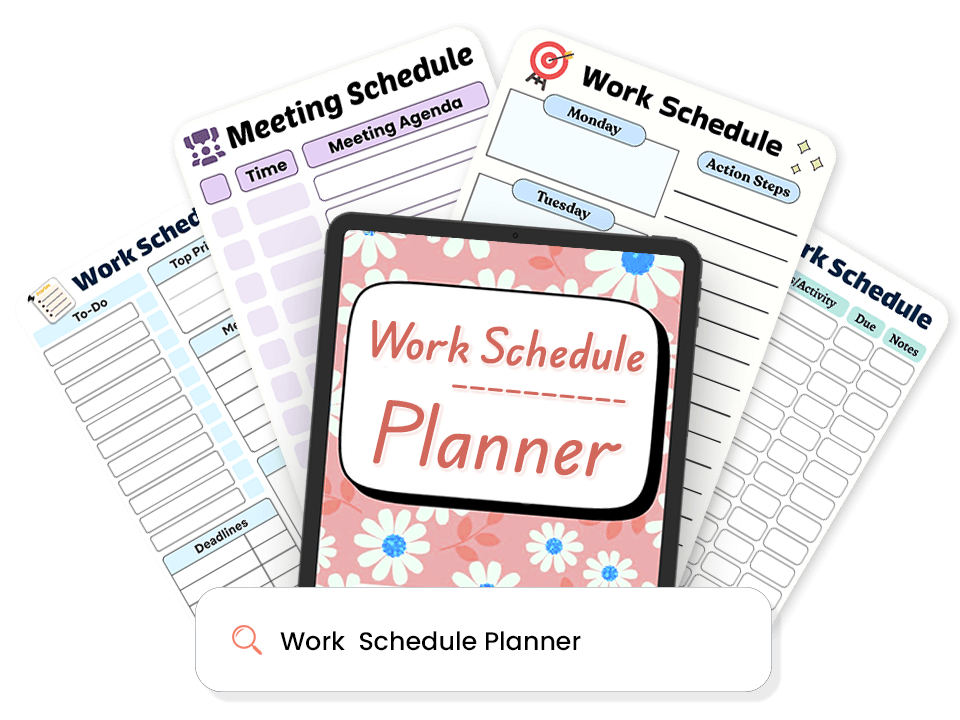
Ready-Made Work Schedule Templates
Most scheduling tools hand you a blank grid and expect you to do all the structural work yourself. PlanWiz does the opposite. Every template arrives pre-structured for the scenario you are actually dealing with: weekly rotation, shift-based arrangement, or a full-month plan.
- Weekly work schedule layouts for 5-day, 6-day, and 7-day operations.
- Shift rotation layouts for morning, afternoon, and overnight patterns.
- Monthly grids with date blocks and coverage summaries built in.
- Individual work planners for freelancers managing their own workload.
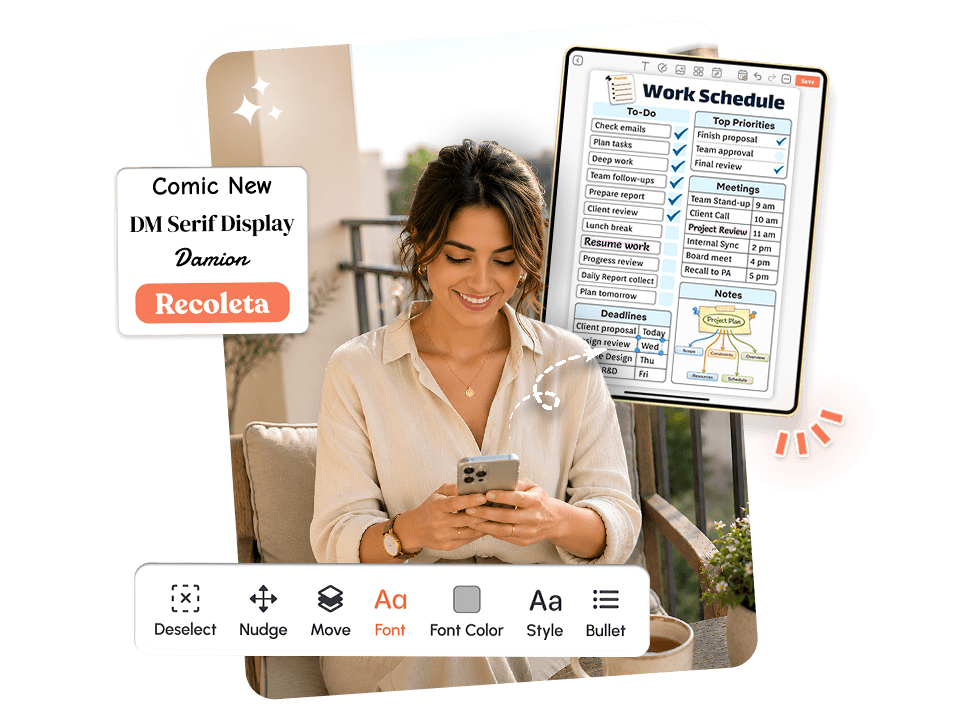
Fully Customizable Work Schedule Layout
No two teams have the same scheduling needs. PlanWiz gives you a fully customizable work schedule maker so the template always fits your operation, not a generic format built for someone else.
- Adjust shift blocks, time ranges, and role labels to match your team's structure.
- Add sections for notes, availability flags, or manager sign-off.
- Customize colors and labels so different shift types are instantly distinguishable.

Work Schedule Coverage Planning
The most expensive scheduling mistake is a coverage gap nobody noticed until the shift started. PlanWiz puts the full weekly or monthly view in front of you so you can see where coverage is thin before anything goes out.
- View all shifts for the full week or month on a single screen.
- Identify uncovered slots and fill them before sharing with the team.
- Adjust rotation patterns in seconds no starting over required.
- Use work planner templates to layer individual workloads against team-level shifts.
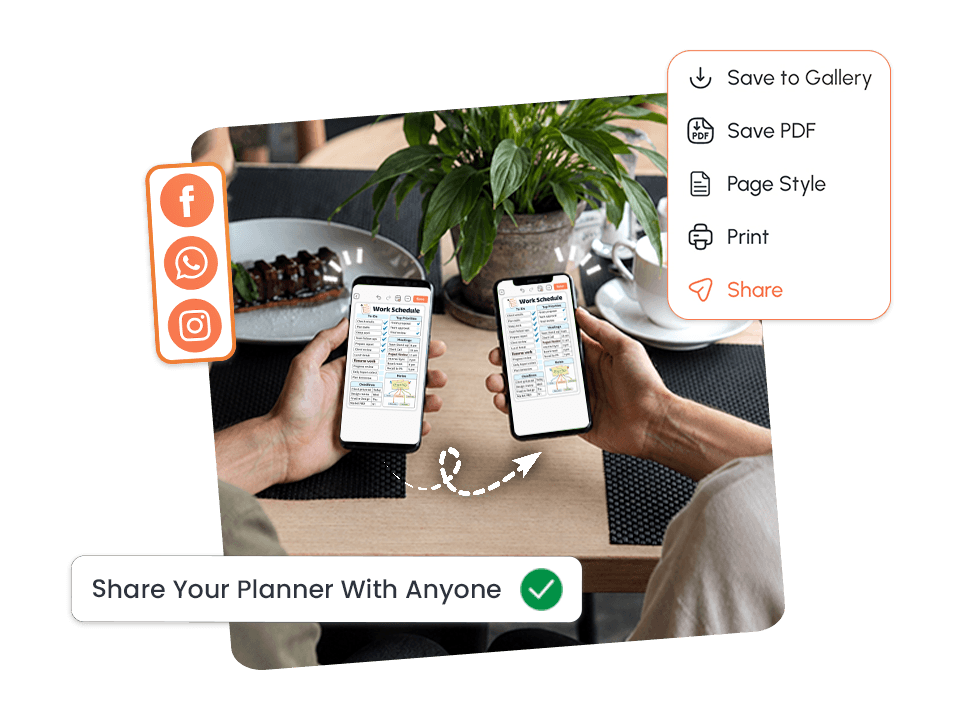
Shareable Work Schedule. One Plan, Zero Confusion.
A schedule that no one can access is not a schedule. PlanWiz makes it easy to share, download, and reference the current version so nobody is working off an outdated screenshot.
- Export any schedule as a clean PDF, shareable via email or printed for a notice board.
- Share a live link so updates reach the team in real time.
- Generate individual views so each team member only sees what is relevant to them.
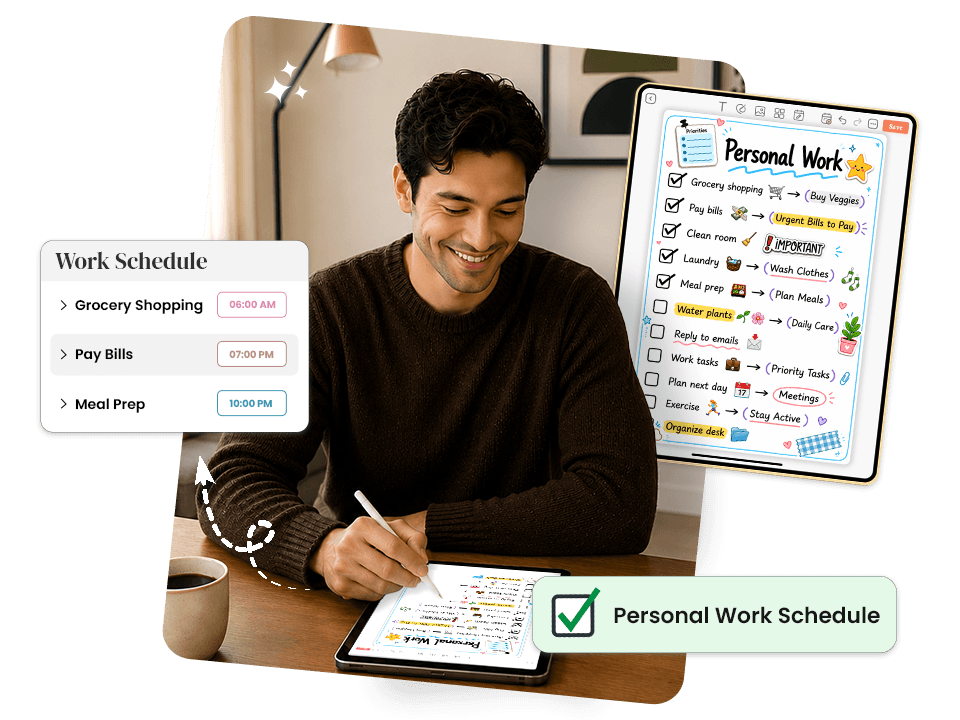
Personal Work Schedule for Individual Planners
PlanWiz works equally well for freelancers and independent professionals who need to structure their own workweek.
- Build a personal work schedule that allocates time by project, client, or task category.
- Use time-blocking layouts to protect focus time and prevent reactive work from taking over.
- Connect your plan to a daily planner app so your work week and daily task list stay aligned.
- Pair your work hours with a habit tracker app to keep professional routines consistent.
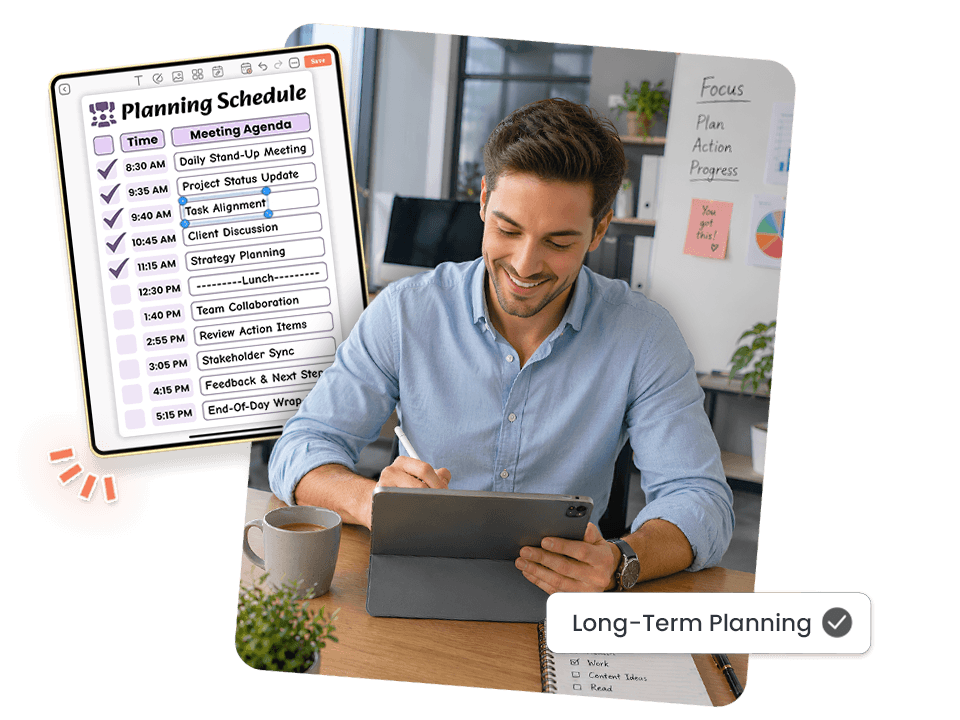
Long-Term Work Schedule Planning
Most tools are built for the immediate week. PlanWiz gives you the full range from daily shift planning all the way out to quarterly and monthly scheduling.
- Plan staffing patterns across multiple months to prevent burnout.
- Map rotations across four to twelve weeks using templates that carry structure forward automatically.
- Coordinate seasonal surges with a project planner template that ties resource planning to schedule output.
Explore Work Schedule Templates Built for Real Teams
Pick the Template That Matches How You Feel Today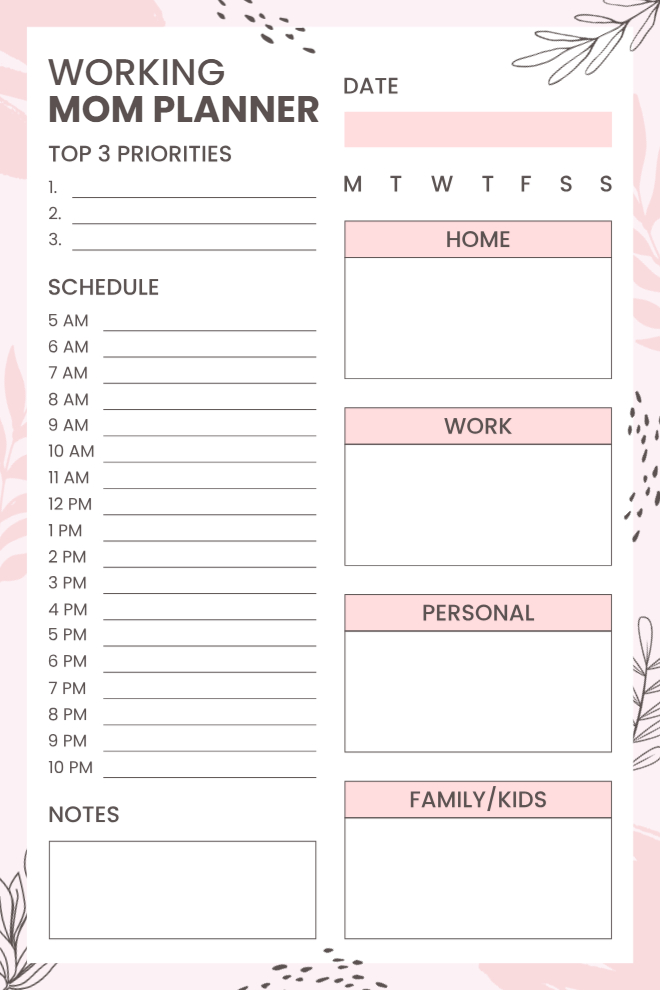
Working Mom Planner
Being a working mom means juggling four completely different roles before noon. This planner gives each one its own space, so nothing gets forgotten and nothing bleeds into everything else.
Best For: Working moms managing home, work, personal, and family tasks all in one day.
Key Features:
- The top 3 priorities section to start the day focused
- Hourly schedule from 5 AM to 10 PM
- Four separate sections: Home, Work, Personal, Family/Kids
- Notes block and day-of-week selector
Why It Works: Separating your roles on paper means your brain isn't carrying all four at once every time you look at the page.
Use This Template →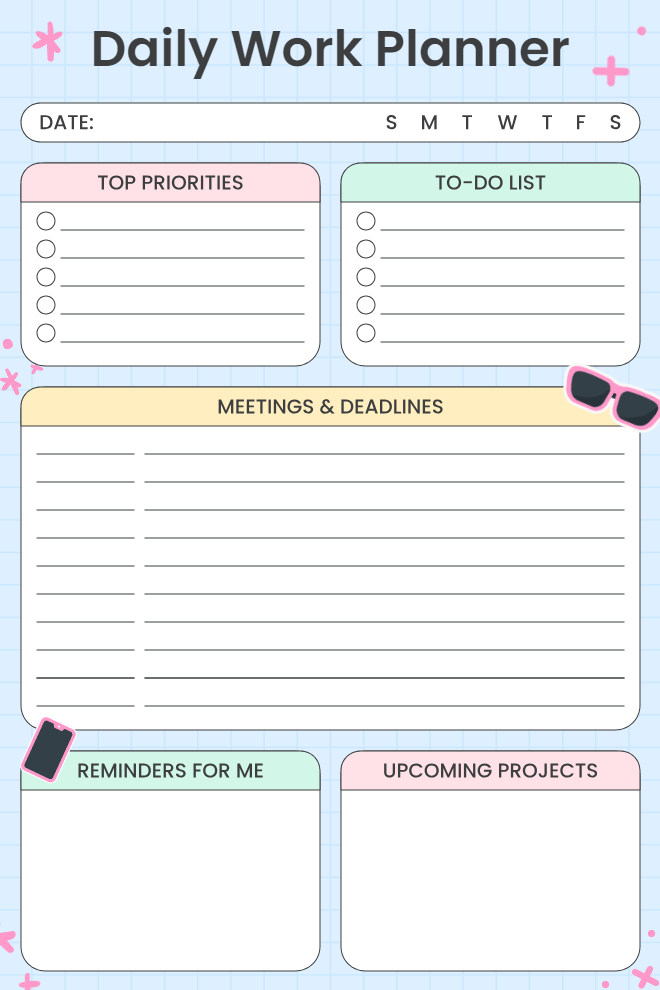
Daily Work Planner
Priorities, tasks, meetings, deadlines, reminders, and upcoming projects all on one page. No switching between apps or notebooks, just one clean layout that covers the full workday.
Best For: Professionals who need to track tasks, meetings, and upcoming projects in one daily view.
Key Features:
- Top priorities and to-do list side by side
- Meetings & deadlines section with time fields
- Reminders and upcoming projects blocks at the bottom
- Day-of-week selector and date field
Why It Works: Meetings and deadlines have their own section, so they don't get buried in the task list and quietly missed.
Use This Template →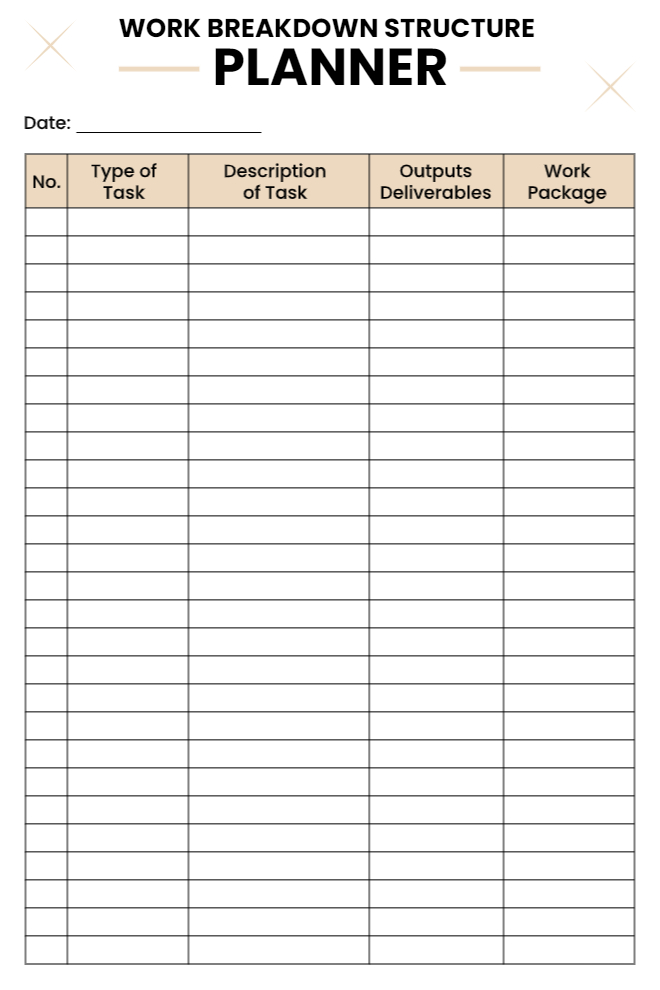
Work Breakdown Structure Planner
A regular to-do list doesn't work when a project has real complexity. This structured table breaks every task down by type, description, deliverable, and work package; nothing stays vague.
Best For: Project managers and professionals who need detailed, structured task documentation.
Key Features:
- Four columns: Type of Task, Description, Outputs/Deliverables, Work Package
- Numbered rows for easy reference
- Date field at the top
- Clean, minimal layout with plenty of rows
Why It Works: Filling in all four columns forces you to define what "done" actually looks like for every single task.
Use This Template →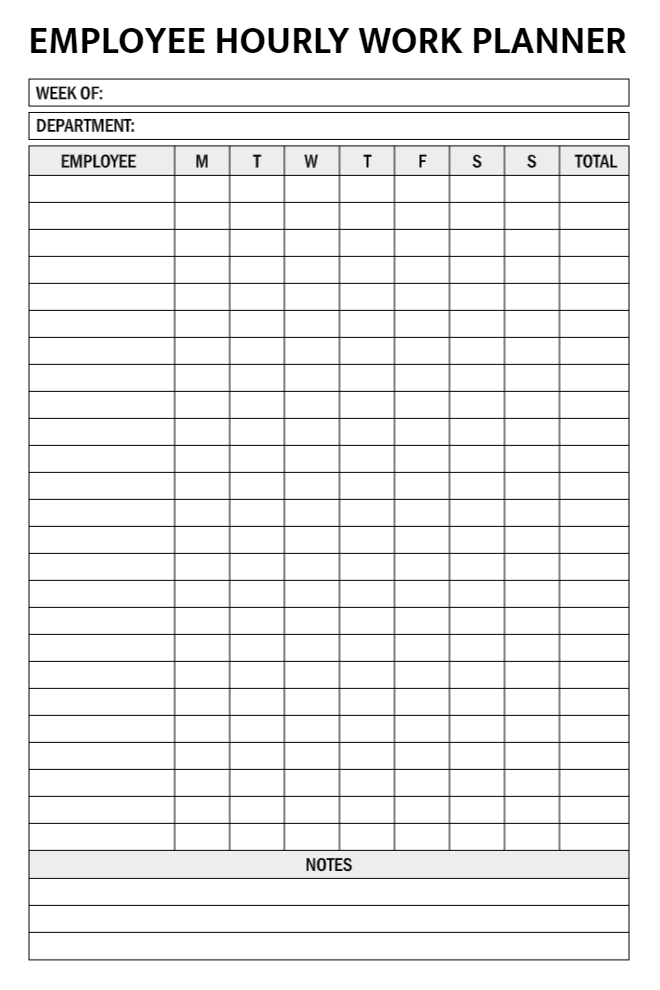
Employee Hourly Work Planner
Tracking a team's weekly hours doesn't need to be complicated. This one-page grid logs every employee's hours across all seven days and totals them automatically, no spreadsheet app needed.
Best For: Managers and HR teams tracking weekly work hours across multiple employees.
Key Features:
- Employee name column with daily hour fields
- Mon–Sun columns plus a weekly total
- Department and week fields at the top
- Notes section at the bottom
Why It Works: Everything sits on one page; weekly reviews and approvals take minutes instead of digging through files.
Use This Template →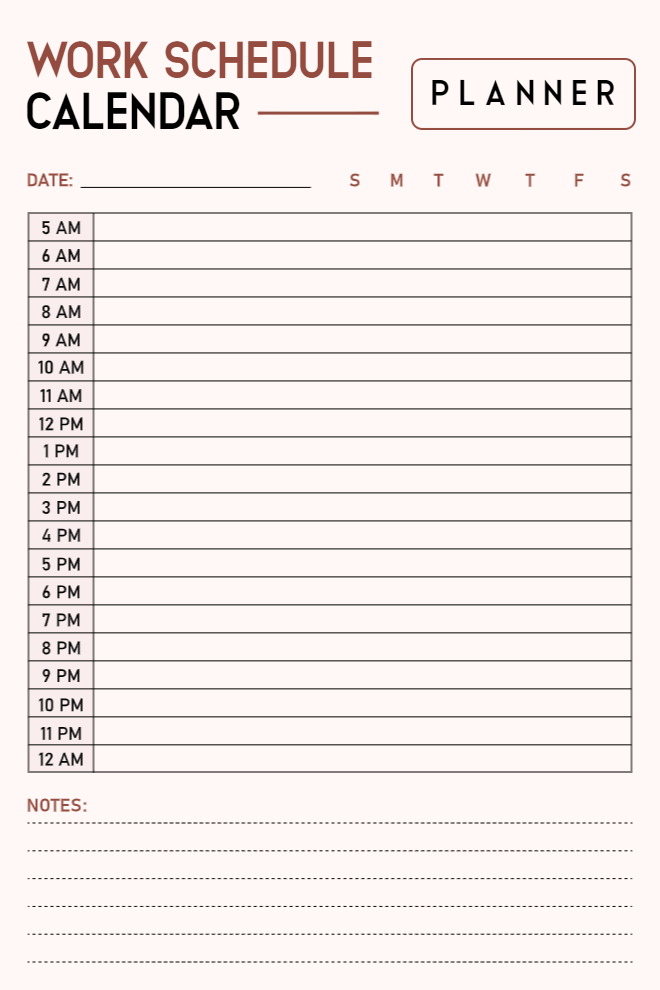
Work Schedule Calendar Planner
No extras, no distractions, just a clean hour-by-hour schedule from 5 AM to 12 AM with a small notes area at the bottom. Exactly what you need when time-blocking is the only goal.
Best For: Anyone who time-blocks their workday and wants a distraction-free daily schedule.
Key Features:
- Full hourly schedule from 5 AM to 12 AM
- Date field and day-of-week selector
- Dotted notes section at the bottom
- Minimal beige and dark red design
Why It Works: When there's nothing else to fill in, you focus entirely on making the schedule actually work.
Use This Template →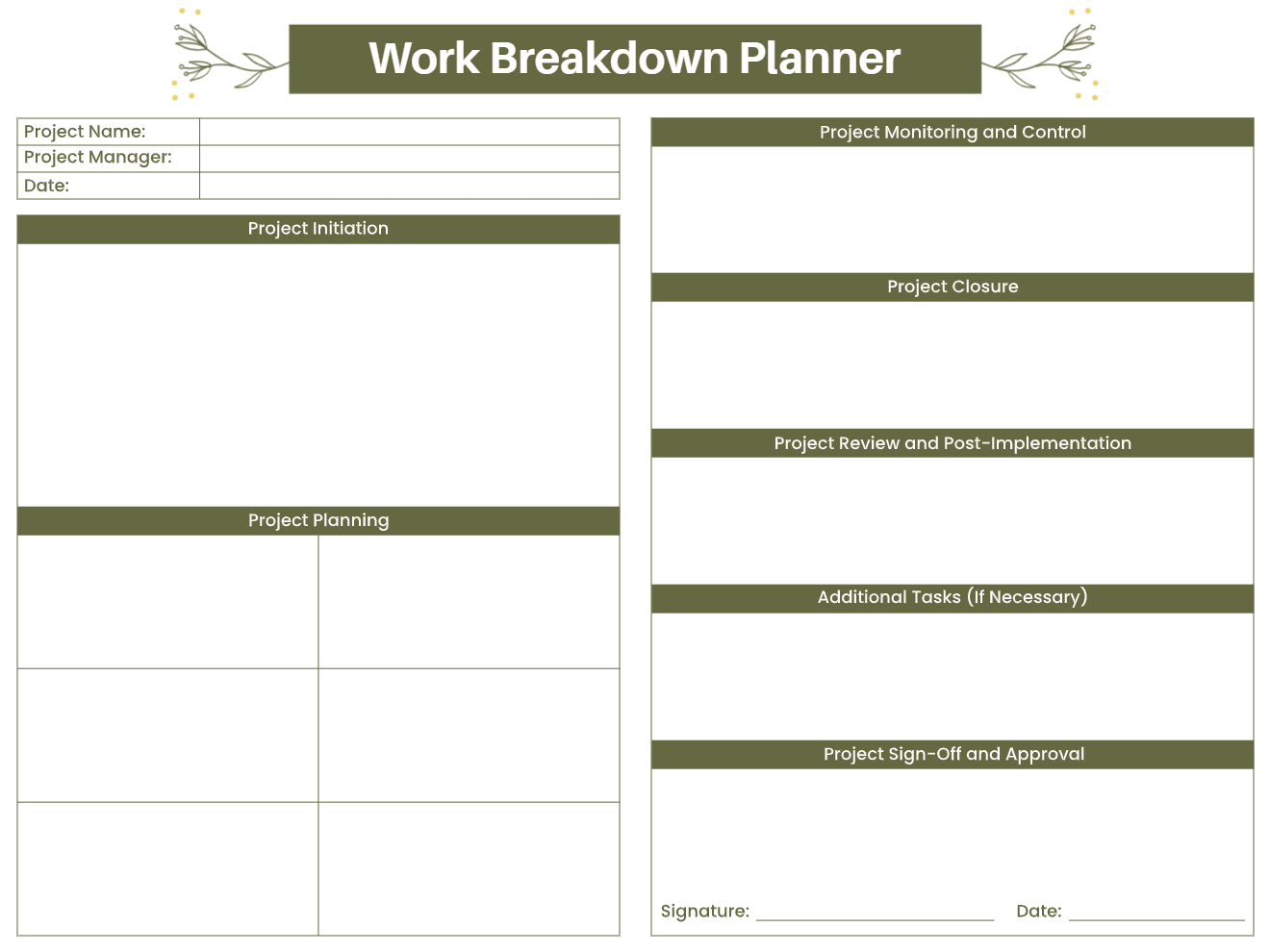
Work Breakdown Planner - Project Phases
This one walks a project through every stage: initiation, planning, monitoring, closure, review, and final sign-off. Each phase has its own section, so nothing gets skipped halfway through.
Best For: Project managers who need to document a full project lifecycle from start to approval.
Key Features:
- Project info fields: name, manager, date
- Six-phase sections: Initiation, Planning, Monitoring, Closure, Review, Additional Tasks
- Sign-off section with signature and date line
- Olive green botanical design
Why It Works: Mapping every phase on one page makes you think through the full project, not just whatever's urgent right now.
Use This Template →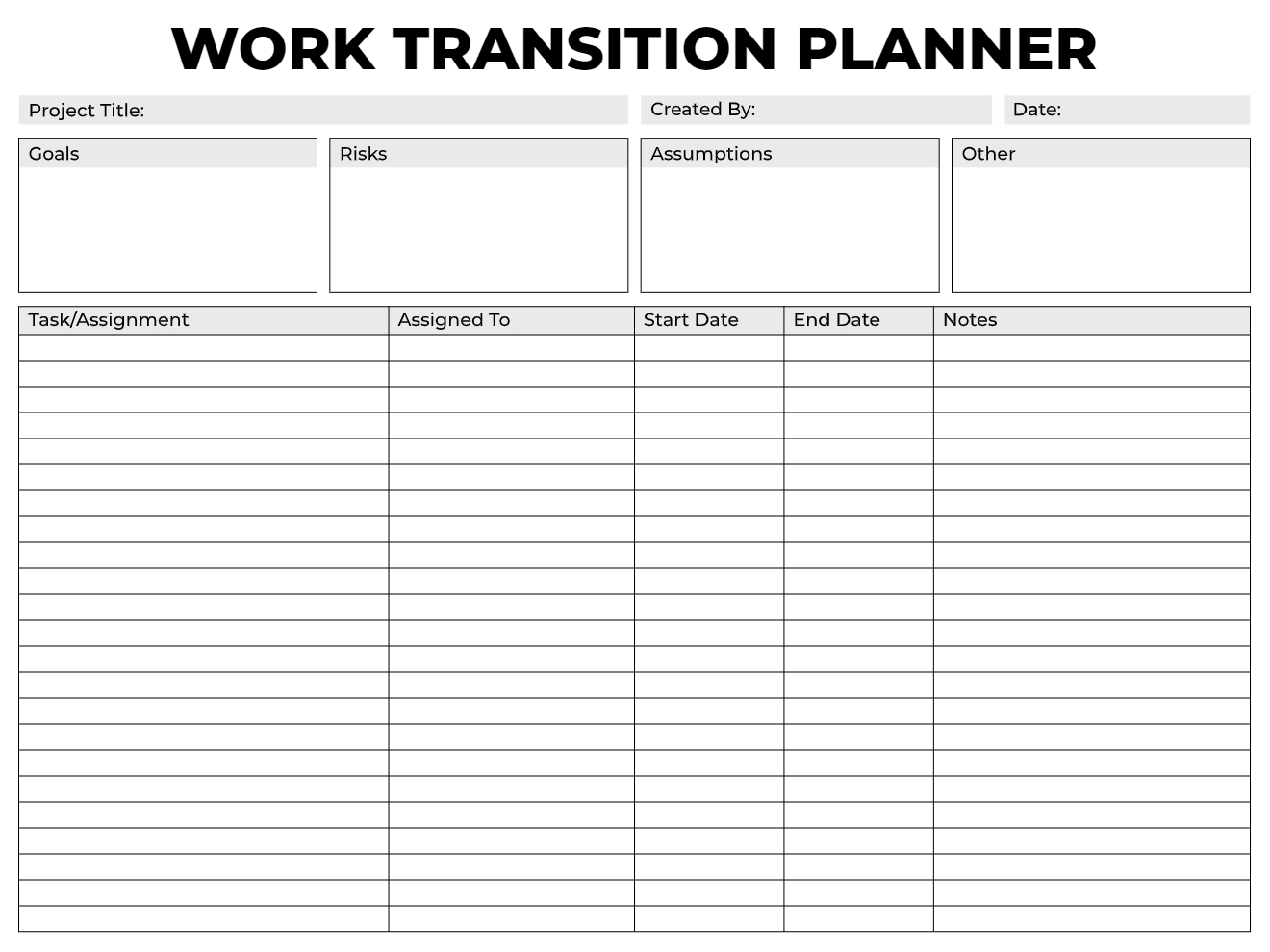
Work Transition Planner
Role handoffs go wrong when things aren't written down. This template documents every task with an assigned owner, start date, end date, and notes, plus sections for goals, risks, and assumptions upfront.
Best For: Professionals managing role transitions, team handovers, or project handoffs.
Key Features:
- Four header boxes: Goals, Risks, Assumptions, Other
- Task table with assigned to, start date, end date, and notes columns
- Project title, creator, and date fields
- Clean landscape layout for full visibility
Why It Works: Every task has a name and a deadline, so nothing gets quietly dropped when responsibilities change hands.
Use This Template →Why the Best Work Schedule Maker Does Not Make You Feel Like You Are Already Behind?
In most scheduling tools, an unfinished week looks like failure. Unchecked tasks. Unassigned shifts. Gaps that turned red because nobody covered them. Every time you open the schedule, the first thing you see is everything that went wrong.
That is not scheduling. That is a weekly guilt summary.
Unfinished schedules are almost always a system problem, not a people problem. When the tool makes it hard to update, hard to share, and hard to recover, people stop using it. Not because they stopped caring, but because the tool stopped helping.
It works differently. A shift falls through; you update one block. A week runs over, and you open the next week fresh. No red flags across the whole month. No performance summary telling you how badly last week went. Just the next page and a clear structure ready to go.
The best managers are not the ones whose schedules never change. They are the ones who can adapt a schedule in two minutes and get the whole team aligned before the shift starts.
"A shift falls through; you update one block. A week runs over, and you open the next week fresh. No red flags across the whole month. No performance summary telling you how badly last week went."
How Do You Get Started With PlanWiz?
No lengthy setup. No, building a custom template before you are allowed to schedule anyone. No migrating data from three different tools before you can see anything useful.
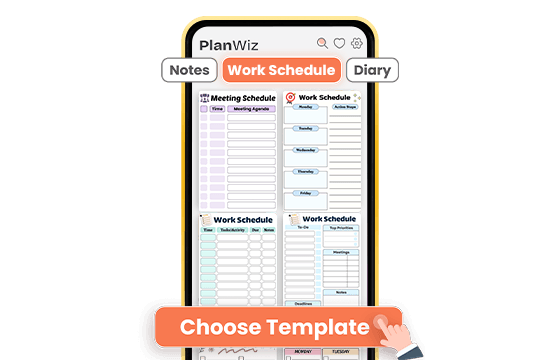
Choose a Template That Fits Your Scheduling Situation
Browse ready-made work schedule templates and pick the one that matches today, not your ideal week, your actual week. Weekly employee work schedule for a five-person retail team? There is a template for that. Monthly rotating night shifts for a healthcare unit? There is a template for that, too. The structure is already there. You just fill in your team's details.
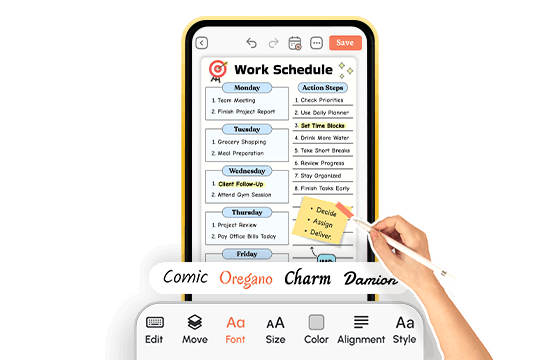
Customize to Fit Your Team, Your Shifts, Your Operation
Add your team members' names, adjust shift time blocks to match your actual hours, add role labels, and color-code shift types so the schedule reads clearly at a glance. On a straightforward week, the default template handles everything. On a complex week with split shifts and multiple coverage requirements, add the sections you need. The system bends to your operation. You never have to rebuild it.
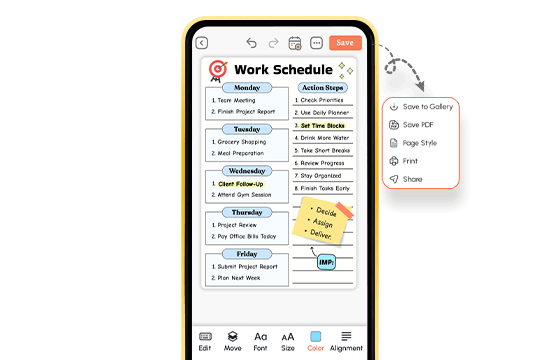
Share It, Print It, and Keep It Current
Do not let your plan live only inside an app. Export the completed schedule as a PDF, share a link, or print it and put it somewhere the team will actually see it. When changes happen mid-week, update the relevant section and share the new version immediately. No guilt, no starting over. Just forward.
A work schedule maker that is ready before your Monday morning starts.
What Do Real People Say About This Work Schedule Maker?
Ready to Try the Work Schedule Maker Built for How Teams Actually Work?
PlanWiz is the work schedule maker built for real shifts, real teams, and real Monday mornings, not the clean roster that exists only in your head. Built in minutes, share instantly, and fix fast when the week does not go as planned.
Free to start. No credit card. Ready in under three minutes.
Start Free → planwiz.app

Frequently Asked Questions
The best online work schedule maker eliminates blank-grid paralysis, handles shift conflicts before they become real problems, and makes the final schedule easy to share with the whole team. It does all three with ready-made templates for weekly, shift-based, and monthly scheduling.
The right tool shows all shifts simultaneously, so coverage gaps are visible before the schedule is published. It must be fast to update mid-week when availability changes, and export clearly so every team member can reference the current version.
Yes. It works just as well for freelancers and independent professionals who need to structure their own weekly work schedule. The same templates that help a manager plan team shifts help a solo professional protect focused work time and plan without reactive work taking over.
A shared schedule gives the entire team one consistent, current version. When something changes, the update reaches everyone immediately. No screenshot chains, no outdated versions, no missed messages. One shared source solves most scheduling communication problems.
Export the finished schedule as a PDF or image and share it via email or messaging, post a printed copy in your workplace, or share a live link so the team always has access to the most current version without receiving new files every time something changes.
Yes. Small business owners often spend hours every week rebuilding the same schedule manually. A work schedule maker with ready-made templates reduces that to minutes, handles shift coverage automatically, and gives the whole team one clear source to reference.