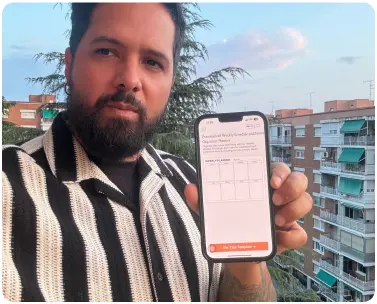
Most people do not lose their day to laziness. They lose it to twenty minutes of deciding what to do next, the task that felt urgent but carried no real weight, and the window where focused work was possible quietly closing before anything important got started. Daily schedule templates exist precisely because that pattern repeats every morning; a day left without structure. That is not a discipline problem. That is what an unplanned day costs.
Your priorities are assigned to specific hours before the first distraction arrives. The professional with a packed calendar does not open their laptop, wondering where to begin. The student with overlapping deadlines does not sit down and spend forty minutes choosing a subject. Structure does not control your day. It protects the hours that matter from the ones that simply feel urgent.
Daily Schedule Templates Built Around the Day You Actually Have
Not every daily schedule template fits every life. The right one depends on where your time disappears and what your day actually demands.
- The Professional with Back-to-Back Meetings: Your focused work has no protected slot. You need free daily scheduling templates that place your most important tasks in hours that no meeting can claim.
- The Student with Shifting Deadlines: Your workload changes every week. A daily schedule planner you can adjust in minutes keeps you working from a current plan, not one that made sense three days ago.
- The Freelancer Without Fixed Hours: Flexibility without structure becomes procrastination. A daily time schedule template with anchored work sessions gives a wide-open day enough shape to finish what matters.
- The Parent Managing Everything: Your own tasks exist in whatever time remains. Daily schedule templates with one protected personal block make that time repeatable, not something rescued from what is left over.
How to Use Daily Schedule Templates Without Abandoning Them by Friday?
Most people stop using a daily schedule template within a week. The format was never the problem. These four steps change the outcome.
- Step 1: Map your real day, not your ideal one. Track one honest week before choosing any template. Daily scheduling templates built over real patterns hold. One's built over assumptions collapses by Wednesday.
- Step 2: Protect your sharpest hours first. Place your most important task in your best focus window inside your daily schedule maker before anything else occupies it.
- Step 3: Keep it to five blocks maximum. A daily schedule planner with five clear blocks completed daily outperforms a detailed one abandoned by Thursday every single time.
- Step 4: Review for two minutes each evening. Open your daily schedule template at the close of the day, mark what carries forward, and adjust tomorrow before you shut work down. You wake up oriented, not undecided.
Frequently Asked Questions
Q1. Why do most people stop using daily schedule templates within weeks? Because the template was built for an ideal day, not a real one. Simpler formats survive longer because they ask less of you on the days you have the least to give.
Q2. Do daily schedule templates work when every day looks different?Particularly then. Free scheduling templates do not require identical days. They give you a starting framework to adjust as the day shifts, which is far more manageable than rebuilding from nothing each morning.
Q3. What is the difference between a printed and a daily schedule planner?Printed suits people with consistent routines who think more clearly on paper. A daily schedule planner suits anyone whose priorities shift regularly and who needs to restructure quickly without starting over.
Q4. How many priorities should a daily time schedule template hold?Three. Extending beyond three reduces completion rates. Three protected priorities with flexible blocks for everything else will always outperform a list that treats every task as equally important.
Q5. When should I fill in my daily schedule maker?The evening before. Morning planning draws from the same mental resources your best work requires. Spending it on scheduling means your first real task begins with a depleted reserve.