The Habit Tracker App That Turns Daily Intentions Into Lasting Routines
Most people fail at building habits not because they don't care but because they have no system that makes showing up feel easy once the motivation fades. PlanWiz is the habit tracker app that fixes this with 1,000+ habit tracker planner templates, visual streak tracking, smart reminders, and a daily check-in you can complete in under five seconds.
What Is the Best Habit Tracker App in 2026?
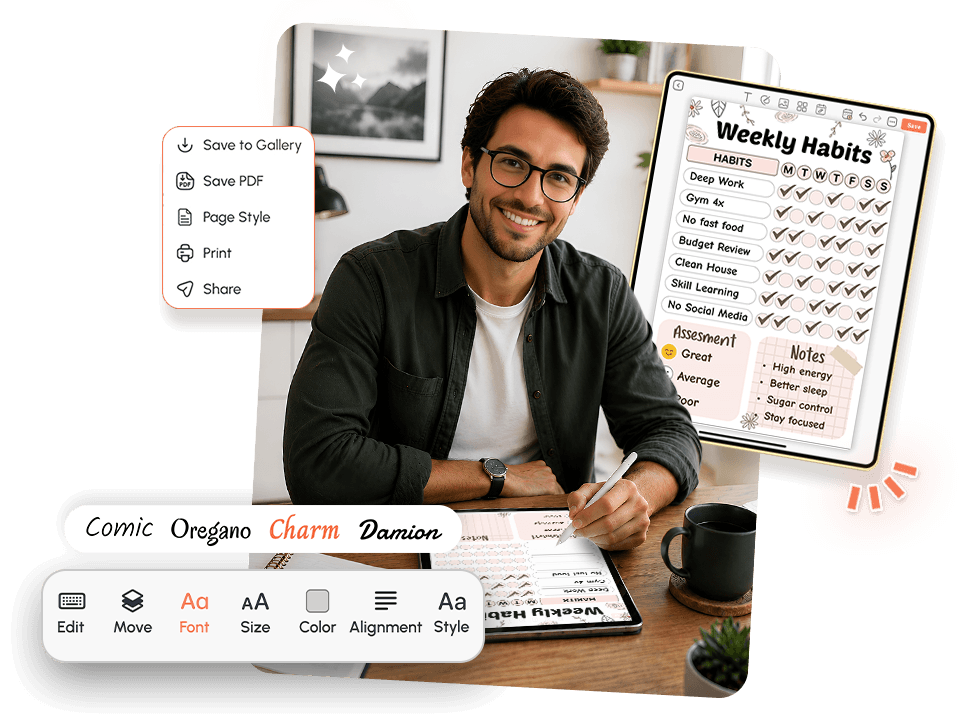
A good habit tracker builds consistent routines with simple logging, smart reminders, and clear progress. The best ones don’t just track, they guide your next action, even on low-motivation days.
A genuinely effective habit tracking app should:
- Make daily check-ins quick so you actually stay consistent
- Send reminders at the right moment, not randomly
- Support multiple habits without feeling overwhelming
- Sync across mobile and desktop seamlessly
PlanWiz holds a 4.8-star rating across app stores with 50,000+ reviews. Visual progress and streak tracking help improve consistency, making it a habit builder designed for real routines from workout planner templates to mindfulness habits.
Who Is This Habit Tracker App For?
This daily habit tracker was built for people whose schedules are real, not idealizedWorking Professionals
Trying to build consistent morning or evening routines around a demanding calendar fitness, reading, journaling, or anything that keeps getting bumped by the next urgent thing.
College Students
Building study, sleep, or wellness habits who need a habit tracker for daily routines that does not collapse after the first week of the semester. Study planner templates are a good starting point before adding habit tracking on top.
Freelancers & Remote Workers
With unstructured days who need behavioral anchors to create rhythm in a schedule that has no built-in routine.
Health-Conscious Adults
Tracking fitness, hydration, sleep, or mindfulness who are already using a mood tracker app and want one clean system that connects their emotional patterns to their daily habits.
People Who Struggle with Consistency
Who need a simple, low-effort system that helps them stay on track even on low-motivation days.
PlanWiz is NOT ideal for: teams needing shared accountability dashboards with admin controls, or users who require clinical behavior tracking or therapy-integrated habit monitoring tools. For those use cases, a purpose-built professional tool is a better fit.
Why Do Most People Fail to Build Habits?
The answer is rarely willpower. It is almost always the absence of a system designed to make showing up feel easy on the days when it does not come naturally.
The First-Week Trap
Sarah decides to start meditating every morning. Sunday night, she sets the alarm, downloads the app, and feels genuinely excited. Monday goes perfectly. Tuesday too. On Wednesday, she wakes up late. Thursday, she skips it, tells herself she will double up on Friday. By Saturday, she had quietly given up without ever officially deciding to.
This is the first-week trap. The motivation that made starting easy is exactly the motivation that will not be there by day five. A routine that depends entirely on feeling like it is not a routine, it is a temporary burst of good intention waiting to run out.
Reminders That Get Swiped Away
Marcus turned on notifications for everything. His habit app, his fitness tracker, his journal app. Within two weeks, he had trained himself to dismiss every one of them before reading what they said. A notification that fires at the same time for every event, a workout, a deadline, a hydration reminder, becomes background noise. The brain categorizes it as something to clear from the screen, not something to act on.
Reminders only work when they arrive at the moment you can actually do something. A reminder that fires during a meeting are not a reminder; it is an interruption you learn to ignore.
Tracking Too Many Things at Once
When Priya found her first habit tracking app, she added everything at once. Sleep, water, exercise, reading, journaling, vitamins, stretching. Twelve habits on day one. A better starting point would have been two or three habits from the focused self-care planner templates not a blank screen with unlimited options.
The best habit builder app does not reward ambition at the start. It rewards consistency over time. Trying to track ten new behaviors at once guarantees that none of them stick.
No Visible Progress, No Motivation
James used a to-do list app to track his habits. Every day, he checked things off. Every day, he checked things off. Every day, the list resets to zero. After three weeks of consistent effort, his app looked exactly like it had on day one. He felt like he had nothing to show for it because he had nothing to look at.
Visible progress is not vanity. It is one of the strongest signals that keeps behavior going. When effort produces no visible result, the motivation to continue quietly disappears.
Why Is Building a New Habit So Much Harder Than It Looks?
The difficulty is not the behavior itself. Walking for twenty minutes, drinking more water, and reading before bed, none of these are not physically hard. The difficulty is making the behavior happen consistently in a life that is already full of competing demands, disruptions, and days that go nothing like planned.
Every habit you want to build exists as an intention floating without a structure. Without a system that makes the next action obvious, easy to log, and visibly connected to your past effort, that intention relies entirely on willpower, a resource that fluctuates constantly and cannot be stored.
The problem is not your discipline. It is the absence of a system that makes showing up feel like the natural next thing to do.
When your habits live in a clean, visual habit tracker for daily routines with streaks that show your momentum, reminders that arrive at the right moment, and a daily check-in that takes five seconds, the friction of following through drops to almost nothing. PlanWiz was built to be that system.
How Does a Good Habit Tracker App Fit Into Your Real Day?
Morning Check-In With PlanWiz: Open the app and in under 60 seconds see your habits, streaks, and reminders for the day. Check off what’s done, update your progress, and know exactly what needs attention. Pair it with daily planner templates to see your full day before distractions begin.
Those 60 seconds change how the day feels before it has really started.
High-Motivation Day vs. Low-Energy Day: On high-motivation days, you log habits easily and watch your streaks grow. On low-energy days, the check-in still takes just seconds, and your streak stays within reach. The app doesn’t demand more when the day feels hard. It simply helps you stay consistent.
What Makes the Habit Tracker App People Actually Stick With?
The habit tracker app should include ready-made templates, streak tracking, smart reminders, habit categories, frictionless check-ins, and progress sharing.
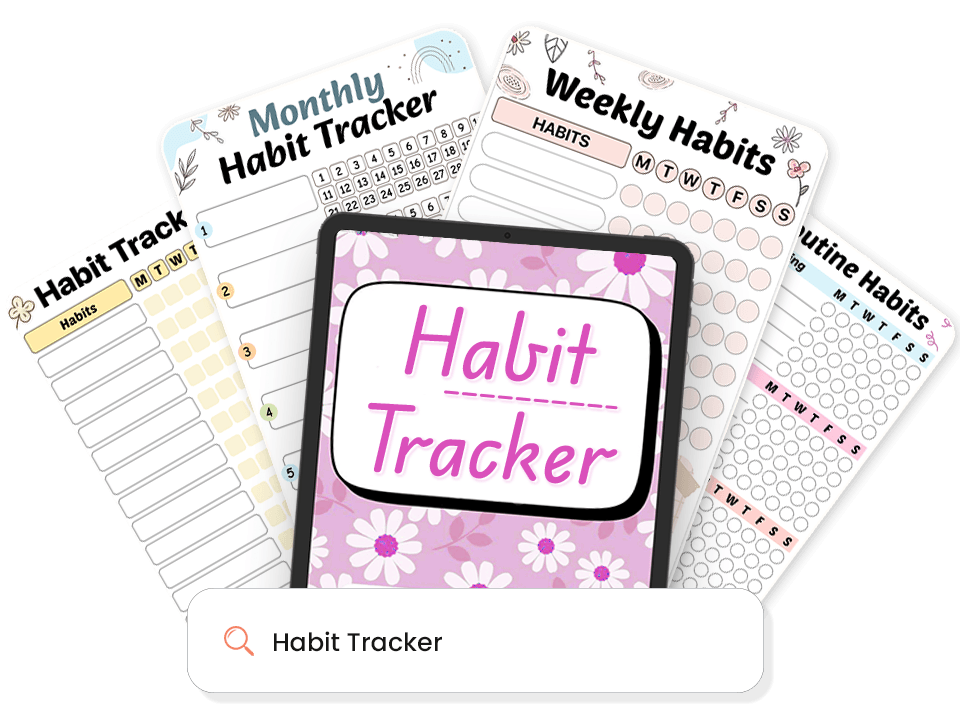
1,000+ Ready-Made Habit Templates.
Most habit tracking apps open to a blank screen and leave you guessing what to track. PlanWiz does the opposite. Every habit template arrives pre-structured so you can start building a real routine in seconds, not after an hour of setup.
What's ready for you:
- Morning routine templates with hydration, movement, and mindfulness built in
- Sleep and wind-down templates to help your body switch off
- Fitness and wellness templates for workouts, steps, and recovery
- Mindfulness and focus templates for meditation, journaling, and less screen time explore mindfulness journal templates if you want a deeper journaling structure alongside your habit log
- Study and productivity planner templates for students and deep work
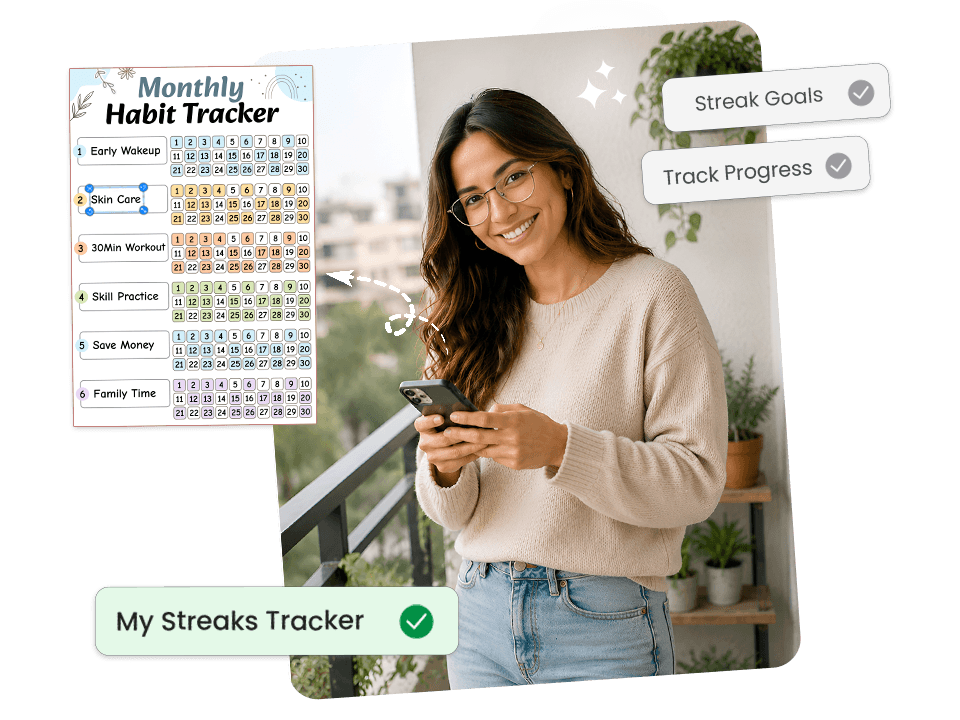
Habit Streak Tracking and Visual Progress.
Most habit tracking apps show you a number. PlanWiz shows you a pattern. Every day you check in, your streak bar extends, and after a few weeks, the visual record of your consistency becomes something you actively want to protect.
What you see every day:
- Your current streak for every habit, updated the moment you check in
- A visual progress bar that shows momentum building across days and weeks
- A weekly summary that makes patterns visible before they quietly fall apart
- Color-coded habit status so you know at a glance which habits are holding and which need attention
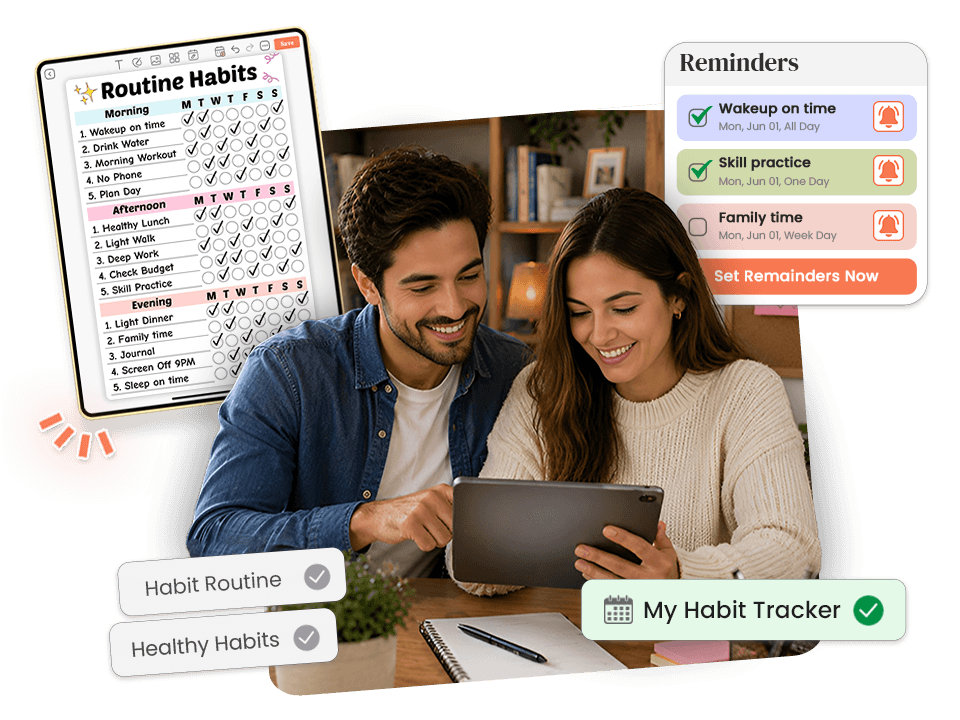
Smart Habit Reminders That Adapt to Your Schedule.
Write down every habit you want to build, and still forget half of them by 3 PM if nothing brings them back into view at the right moment. It lets you set a reminder directly on each habit, calibrated to the exact time it belongs in your day.
How it works:
- Set a habit reminder in under 10 seconds directly on the habit, no separate app needed
- Morning habits get morning reminders, evening habits get evening reminders; they never collide
- Adjust any reminder timing any time your schedule shifts, no full reset required
- Daily check-in reminders protect the 60 seconds each morning you would otherwise skip
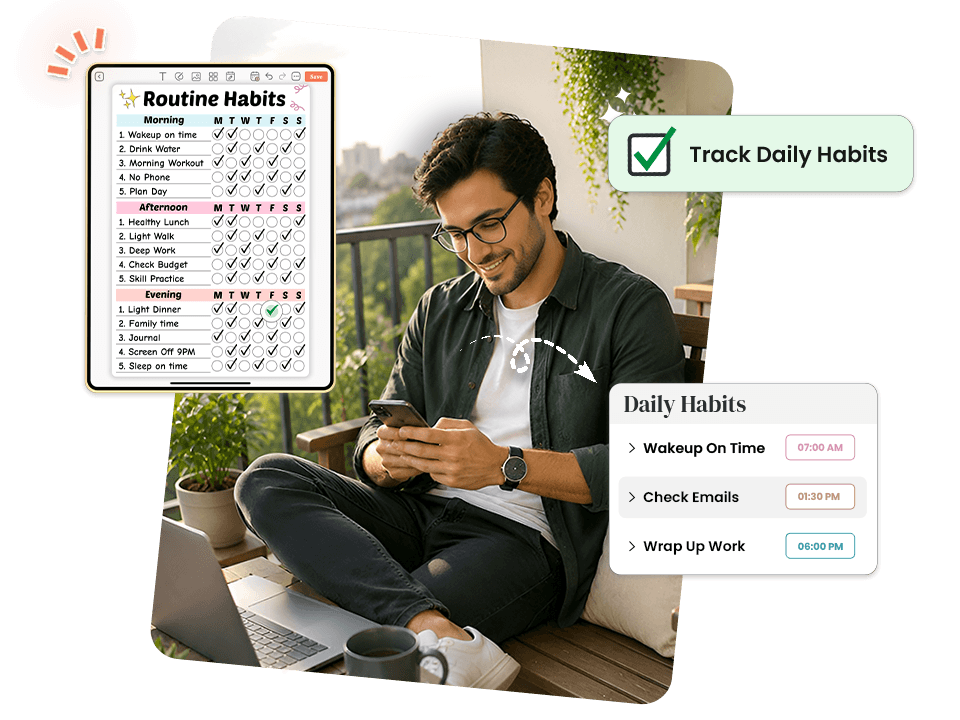
Habit Categories and Custom Goals.
A random list of behaviors is not a routine. It lets you organize every habit by area of life: health, learning, mindfulness, productivity, so your daily check-in reflects how you actually think about your day, not just a stack of unrelated items.
How it works:
- Group each habit by category so your check-in view is organized, not overwhelming
- Set a custom habit goal daily, five days a week, or a specific count per week
- Track your goal completion rate alongside your streak, always know if you are meeting your own standard
- Add or remove any habit at any time without disrupting the habits already running
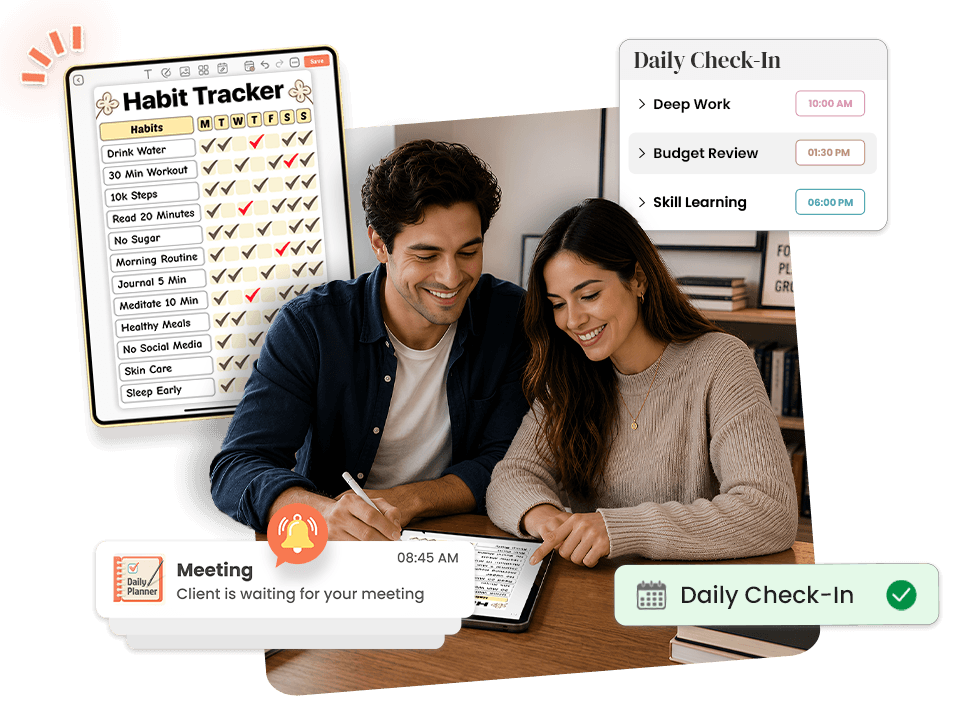
Frictionless Daily Habit Check-In.
The most common reason a habit tracking app gets abandoned is that logging takes too long. If checking in requires opening, navigating, scrolling, and confirming, skipping starts to feel easier than showing up. PlanWiz solves this with a check-in that takes under five seconds per habit.
How it works:
- One tap to log a habit complete, no menus, no confirmation screens, no extra steps
- All your habits are visible on one screen; nothing is buried behind navigation
- Log in to your phone in the morning, open it on your desktop later, and your data is always current
- Check-in works the same on a high-motivation day and a hard, low-energy day
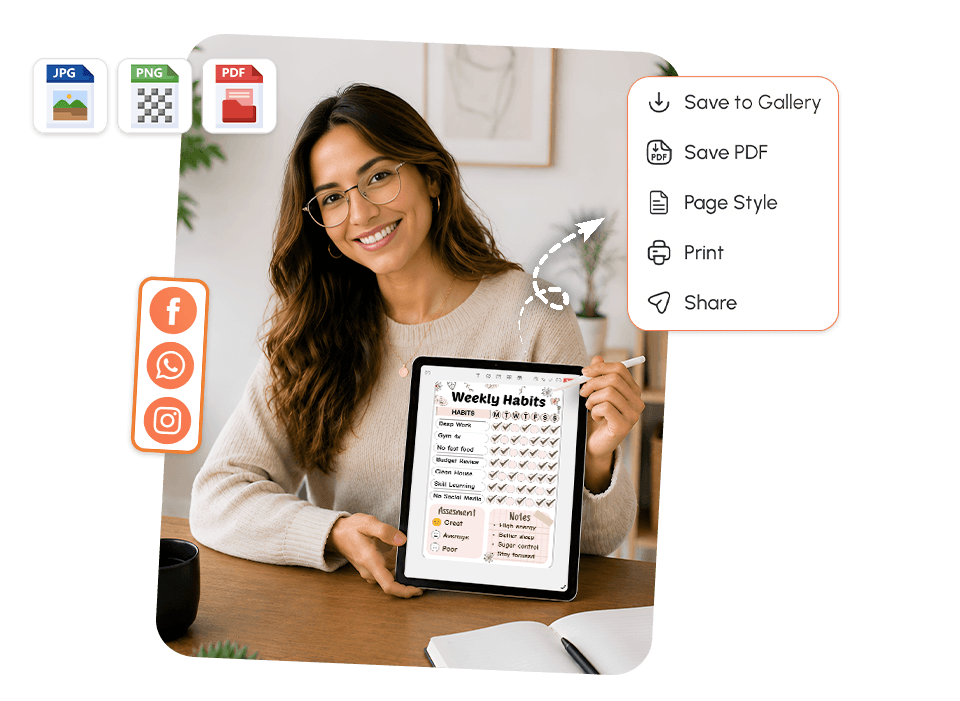
Download and Share Your Habit Progress.
A habit log that only lives inside an app is easy to ignore when life gets busy. It lets you take your progress out of the app, and sharing what you are building is one of the most effective ways to keep building it.
What you can do:
- Download your weekly habit summary as a PDF, save, print, or file your habit record
- Share your habit progress with an accountability partner, coach, or anyone who keeps you honest
- Export a clean habit consistency record, useful for personal reviews or health check-ins
- Pair your habit log with a goal planner app to connect your daily routines to your bigger milestones
Explore Habit Templates and Routine Packs Built for Real Life
Pick the Template That Matches Your RoutineEvery template is pre-structured so your brain never faces a blank page. Browse below and tap any template to explore it.
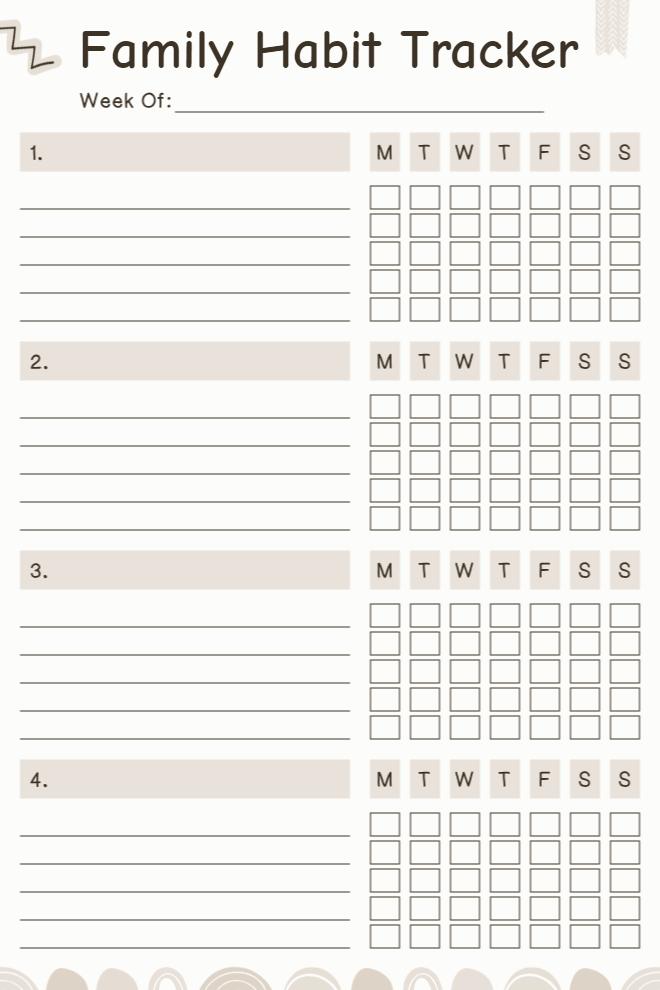
Family Habit Tracker
This habit tracker is designed for families who want to build routines together. It has four separate sections, so each family member can track their own habits, or you can use it for different categories like morning routines, exercise, chores, and self-care. Each section gives you five lines to write specific habits and a weekly grid with checkboxes for every day. The neutral beige color scheme works for both kids and adults. It's a great way to create accountability when everyone can see each other's progress on one page, and the week-of line at the top keeps things organized.
Best For: Families tracking habits together, parents managing kids' routines, households working on shared goals, or anyone who wants to track multiple habit categories on one sheet.
Use This Template →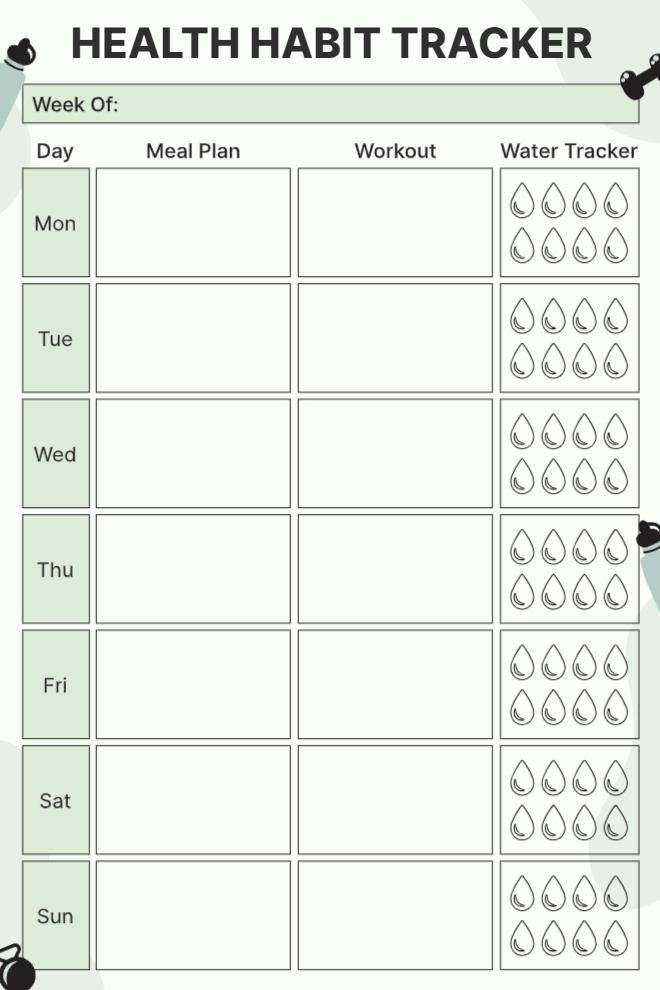
Health Habit Tracker
This weekly health tracker covers the big three wellness areas: what you eat, how you move, and whether you're drinking enough water. Each day from Monday through Sunday gets its own row with columns for meal planning, workout notes, and eight water droplets to check off throughout the day. The simple grid layout makes it super easy to see patterns across your week, like realizing you always skip workouts on Thursdays or forget to drink water on weekends. The apple and dumbbell graphics remind you what this tracker is all about without being too cutesy.
Best For: People focusing on health and fitness, those trying to drink more water, meal preppers planning weekly nutrition, or anyone working on multiple wellness habits simultaneously.
Use This Template →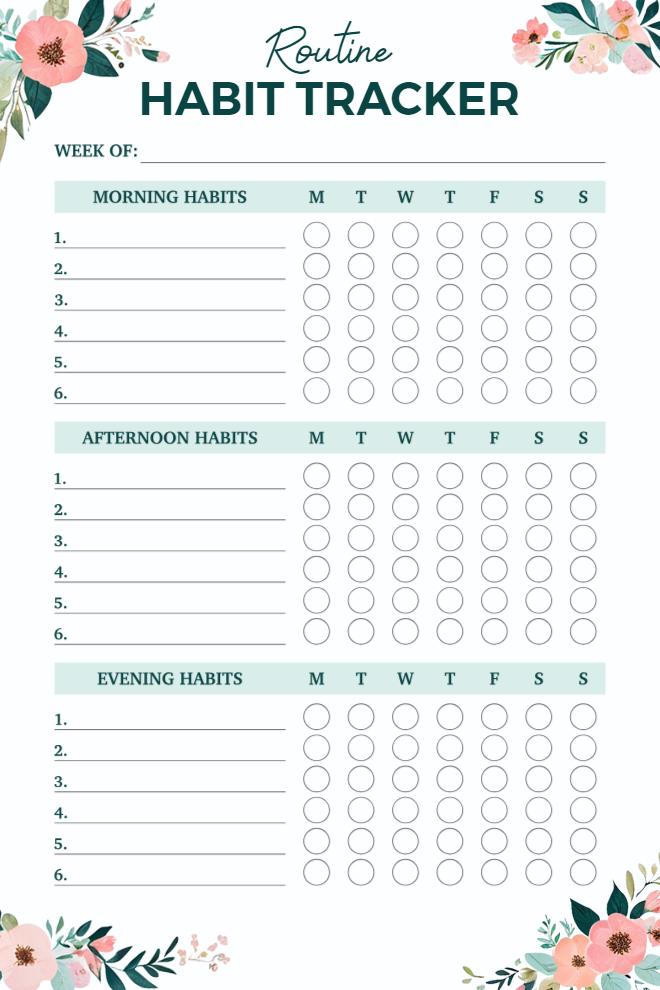
Routine Habit Tracker
This beautiful floral tracker organizes habits by time of day, which is genius for people who struggle with when to fit habits into their schedule. You've got six slots each for morning, afternoon, and evening habits, complete with daily checkboxes across the week. The soft mint and cream color palette with pink flower accents makes it feel calm and inviting rather than like another task list. Breaking habits into time blocks helps you build realistic routines instead of just listing random habits you want to do "sometime" during the day. It acknowledges that your energy and availability change throughout the day.
Best For: People building time-specific routines, those who think in morning/afternoon/evening blocks, anyone struggling to fit habits into their day, or routine-focused planners.
Use This Template →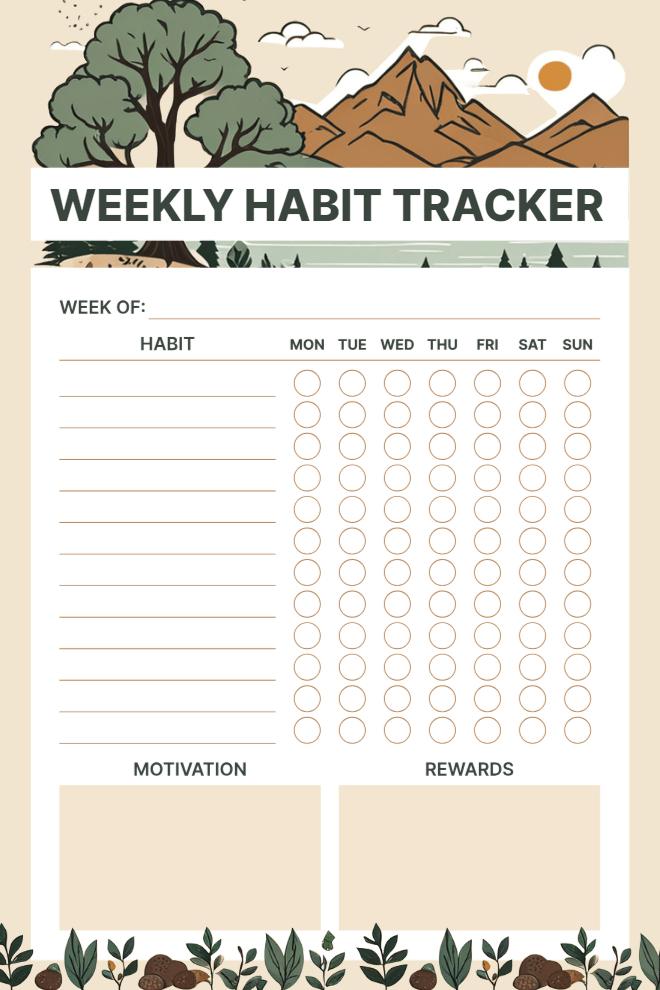
Weekly Habit Tracker with Motivation
This nature-themed tracker gives you space for up to 12 habits with weekly checkboxes, but what sets it apart are the motivation and rewards sections at the bottom. The motivation box is where you write why you're doing this in the first place, which actually matters when you're tempted to skip. The rewards section lets you plan what you'll give yourself for consistency. The beautiful mountain and tree landscape illustration at the top creates a peaceful, outdoorsy vibe that makes habit tracking feel less clinical. The warm earth tones are calming without being boring.
Best For: People who need motivation to stay consistent, those who respond well to rewards, nature lovers, or anyone who wants their habit tracker to feel more inspiring than mechanical.
Use This Template →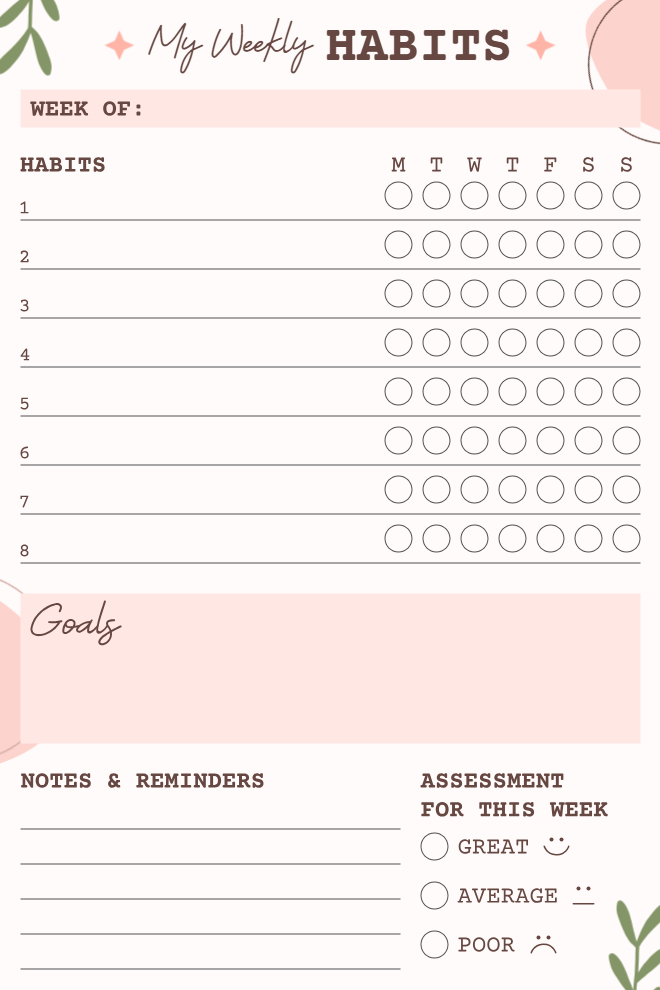
My Weekly Habits Tracker
This comprehensive weekly tracker lets you monitor eight different habits with daily checkboxes, plus it includes sections that help you actually succeed at those habits. The goals box at the top keeps you focused on what you're working toward, notes and reminders help you remember important details, and the self-assessment at the bottom (great, average, or poor with little faces) lets you honestly evaluate how the week went. The pink and green color scheme with botanical accents is gentle and encouraging. The self-assessment piece is particularly valuable because it forces you to reflect instead of just moving on to next week.
Best For: Reflective habit builders, people who like weekly assessments, those tracking multiple habits, or anyone who wants accountability with kindness rather than harsh judgment.
Use This Template →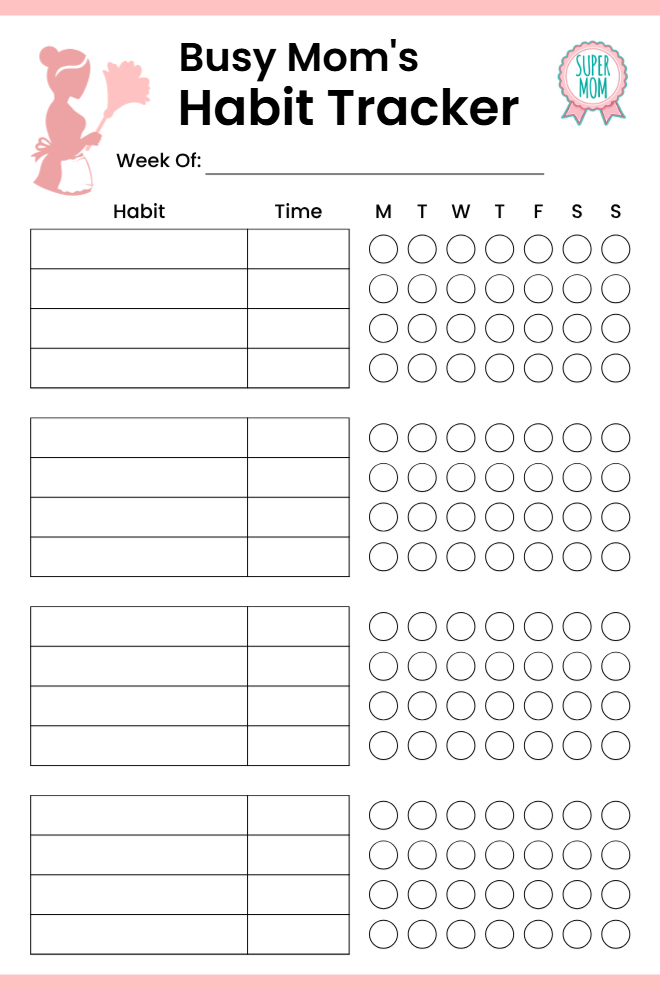
Busy Mom's Habit Tracker
Built specifically for busy moms juggling a million things, this tracker includes a time column alongside each habit, which is perfect for habits that need to happen at specific times. You can track up to 16 different habits organized in four groups of four, giving you flexibility to separate kid-related habits from personal ones, or morning routines from evening ones. The pink theme with the "Super Mom" badge and silhouette illustration acknowledges that moms deserve recognition for taking care of themselves while managing everyone else. The grouped layout prevents that overwhelming feeling of seeing too many habits at once.
Best For: Busy mothers managing family and personal habits, parents with time-sensitive routines, anyone juggling many responsibilities, or people who need habits organized by category or time.
Use This Template →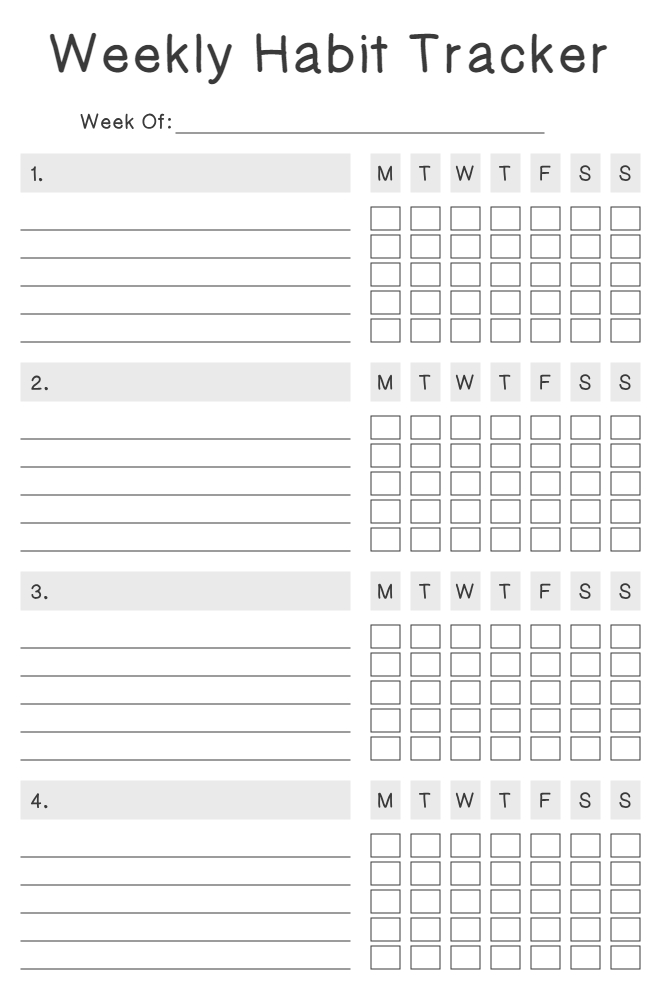
Minimalist Weekly Habit Tracker
This stripped-down tracker is for people who want functionality without any decorative distractions. Four numbered sections with five habit lines each give you space to track up to 20 habits, though realistically, most people would use fewer. The gray and white color scheme is about as minimal as it gets, making it perfect for printing or for people who find colorful designs distracting. Each habit gets five rows of daily checkboxes, which seems like a lot but actually gives you room to track sub-habits or different aspects of the same habit. It's straightforward, efficient, and gets out of your way.
Best For: Minimalists who dislike decoration, people tracking many habits, those who prefer simple black and white designs, or anyone who wants maximum tracking space with zero frills.
Use This Template →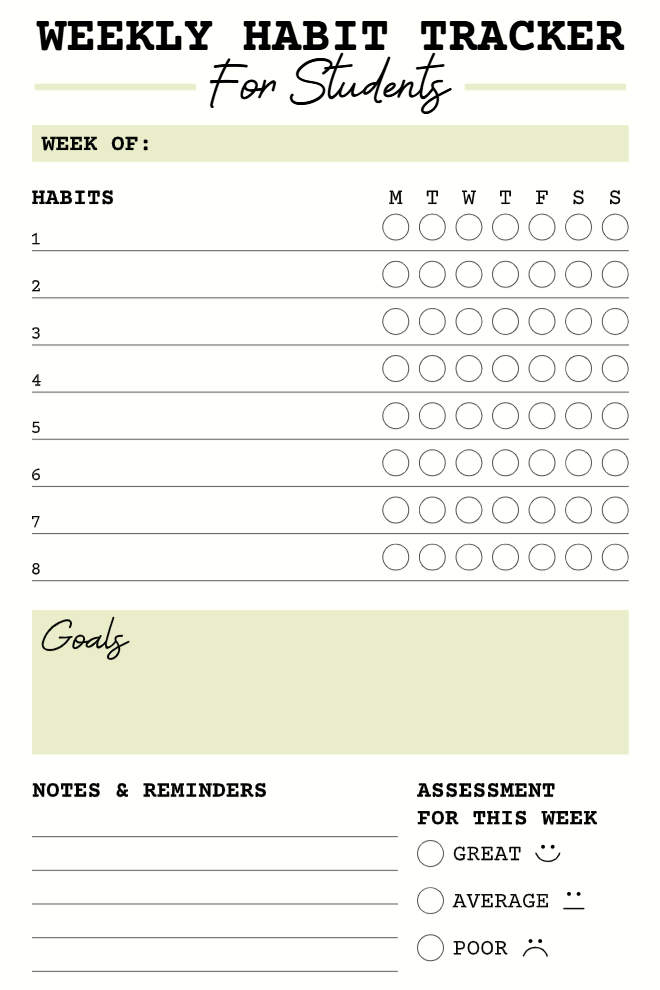
Weekly Habit Tracker for Students
This student-focused habit tracker recognizes that students need to track academic habits alongside personal ones. You can monitor up to eight habits with weekly checkboxes, write out your goals for the week, jot down notes and reminders about assignments or deadlines, and do a self-assessment at the end (great, average, or poor with corresponding faces). The clean design with just a touch of green accent color keeps it professional enough for older students but simple enough for younger ones. The self-assessment with emoji faces makes reflection less intimidating, which matters when you're learning how to evaluate your own behavior.
Best For: Middle and high school students building study habits, college students managing routines, parents tracking kids' homework habits, or young adults learning self-discipline.
Use This Template →What Happens When You Miss a Day?
You will. A streak will break at some point, not because you gave up, but because life does what life does. A late night, a sick day, a week that runs completely off the rails. It happens to everyone who has ever tried to build a consistent routine.
Most habit apps handle this badly. The streak resets to zero. The missed day sits in the log like an accusation. You open the app the next morning, and the first thing you see is evidence of what did not happen. So you close it. One missed day becomes a week. A week becomes giving up entirely, not because the habit was bad, but because returning felt worse than staying away.
This planner app helps you restart without guilt. One missed day does not erase your progress. The habit log still shows every day you showed up. The streak restarts, but your history does not disappear. You open the app the next day, check in, and keep going from where you actually are. If you need a fresh structure to restart, routine planner templates give you a clean foundation without rebuilding everything from scratch.
"One missed day does not erase your progress. The only thing that matters is what you do next."
How Do You Actually Get Started With PlanWiz?
PlanWiz helps you choose a habit template, set your reminders, and follow a simple daily check-in that builds real consistency without making the system feel like extra work.
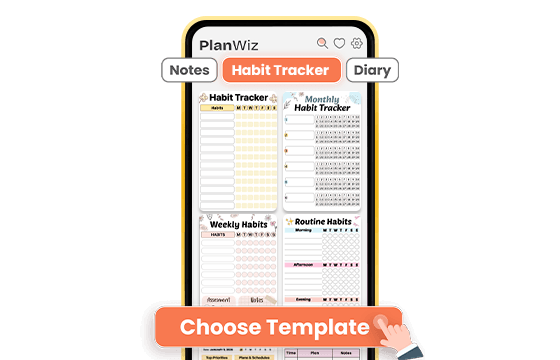
Choose a Habit Template That Fits Your Routine
Browse from 1,000+ ready-made habit templates and pick one that matches where you are right now. Building a morning routine from scratch? Use the Morning Routine Pack, hydration, movement, and mindfulness already structured for you. Just want to track one or two things to start? Pick a minimal habit template and get going in under a minute. Either way, the structure is already built you are not starting from zero.
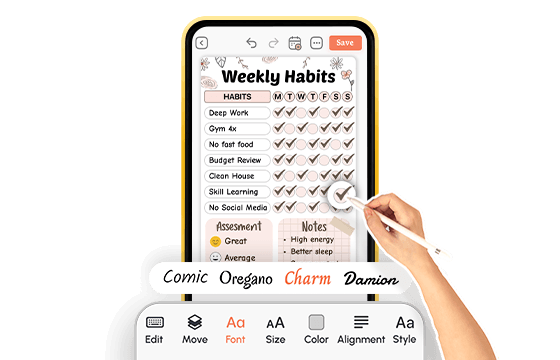
Set Your Reminders and Personalize in Minutes
Choose the time each habit belongs in your day, set a reminder directly on it in under 10 seconds, and adjust any template sections if you want. Or use it exactly as it is. Either way, you are looking at a complete daily habit plan within two minutes not after an hour of setup that drains the energy you needed for the habits themselves.
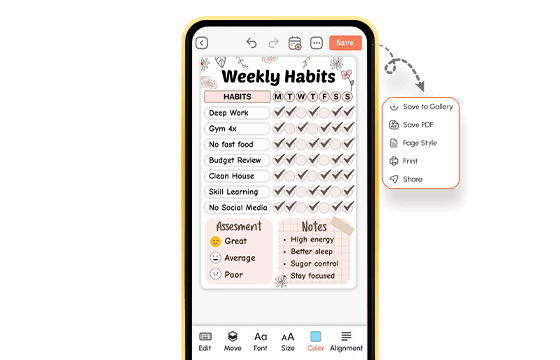
Check In Daily, Track Your Progress, and Keep Going
Once your habits are set, do not let them live only inside your head. Open PlanWiz each morning for 60 seconds, log what you completed, and watch your streak build in real time. Download your weekly habit summary as a PDF, share your progress with an accountability partner, and when a hard week hits open a fresh template and keep moving from where you are.
That is the whole system.
What Real People Say About This Habit Tracker App?
From people who have already tried everything else.
Ready to Try the Habit Tracker App That Makes Consistency Feel Possible?
PlanWiz is a habit tracker app built for real people with real schedules, not the idealized version of a day that never actually happens. Streak tracking, smart reminders, frictionless daily check-ins, and a no-shame restart when a hard week hits.
Free to start. No credit card. Your first habit logged in under three minutes.
Start Free → planwiz.app

Frequently Asked Questions
The best habit tracker app for building daily routines combines a fast daily check-in, visual streak tracking, and reminders that arrive at the right moment not just any time. PlanWiz covers all three, with 1,000+ ready-made habit templates so you never start from a blank screen. Users report feeling noticeably more consistent within the first two weeks of daily use.
Another app is built for tasks you complete once and remove. A habit tracker app is built for behaviors you want to repeat every day it tracks your streak over time, shows your consistency pattern, and reminds you to show up again tomorrow. The core difference: a to-do list resets to zero every day. A habit tracker shows your history growing.
A good habit tracker app needs five things: a frictionless daily check-in under 10 seconds, a visual streak or progress display, per-habit reminders you control, support for multiple habits at once, and a weekly progress summary. Anything that adds friction to logging or makes returning after a missed day feel like punishment will get abandoned within a month.
Yes, when it removes friction instead of adding it. The research on behavior change shows that visual progress tracking and timely reminders meaningfully increase daily follow-through. A well-designed habit builder app makes showing up the path of least resistance, which is exactly where most new habits break down without one.
Start with two or three, not ten. The most common reason people abandon a habit tracking app in the first two weeks is adding too many habits at once. The daily check-in starts to feel overwhelming, and skipping becomes easier than showing up. Consistency with two habits for a month is worth more than ambition with ten habits for four days.
Open the app the next day and check in do not wait for Monday. One missed day is noise; it only becomes a pattern if you stop returning. PlanWiz keeps your full history visible even after a missed day, so a single break does not erase three weeks of progress. The only thing that matters is the next check-in.