The Gratitude Journal App That Works on Your Worst Days
A good gratitude journal app gives people a simple, consistent way to record what they are thankful for, with guided prompts and gentle reminders that make the habit easier to maintain. The best gratitude journal templates take under three minutes to use and never punish a missed entry with streak-based guilt.
What Is the Best Gratitude Journal App in 2026?
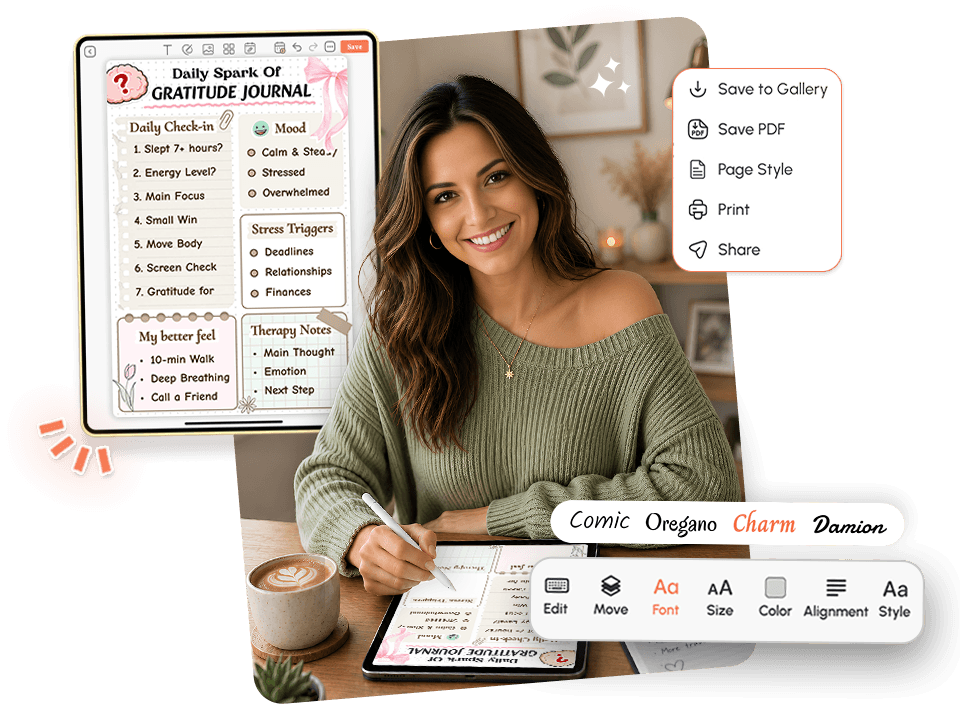
The best gratitude journal app removes the blank page, takes under three minutes daily, and makes returning after a gap feel natural, not like starting over. It works on your best days and your worst ones, without punishing inconsistency with shame.
A good daily gratitude journal must:
- Remove the blank page with guided prompts every time.
- Take under 3 minutes for a complete entry.
- Adapt to your energy, full reflection, or just one line.
- Send gentle reminders without notification pressure.
- Keep entries completely private, no social layer, no algorithm.
Who Is This Gratitude Journal App For?
This gratitude journal app was built for the people who generic journaling apps always leave behindBusy Professionals
Who want to begin or close their workday with a moment of intentional reflection but need it to take under 3 minutes, not an hour of setup.
Parents and Caregivers
Who give everything to others all day need one simple daily tool to keep their own emotional well-being from quietly disappearing.
Students Managing Academic Stress
Who want a low-pressure daily habit that helps them notice what is going well, not just everything that is going wrong.
People in Therapy or Personal Growth Work
Who want a private, simple way to practice reflection and gratitude between sessions, without a separate clinical tool.
Mindfulness and Wellness Builders
Who already have a meditation or breathwork practice and want a gratitude layer from self-care journal templates that integrates naturally into the same daily routine.
PlanWiz is not ideal for: users looking for a clinical therapy journaling program guided by a licensed professional, those who need team collaboration or shared writing tools, or anyone seeking a comprehensive task and project management system.
Why Does Every Gratitude Journal App Fail?
Most gratitude journal apps fail not because people stop caring about the practice, but because the tools never solve the real problems that cause people to quit. The intention stays. The habit disappears. And most apps never ask why.
The Blank Page Problem
You open the app. The cursor blinks. You know you are supposed to feel grateful, but right now you feel nothing in particular, or everything at once, and you have no idea where to begin. So you close it.
Without a prompt or starting framework, the brain interprets "write something meaningful" as an overwhelming task and avoids it entirely. A gratitude journal without guided prompts leaves most people staring at nothing, writing nothing, and feeling quietly guilty about it.
The Habit Breaks and Never Recovers
You journal every morning for eleven days. Then a hard week hits. You miss three days. The streak is gone. The progress feels erased. So you stop.
This is shame-triggered avoidance, not laziness. When a tool makes a missed day feel like a failure, most people stop engaging entirely. The right gratitude tracker app makes returning after a gap feel completely natural, not like starting over from zero.
Gratitude Feels Forced and Repetitive
By day five, you are writing the same three things: family, health, and coffee. It starts to feel mechanical. The practice loses meaning.
Repetitive prompts produce repetitive answers. A good daily gratitude journal rotates its prompts: what went right today, who made a difference, what surprised you, so the practice stays alive and specific, not hollow and routine.
The App Disappears Into Your Phone
You downloaded it with real intention. It got buried in a folder by the end of week two. No reminder pulled you back. The habit quietly ended.
A gratitude journal that relies entirely on your discipline will always lose to a full and busy life. Gentle, well-timed reminders, not aggressive notification badges, are what keep a daily practice alive.
Why Is Building a Daily Gratitude Habit So Much Harder Than It Looks?
Gratitude is not the hard part. Most people genuinely want to notice what is going well. What is hard is maintaining that practice across a real, unpredictable life, hard weeks, busy mornings, and the days you simply forget until it is already 11 pm.
The problem is rarely motivation. It is friction. The blank page. The app that makes a missed day feel like a failure, so you stop coming back at all.
🧠 Why this matters: People with a pre-built structure waiting for them a prompted page, a familiar layout, a gentle reminder are far more likely to maintain a daily reflection habit. Removing friction is what makes the difference between a practice that sticks and one that disappears by week two.
"The problem is not that you are ungrateful. It is that no tool has ever made gratitude feel easy enough to actually do every single day."
A habit tracker app approach applied to daily reflection, show up, write something, come back tomorrow, is what PlanWiz is built around. The personal development planner templates connect gratitude directly to longer-term growth for those who want their daily reflection to mean something beyond the moment.
How Does a Good Gratitude Journal App Fit Into Your Real Day?
A good gratitude journal app does not ask you to build your practice around it. It fits around your day, your actual day, not an ideal one where you have thirty minutes of peaceful morning quiet.
PlanWiz bridges this with three connected layers:
Instant start: You open the app, pick a page, morning gratitude prompt, evening reflection, or daily journal template, and the structure is already there. No deciding what to write. Just show up and begin.
Flexible depth: On a strong day, go deep. On a hard day, write one sentence. The system accepts whatever you bring and never punishes a low-energy entry.
Gentle return: Miss a day. Miss a week. Open a fresh page whenever you are ready. No streak counter. No missed-day warnings. Pair reflection with a daily emotional check-in using mood tracker templates.
What Features Should a Gratitude Journal App Have?
PlanWiz was not built by adding a gratitude tab to a generic journaling app. It was designed from the start for people who want a real, lasting daily gratitude practice with the structure and flexibility to make that happen across good weeks and hard ones alike.
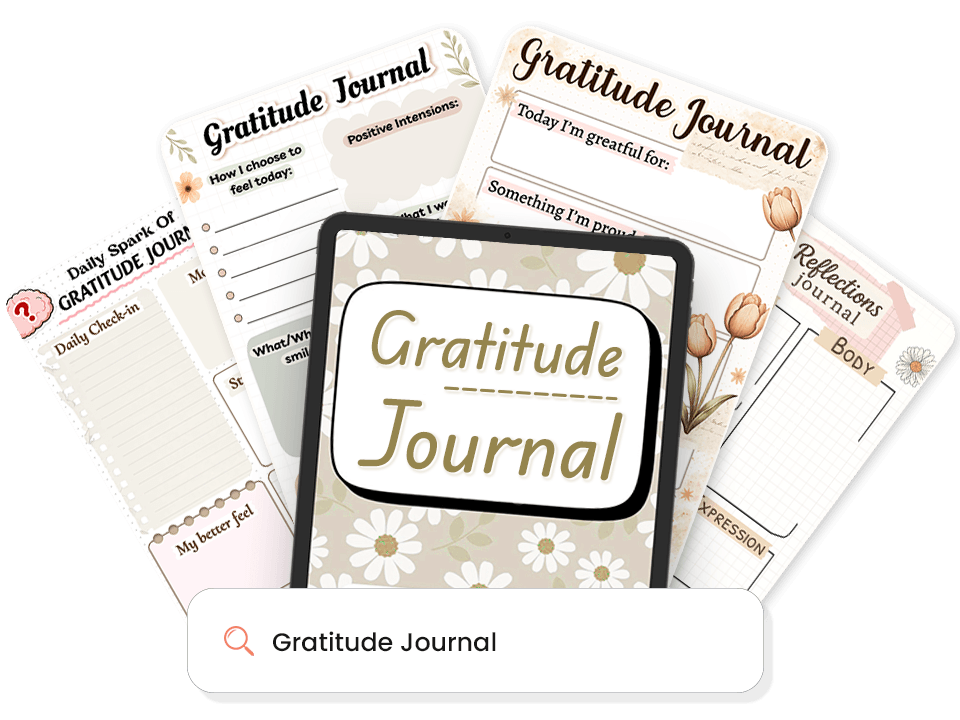
1,000+ Gratitude Journal Templates
Looking for ready-made gratitude pages? PlanWiz includes over 1,000+ gratitude journal templates and also provides bullet journal templates so you can begin your practice instantly without deciding where to start.
- Daily gratitude & affirmation journal pages
- Weekly gratitude journal for end-of-week reflection
- Daily positivity reflection & mindfulness tracking pages
- 30-day gratitude reflection guides
- Today's blessings & daily wellness journal pages
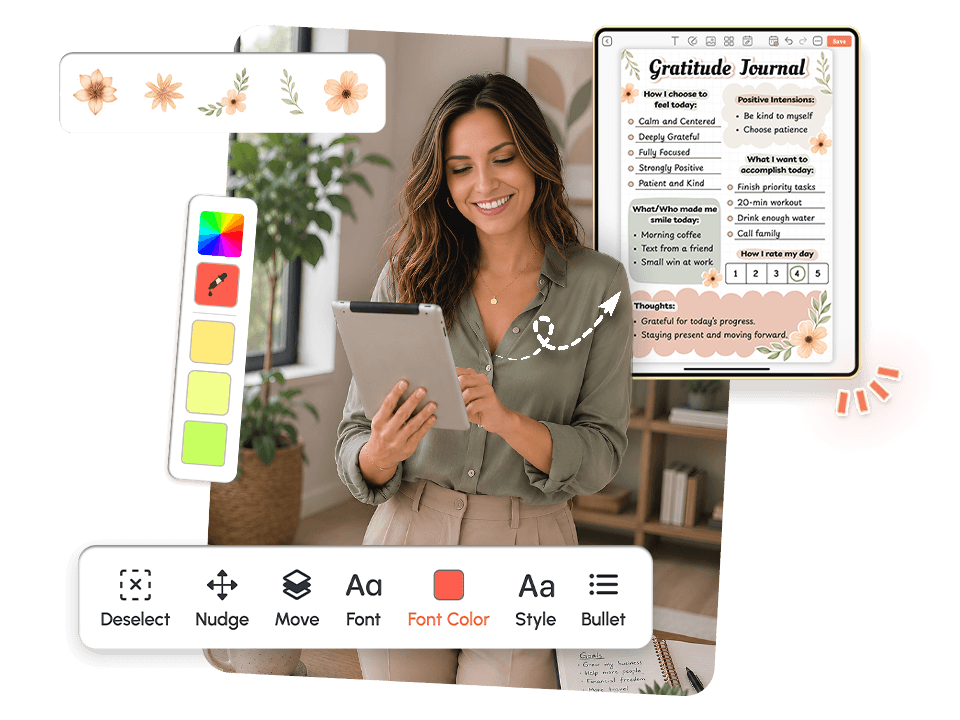
Fully Customizable Gratitude Journal
Want to make your gratitude practice truly yours? No two people experience gratitude the same way. PlanWiz gives you a fully customizable digital journal that fits your life and your energy.
- Choose layouts, fonts, colors & covers that match your mood
- Add or remove sections like affirmations, mood check-ins & evening reflections
- Drag & drop journal elements to build your perfect gratitude page
- Add photos, stickers & creative personal touches

Build a Daily Gratitude Habit
The hardest part of gratitude journaling is not the writing, but showing up consistently. It is designed to make the habit survive real life, not just good days.
- Anchor your journaling to an existing daily routine
- Write specific, meaningful entries, not just categories
- Stay consistent with one format for real, lasting results
- Works on your lowest-energy days, simple enough to complete in under 5 minutes

Flexible for Every Journaling Style
Not everyone journals the same way. PlanWiz adapts to your pace, your schedule, and your energy, not a one-size-fits-all format.
- Quick 3-minute entries for busy professionals
- Weekly deep-reflection format for thoughtful journalers
- Daily check-in pages for habit rebuilders starting fresh
- Mindset-shifting layouts, including in mindfulness journal templates for those retraining toward positivity.
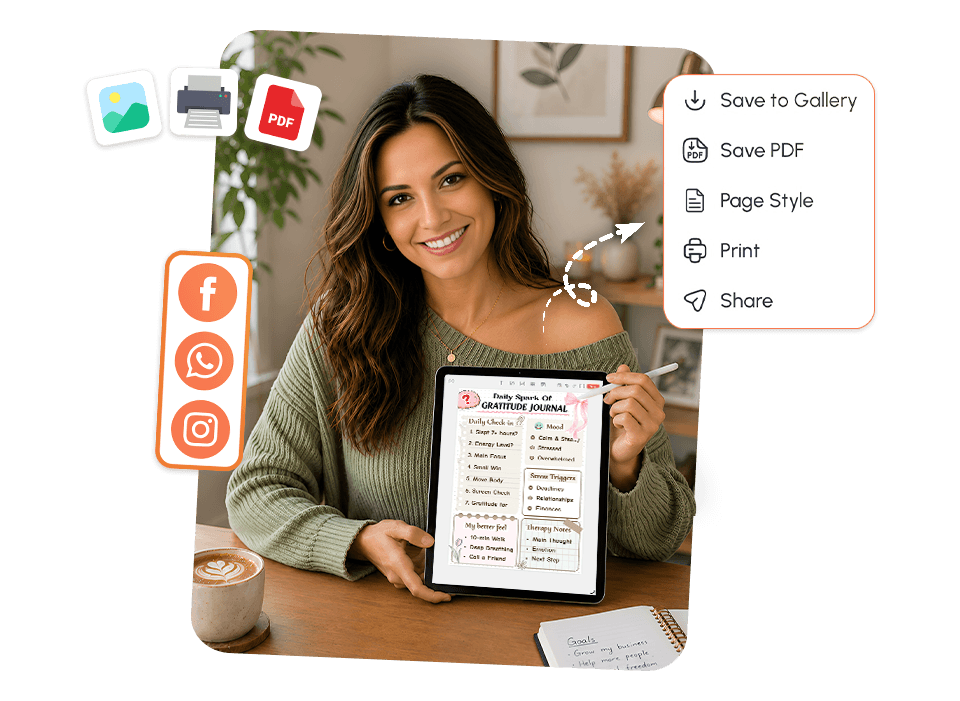
Export & Share Anytime
Your gratitude journal should belong to you, not the platform. PlanWiz lets you save, print, and share your entries however you want.
- Save or export any gratitude page as a PDF or PNG
- Print your daily or weekly gratitude journal pages at home
- Share your reflections, diary entries, or wellness notes with ease

Works Across All Your Devices
Your gratitude practice should follow you, not stay tied to one screen. It works wherever you are.
- Available on Android, iOS, and Web
- Start on your phone, continue on tablet seamlessly
- 10,000+ happy users already planning smarter with PlanWiz
Explore Gratitude Journal Templates for Every Kind of Practice
Pick the Template That Matches How You Feel Today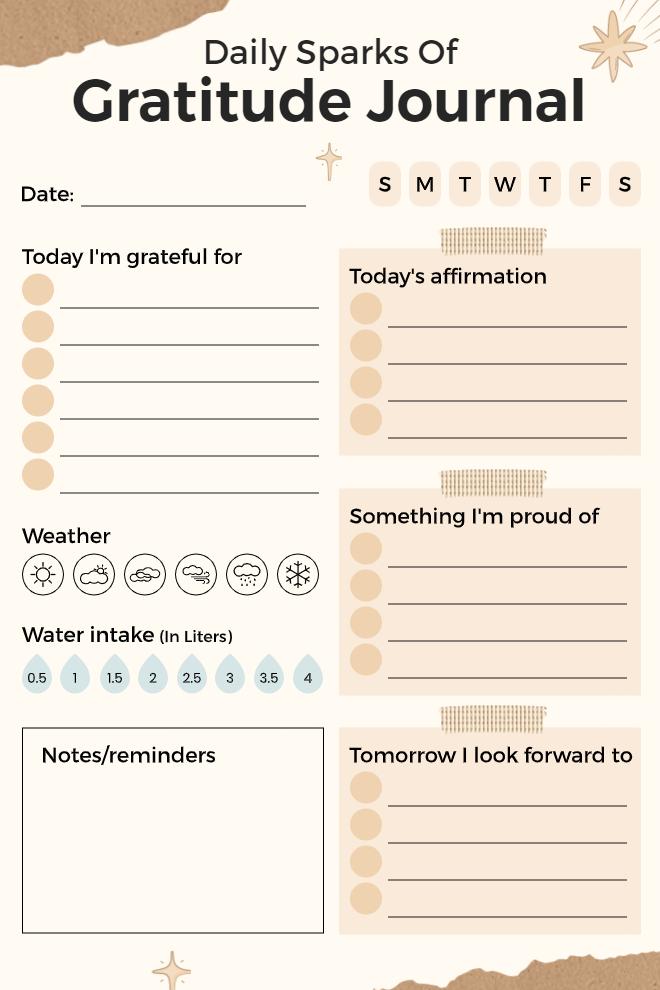
Daily Sparks of Gratitude Journal
This daily journal is more than just a gratitude list; it's a full morning reset in one page. It keeps your mind, body, and emotions all in check without taking up too much time. Warm, simple, and easy to stick with every single day.
Best For: People building a daily journaling habit from scratch.
Key Features:
Why It Works: Most journals only ask what you're grateful for. This one also tracks your physical habits and sets a positive tone for tomorrow, making it a complete daily check-in, not just a writing exercise.
Use This Template →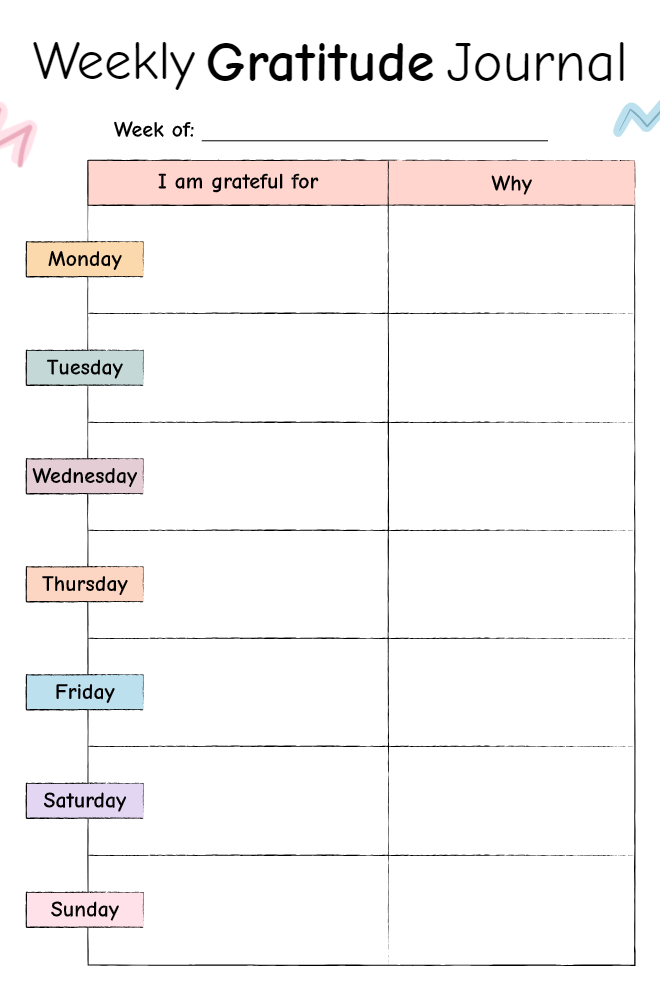
Weekly Gratitude Journal
Not everyone can journal every single day, and that's okay. This weekly layout gives you one clean page to reflect on the whole week without any pressure. Simple, colorful, and straight to the point.
Best For: People who prefer weekly reflection over daily writing.
Key Features:
Why It Works: The "Why" column pushes you to think deeper, not just list things, but actually understand what made them meaningful that day.
Use This Template →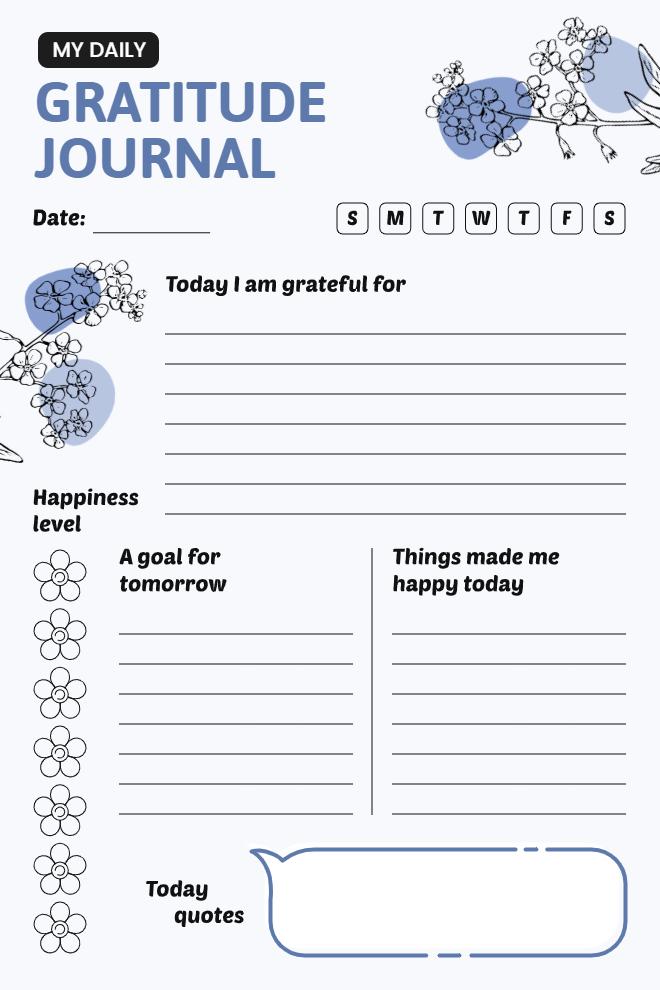
My Daily Gratitude Journal
This one goes a step further than most daily journals. It tracks not just what you're grateful for, but how happy you actually felt and what you want to carry into tomorrow. Calm blue floral design makes it genuinely pleasant to open every day.
Best For: Anyone combining mindfulness and goal-setting in one daily page.
Key Features:
Why It Works: It tracks mood AND future intentions; most journals only do one. That combination builds both awareness and direction at the same time.
Use This Template →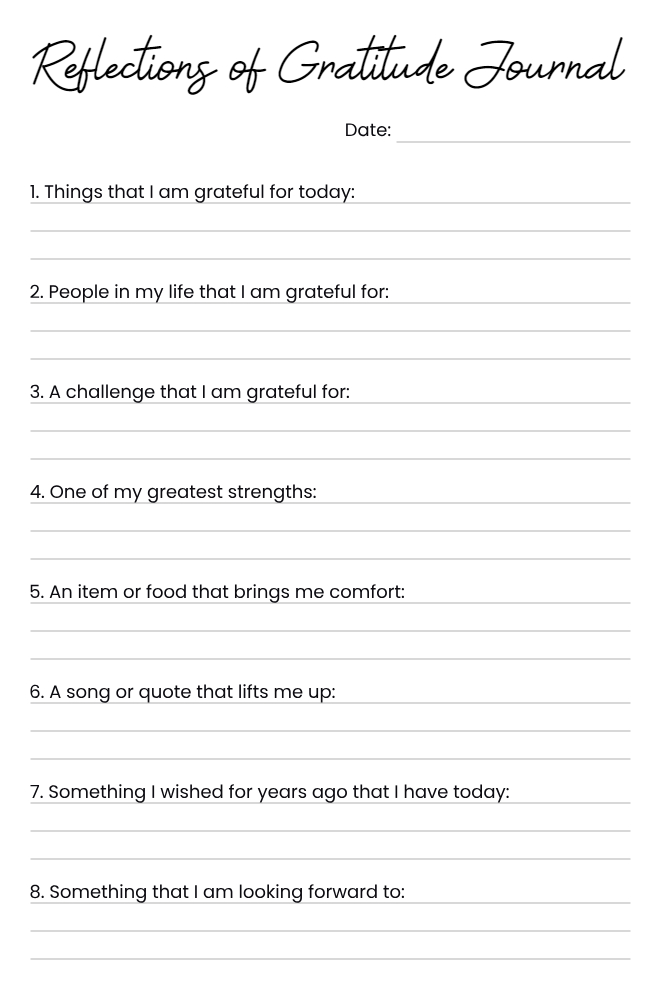
Reflections of Gratitude Journal
Eight prompts that actually make you stop and think. This isn't your usual fill-in-the-blank journal; it asks about challenges, strengths, and things you once wished for that you now have. Clean and minimal so nothing distracts from the writing.
Best For: People who want guided, deeper journaling prompts.
Key Features:
Why It Works: It finds gratitude in places most people overlook like hard situations and personal growth, which makes the practice feel more real and honest.
Use This Template →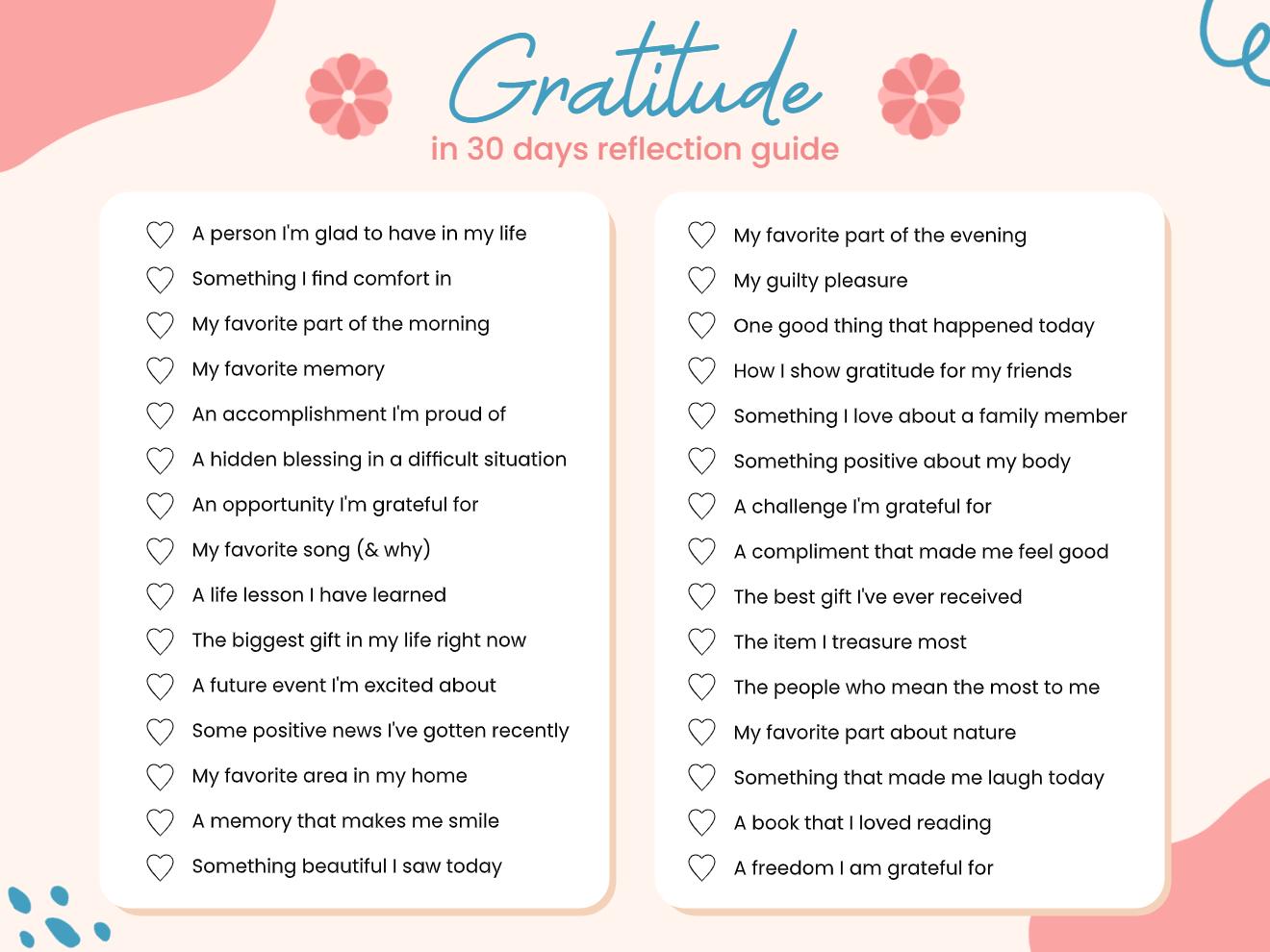
Gratitude in 30 Days Reflection Guide
Thirty days, thirty different things to appreciate. This guide breaks you out of the usual "grateful for family and health" routine with prompts that are genuinely specific and personal. Soft pink design with heart icons keeps the whole thing feeling light.
Best For: Anyone doing a 30-day gratitude challenge or needing fresh daily prompts.
Key Features:
Why It Works: Fresh prompts every day mean you never repeat yourself, and that keeps the practice feeling new instead of like a habit you're just going through.
Use This Template →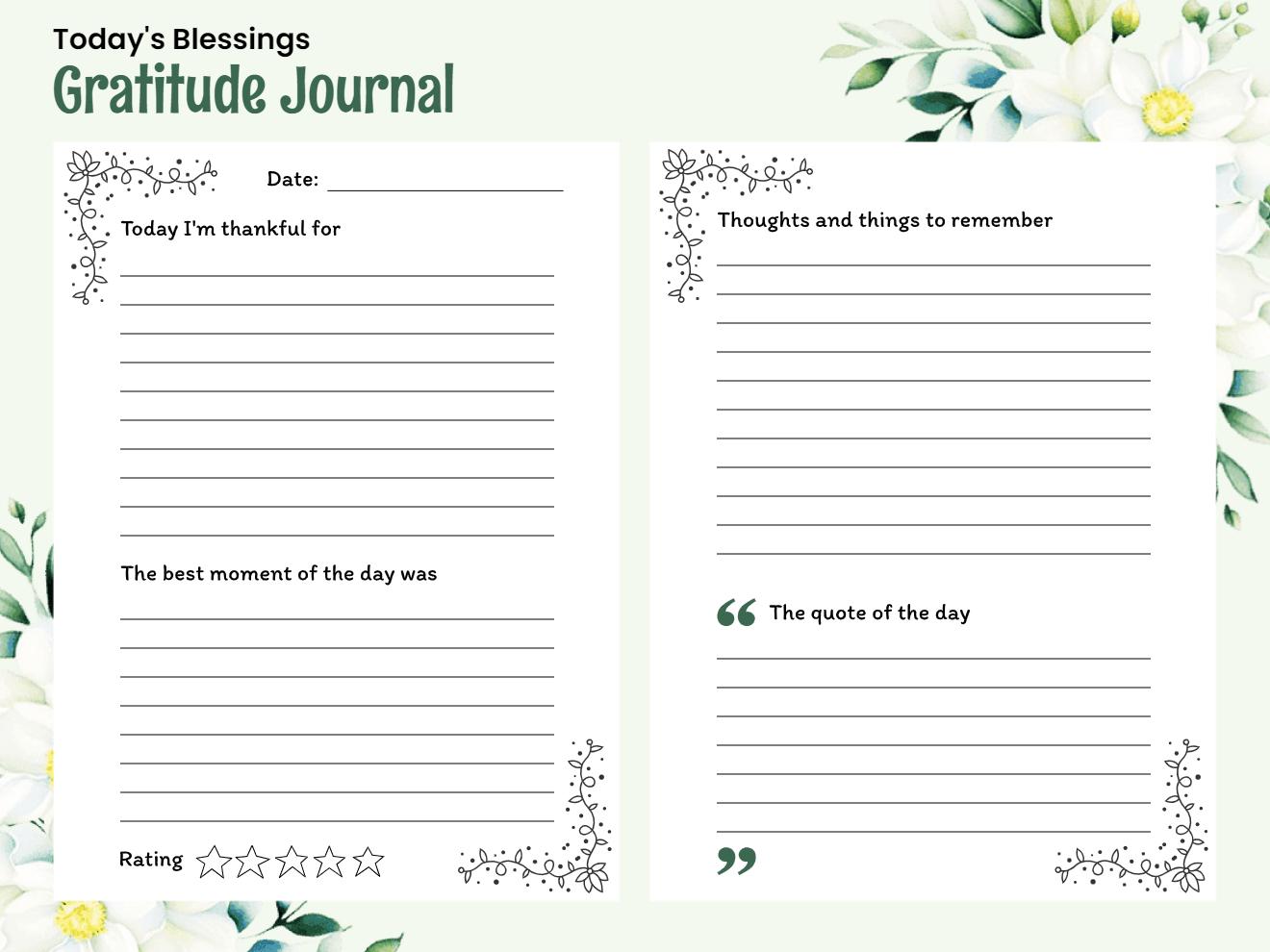
Today's Blessings Gratitude Journal
A two-page spread that turns journaling into a proper daily ritual. It captures your best moment, a quote that meant something, and even asks you to rate your whole day with stars. The soft floral design makes it feel calm and intentional every time you open it.
Best For: People who want a complete morning or evening reflection routine.
Key Features:
Why It Works: That star rating at the end forces a quick, honest summary of your day, small habit, but surprisingly powerful for building self-awareness over time.
Use This Template →Why the Best Gratitude Journal App Does Not Punish a Hard Week?
In most gratitude apps, a missed day means a broken streak, a badge gone, and a notification that makes you feel like you failed. Every time you open the app after a gap, the first thing you see is everything you did not do. That is not encouragement. That is a shame spiral.
A hard Tuesday can quietly unravel an entire month of consistency, not because the practice stopped mattering, but because the tool made returning feel harder than starting over.
No streak counter. No overdue warnings. When you open PlanWiz after a week away, you see exactly what you would have seen on day one: a clean page with a gentle prompt waiting for you.
"Miss a day. Open a fresh page. PlanWiz never makes a gap feel like a failure; it just gives you a new prompt and lets you begin again."
How Do You Get Started With PlanWiz?
No lengthy onboarding. No building the perfect system before you are allowed to use it. No importing data from other apps or spending an hour customizing before your first entry.
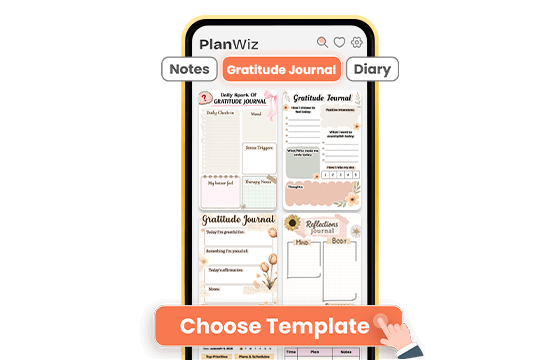
Choose a Gratitude Template That Fits Your Day
Browse 1,000+ ready-made templates and pick one that matches today, not your ideal journaling day, your actual one. Morning gratitude prompt, evening reflection page, mindfulness check-in, or a simple one-line thankfulness entry. The structure is already there. You just show up and write.
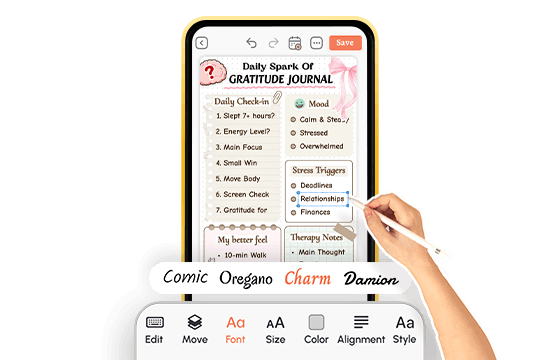
Customize to Fit Your Life and Your Energy
Add your entry, adjust sections if you want, or use the template exactly as it is. On a strong day, go deep with a full morning reflection, mood check-in, and evening close. On a hard day, write three words and close it. The system adapts to your energy. It never demands more than you have.
Download, Export, and Keep Your Practice Yours
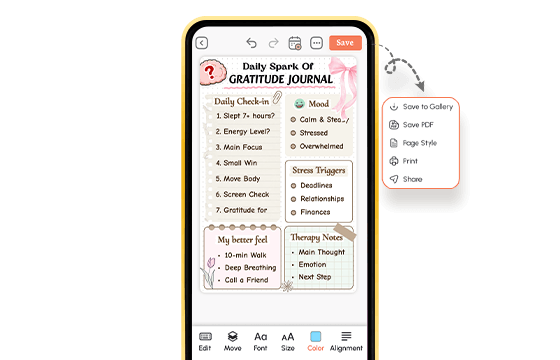
Save any page as a PDF, export entries, or keep everything private inside the app. Your gratitude journal belongs to you, not the platform. When you miss a week, open a fresh page. No guilt. No starting over. Just forward.
A gratitude journal app that is ready before you are.
What Do Real People Say About This Gratitude Journal App?
Ready to Try the Gratitude Journal App That Actually Sticks?
If you have ever abandoned a gratitude practice, blank pages, broken streaks, or good intentions that quietly disappeared, PlanWiz was built for exactly that starting point. Not for the person who already has a perfect practice. For the person who is still trying to build one.
Free to start. No credit card. Ready in under three minutes.
Start Free → planwiz.app

Frequently Asked Questions
The best gratitude journal app removes the blank page, takes under three minutes daily, and makes returning after a gap feel natural. Look for guided prompts, gentle reminders, flexible customization, and complete privacy. PlanWiz meets all of these criteria with 1,000+ ready-made templates and a no-streak, no-shame approach to daily reflection.
A gratitude journaling app is built specifically around noticing and recording what you are thankful for with structured prompts and guided reflection questions. A regular journaling app gives you a blank page. The difference matters because gratitude journaling has a specific structure, and apps built for that practice guide you through it rather than leaving you to figure it out alone.
A good daily gratitude journal makes the practice easy enough to do every day, not just on motivated days. That means guided prompts, a complete entry in under three minutes, gentle reminders, full privacy, and a forgiving system that does not punish missed days.
Most people find that a daily gratitude practice starts to feel natural within two to three weeks of consistent entries. The first week is the hardest. Having a pre-built template waiting removes most of the friction that causes people to stop before the habit takes hold.
Both can support a meaningful practice; the best one is whichever you will actually use every day. A physical notebook offers a tactile, distraction-free experience. A gratitude tracker app offers guided prompts, gentle reminders, seamless sync, and photos. For people who struggle with consistency, an app often makes the habit easier to maintain long-term.
Many people find that writing down what they are thankful for each day helps shift attention away from what is going wrong and toward what is already working. A structured daily gratitude practice, even just three specific things, can support a calmer, more grounded daily mindset over time.
Start with one guided prompt and one entry. Do not build a system on day one. Pick a template that asks a single question, what went well today, or who made a difference, and answer it honestly in two or three sentences. Do that for seven days before adding anything else. Simplicity is what makes the habit survive the first week.