The Mood Tracker App That Helps You Finally Understand How You Feel
PlanWiz is a mood tracker app that helps you turn scattered emotional moments into a consistent self-awareness habit. Choose from 1,000+ ready-made mood tracker templates for daily check-ins, activity-mood logging, weekly reviews, and guided reflection. Whether you are processing a difficult week or simply trying to understand why you feel the way you feel.
What Is the Best Mood Tracker App in 2026?
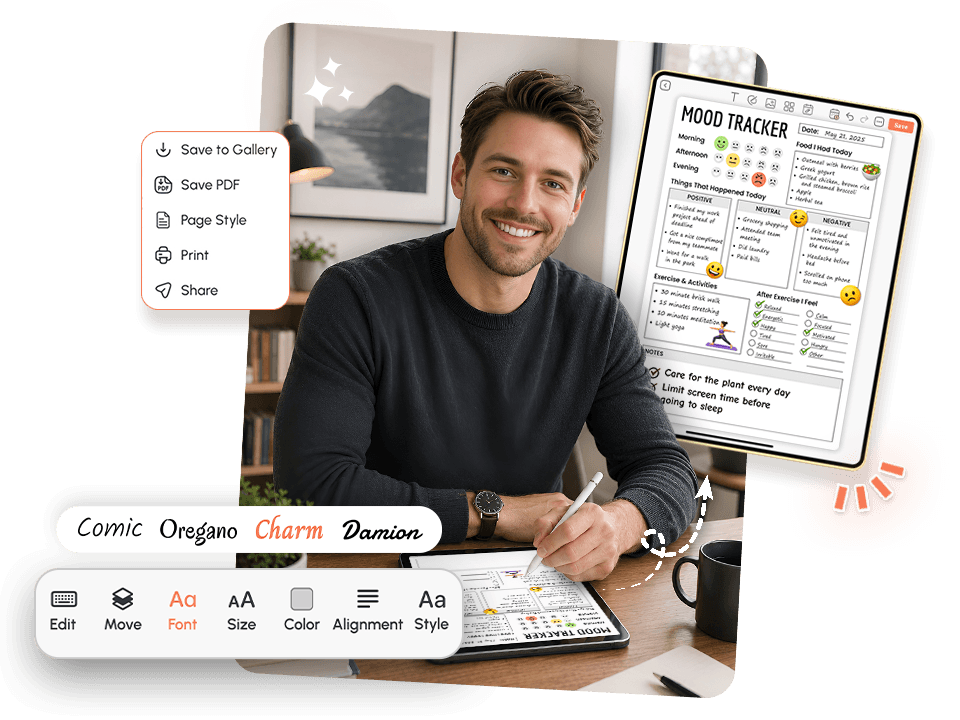
The best mood tracker in 2026 removes friction, reveals patterns over time, and links habits to how you feel, no journaling or expertise required.
Here is what a reliable emotional wellness app must do:
- Log a mood in under 30 seconds, no paragraphs, no setup.
- Offer a nuanced scale or emoji options to capture how you actually feel.
- Add context tags sleep, stress, exercise, so patterns become explainable.
- Show visual trend charts over 30, 60, or 90 days so patterns emerge from the data.
- Send reminders that feel like an invitation, not a demand.
PlanWiz was built for exactly this. It is a mood journal app for people who want self-awareness without rigidity, consistency without guilt, and a tool they will still be using in month four, not one they abandoned in week two.
Who Is This Mood Tracker App For?
This daily mood tracker was designed for the people who need it mostWorking Professionals
Managing high-stress weeks who want to spot burnout patterns early before they hit a wall, not after.
College Students
Navigating anxiety, deadlines, and inconsistent sleep who want a simple way to understand what is driving their emotional highs and lows.
Therapy & Personal Growth
Individuals who want a structured way to log emotional check-ins between sessions. A digital journal app that tracks patterns between appointments gives clients richer material to work with.
Health-Conscious Adults
Tracking the relationship between sleep, exercise, and daily mood who want one place where those connections become visible over time.
Lapsed Journalers
Anyone who has tried journaling, given up, but still wants emotional self-awareness without the daily writing commitment.
This app is NOT ideal for: individuals experiencing clinical mental health conditions who require professional diagnosis, therapy, or medication management. It is a self-awareness tool, not a clinical resource. If you are in crisis or experiencing significant mental health challenges, please contact a licensed mental health professional.
Why Do So Many People Give Up on Every Mood Tracker App They Try?
Most people have tried some version of emotional self-tracking, a journal, a notes app, a wellness tool, and stopped within two weeks. The problem is seldom the person. Here is what actually gets in the way.
The Blank Page Problem
Sunday evening. You decide to start tracking your mood. The app opens. You stare at it. You know something felt off this week, but turning a vague emotional impression into a useful entry with context, with meaning, with something you will actually remember takes more energy than you have left at 9 PM.
People do not need another empty box to fill. They need a format that meets them where they are.
Too Much to Do Before You Can Start
Some apps solve the blank-page problem by offering too many options. Five journaling formats. Three check-in modes. A setup flow that takes 20 minutes before you log a single mood. Users spend more time configuring the app than actually using it and never open it again.
A good feelings log gives people one clear starting point, fast, simple, and immediately useful. Not a configuration menu. Not a wellness tutorial. Just a check-in that works.
No Flexibility for Real Emotional Life
Monday: exhausted and behind. Wednesday: surprisingly calm. Thursday: overwhelmed by one conversation. Friday: numb.
An emotional check-in tool that expects the same level of engagement every day will be abandoned on the hard days, which are the exact days the data matters most. The best wellbeing tracker works with real emotional variability, not against it.
Disconnected from the Rest of Daily Life
Many people already use a sleep app, a fitness tracker, and a habit tracker app for daily routines. The problem is that none of these tools connect to show the emotional picture. When mood data lives separately from lifestyle context, the patterns that explain how you feel stay invisible. The daily planner templates that bring habits and emotional data together in one place can close that gap.
Why Is Emotional Self-Awareness So Hard to Build Without the Right Tool?
Most people are not failing at self-awareness because they are not trying. They are failing because the formats available to them, journaling, informal reflection, and occasional therapy, either demand too much on hard days or produce no reviewable output over time.
When a check-in flow requires five taps to log one mood entry, people procrastinate. When the format does not match how emotional experience actually works, messy, variable, and hard to put into words, the tool gets abandoned in two weeks.
problem is not the person. It is the tool.
Most self-awareness apps were designed around wellness ideals, not real emotional life. PlanWiz was designed around what people actually do between 7 AM and 10 PM, not what a product roadmap assumes they should do.
People who use a consistent emotional check-in tool report feeling more in tune with their emotional rhythms over time. The self-awareness habit, once built around the right tool, much like the goal planner templates that keep your bigger picture visible, becomes one of the most reliable parts of the week.
How Does PlanWiz Fit Into Your Real Day?
A good daily mood tracker should take up as little time as possible while giving users the most emotional clarity possible. Here is what that looks like in practice.
Morning or Evening Check-In (Under 20 Seconds)
Open the app, tap your
mood on the sliding scale, add an optional tag like "poor sleep" or "work stress," and
close. It’s a quick, low-friction check-in with no scrolling, writing, or menu hunting.
Heavy Reflection Days (Weekend or End of Week)
Use the weekly mood review
to see your average mood, top tags, and patterns from the past seven days. Your daily
check-ins are already organized automatically, so the full picture appears without manual
review.
Mid-Week Awareness (1 Minute, Not 1 Hour)
On difficult days, check the
trend view to compare with last week, see tag clusters, and review the 30-day chart.
Patterns are always updated, no rebuilding or starting over.
What Features Should a Mood Tracker App Have?
The mood tracker app should include ready-made mood tracker templates, visual trend charts, a weekly mood dashboard, flexible daily logging, smart reminders, cross-device access, and download and share options.
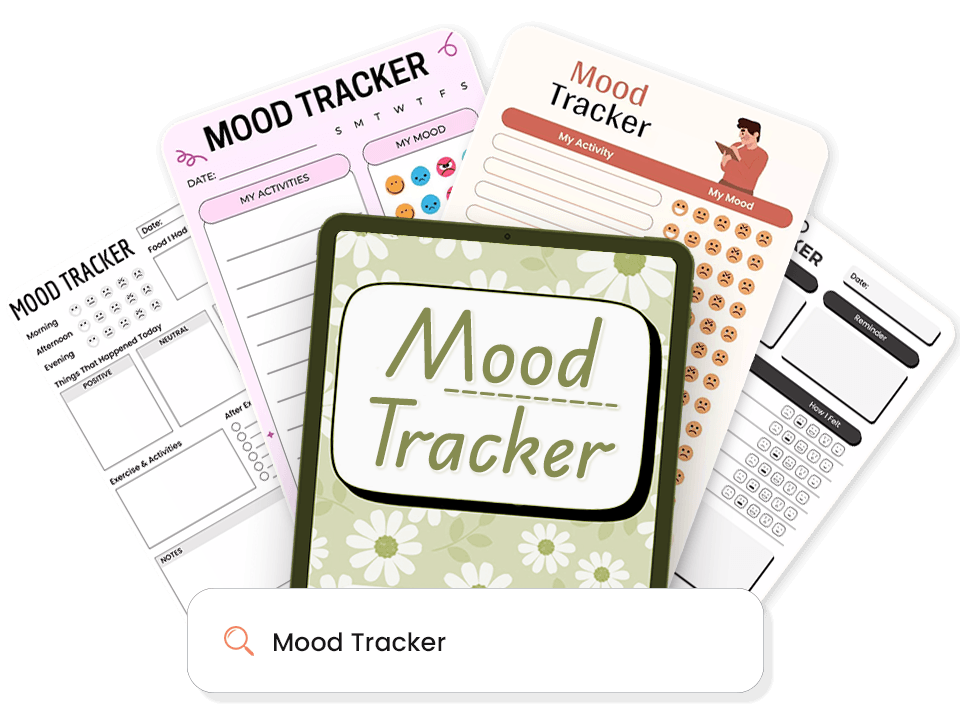
1,000+ Ready-Made Mood Tracker Templates
Most emotion tracking tools open to a blank screen and leave you guessing where to start. PlanWiz does the opposite. Every mood tracker template arrives pre-structured, so you can log how you feel in seconds, not after five minutes of deciding what format to use.
What's ready for you:
- Clean daily mood tracker template with emoji check-in.
- Minimalist mood tracker template with weekly grid.
- Monochrome mood tracker template for a professional layout.
- Doodle weekly mood tracker template for creative check-ins.
- Daily wellness and mood tracker template with sleep journal templates for sleep tracking.
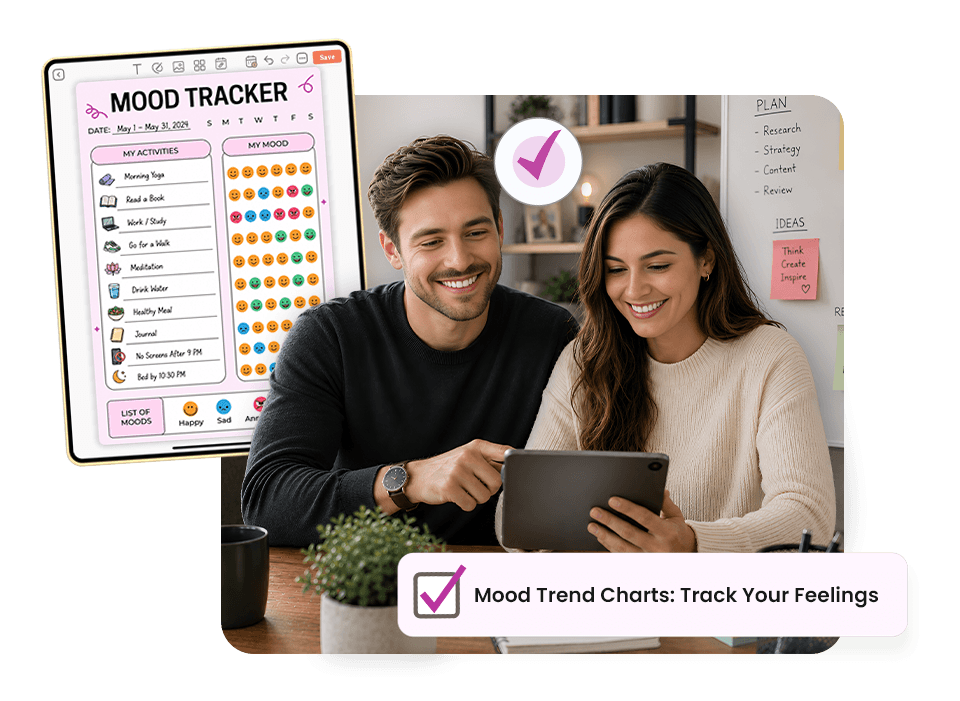
Mood Trend Charts Built In
Most apps store mood entries but treat pattern recognition as an afterthought. The app builds visual mood trend charts directly into every check-in, so patterns become part of what you see, not a separate task to figure out later.
How it works:
- Rolling 30, 60, and 90-day mood charts are built automatically.
- Average mood by day and time of day is visible at a glance.
- Filter by any tag to isolate emotional highs and lows.
- No spreadsheets, no manual export, no extra steps.
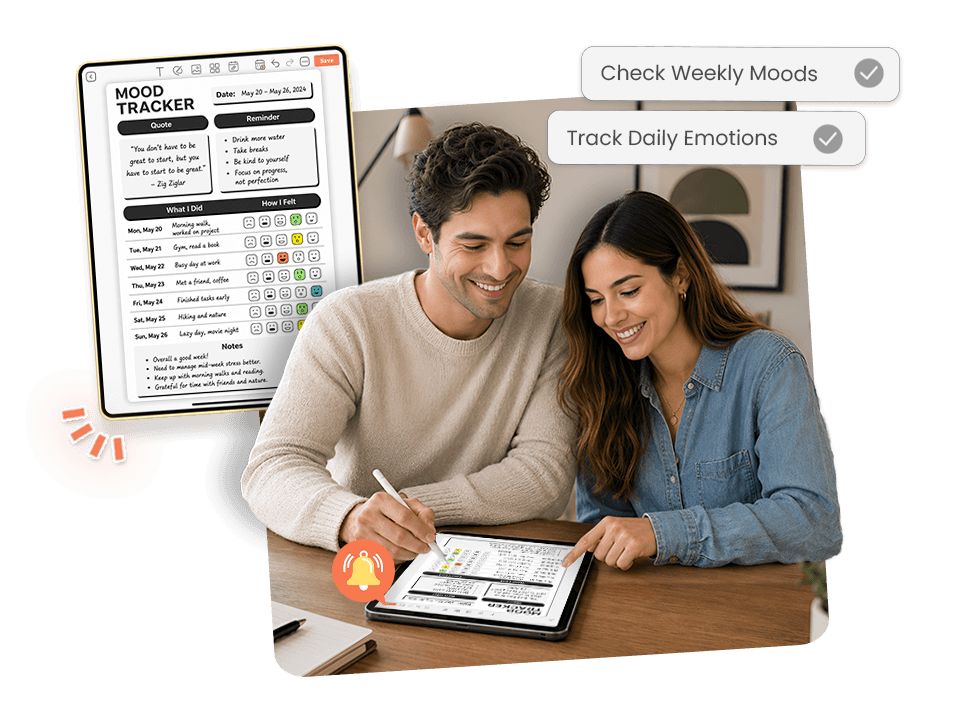
Weekly Mood Overview Dashboard
The app opens to the full weekly mood dashboard, so the entire week of emotional data is visible before a single reflection is written.
What it gives you:
- Full week of mood scores visible on one screen.
- Activity log and mood correlation visible side by side.
- This week versus last week mood comparison at a glance.
- Day-by-day patterns become obvious in the weekly view.
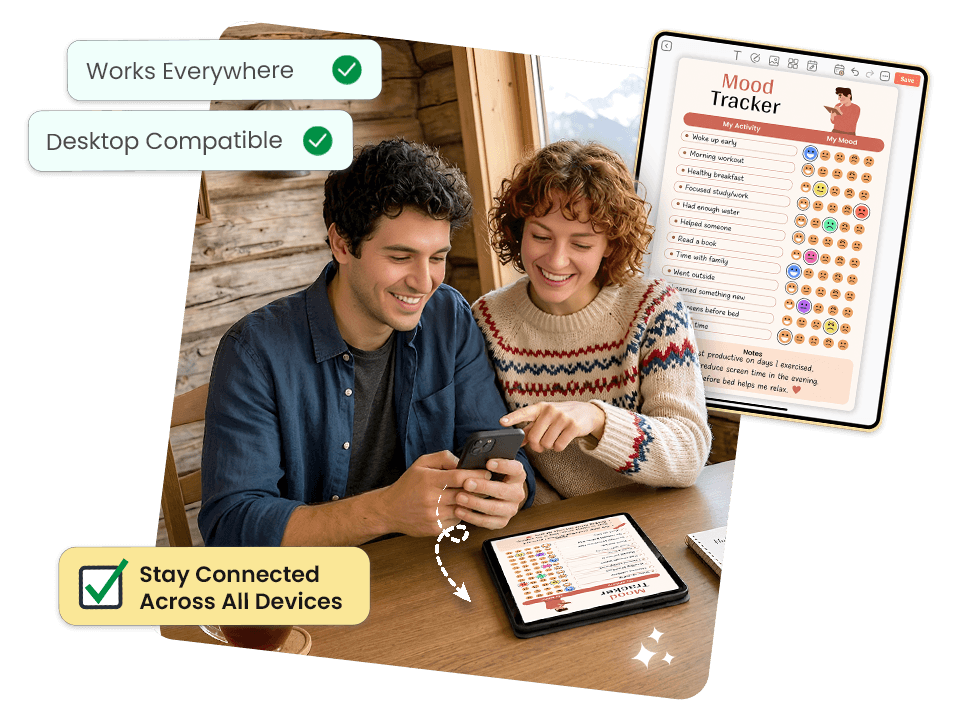
Flexible Mood Logging for Every Kind of Day
No two days call for the same level of emotional engagement. The app lets you switch your mood check-in format in two taps without disrupting the overall record.
How it works:
- Switch between templates anytime without resetting data.
- Skip the reflection on hard days; the mood rating keeps the record intact.
- Add sleep, hydration, and meals on days when you want the full picture.
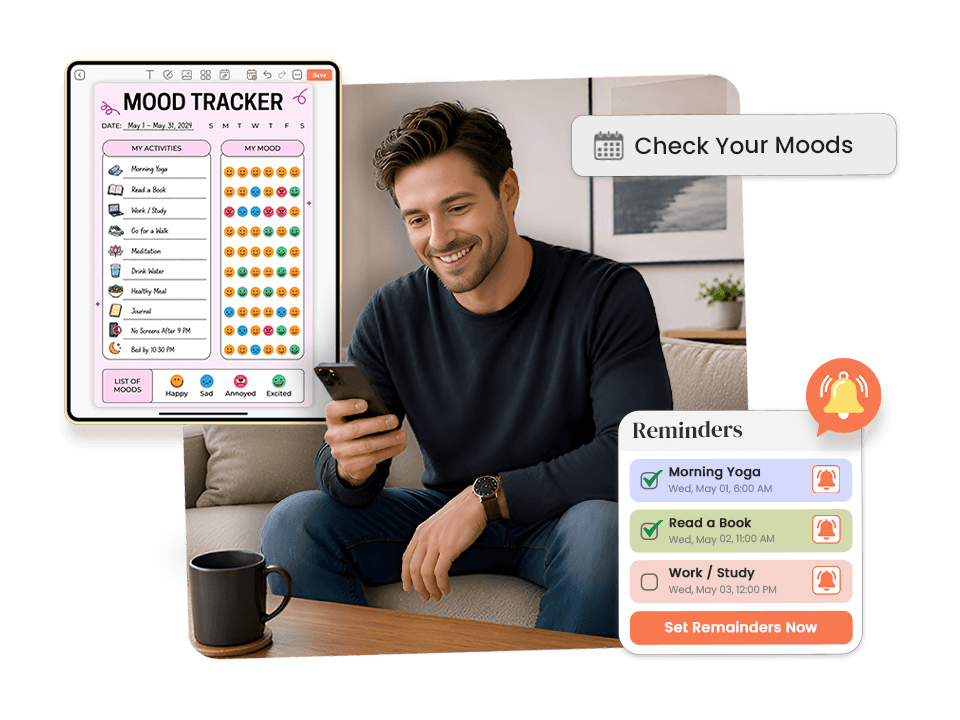
Smart Mood Reminders
Fill out a mood tracker template once and forget to check in for two weeks if the reminder disappears. The app keeps your daily mood check-in front and center without becoming another source of pressure.
How it works:
- Set one calm mood reminder morning, midday, or evening.
- No escalating alerts, no missed-day counts, no streak pressure.
- An optional weekly review reminder surfaces patterns before the next week starts.
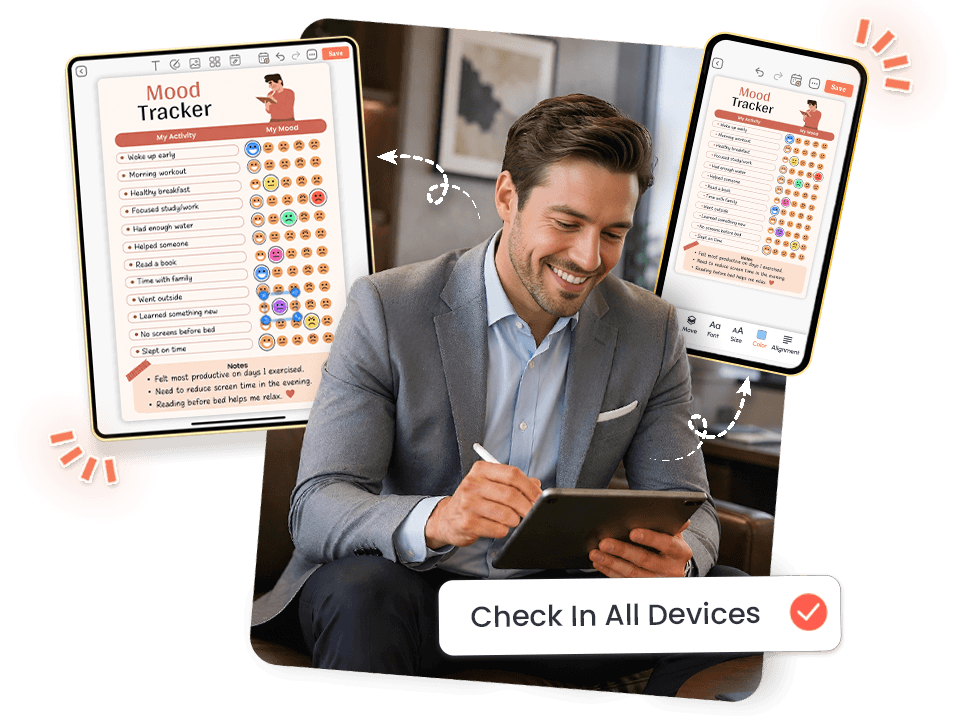
Your Mood Data Across All Your Devices
People do not fill out mood tracker templates in one place. The app automatically follows you across desktop, tablet, and phone.
How it works:
- Full mood history on all devices with no manual syncing or export.
- Check your morning mood baseline on your phone before the day begins.
- Changes made on any device appear everywhere instantly.
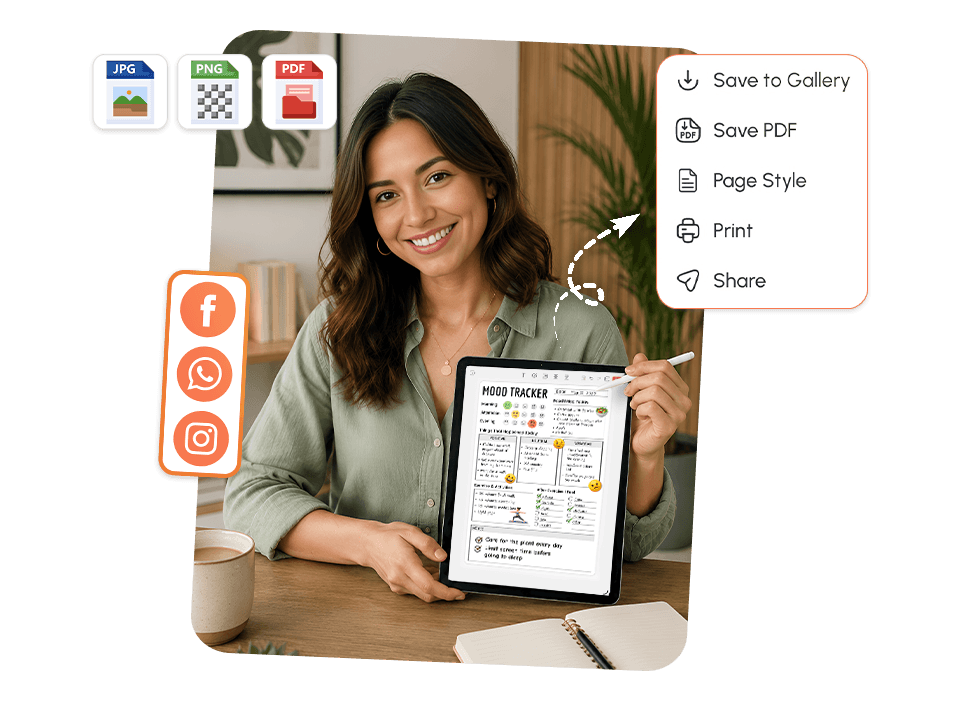
Download and Share Your Mood Reports
A mood tracker template that only lives inside an app is one missed reminder away from being forgotten. Users who pair the app with a gratitude journal app for their evening reflection find that consistent mood tracking becomes second nature.
What you can do:
- Download any mood tracker template as a PDF.
- Share your weekly mood summary with a therapist or coach with one tap.
- Export your 30, 60, or 90-day mood trend chart anytime.
Explore Mood Tracker Templates Designed for Real Emotional Life
Pick the Template That Matches How You FeelEvery template is pre-structured so your brain never faces a blank page. Browse below and tap any template to explore it.
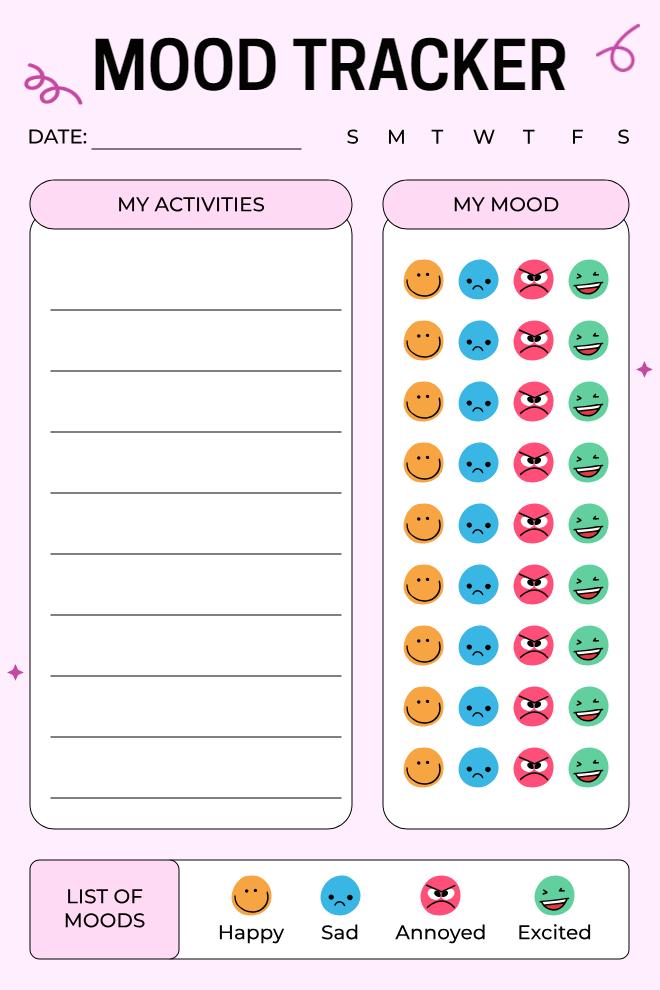
Weekly Mood and Activity Tracker
This cute pink mood tracker connects what you do with how you feel, which is actually super insightful when you look back at patterns. On the left, you write down your daily activities, and on the right, you can circle or color in emoji faces representing happy, sad, annoyed, or excited for each day of the week. The cheerful design with little doodle accents makes mood tracking feel less clinical and more like a fun check-in. The legend at the bottom reminds you what each face means, so you don't have to remember your own system. It's perfect for spotting which activities consistently make you feel good versus which ones drain you.
Best For: People exploring the connection between activities and emotions, visual trackers who like emoji-based systems, those new to mood journaling, or anyone who wants mood tracking to feel approachable and friendly.
Use This Template →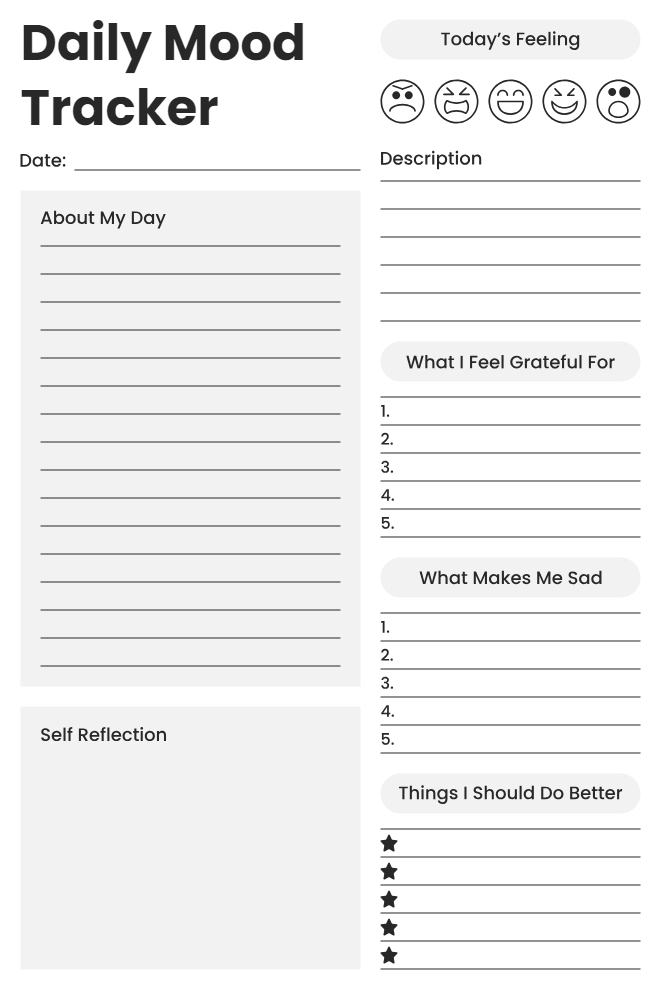
Comprehensive Daily Mood Tracker
This detailed daily tracker goes way beyond just marking how you feel. You start by circling one of five feelings at the top, then describe your day in the "About My Day" section. The gratitude list helps you focus on positives, while "What Makes Me Sad" lets you acknowledge difficult feelings without judgment. There's also a section for things you could do better, which is about growth rather than criticism, plus a self-reflection box for deeper thoughts. The black and white design is clean and distraction-free. This is the kind of tracker that helps you actually understand your emotions instead of just recording them.
Best For: People working on emotional awareness, those in therapy who want to track progress, journalers who like structured prompts, or anyone wanting deeper self-reflection alongside mood tracking.
Use This Template →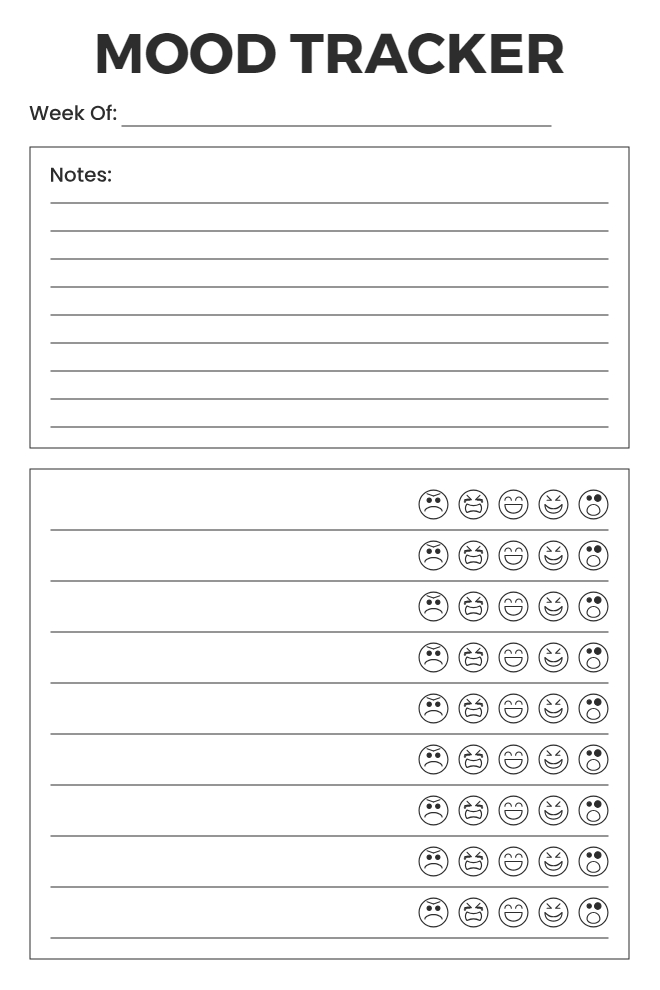
Simple Weekly Mood Tracker
This minimalist weekly tracker strips mood tracking down to the essentials. There's a notes section at the top for anything important about your week, then nine rows below where you can write specific moods or situations and circle the corresponding emoji face for each one. The five emoji options range from very unhappy to surprised, covering the basic emotional spectrum. The clean black and white design is printer-friendly and won't distract from the actual tracking. It's flexible enough that you could track the same mood throughout the week or different moods in each row.
Best For: Minimalists who want simple tracking, people who prefer flexibility in what they track, those printing in black and white, or anyone who finds detailed trackers overwhelming.
Use This Template →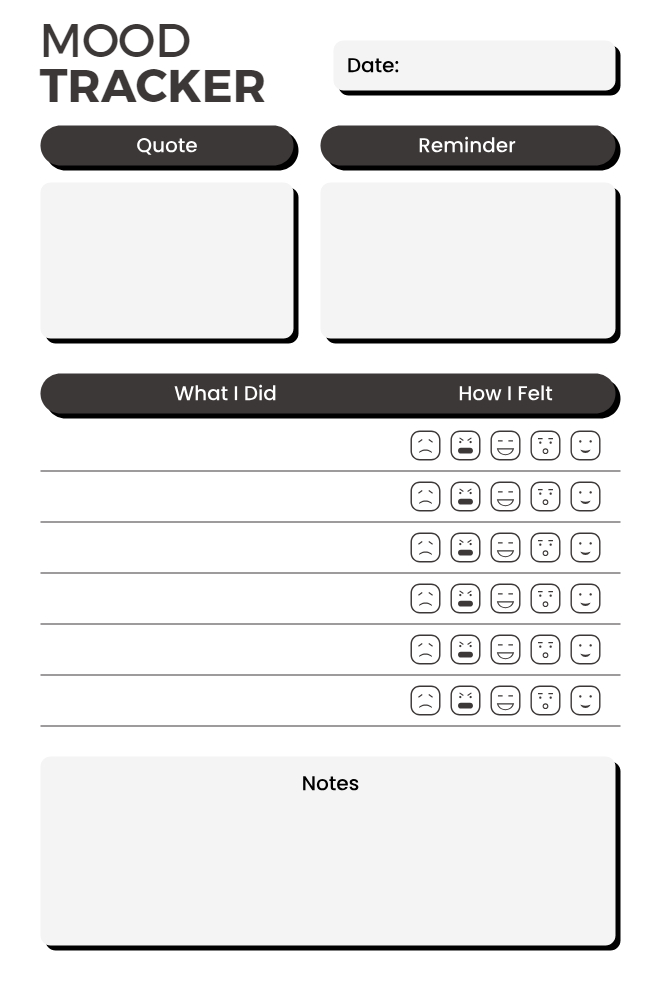
Activity-Based Daily Mood Tracker
This tracker helps you connect specific activities to how you felt afterward, which is incredibly useful for understanding what actually impacts your mood versus what you think does. You write an inspirational quote and daily reminder at the top, then in the "What I Did" section, you list activities, and for each one you circle the corresponding emoji showing how you felt. Five different faces cover the range from sad to surprised. The notes section at the bottom gives you space to write about patterns you're noticing. The clean black and white design with rounded corners feels modern and accessible.
Best For: People tracking mood triggers, those testing how different activities affect them, behavior-pattern seekers, or anyone who wants to be more intentional about what they do.
Use This Template →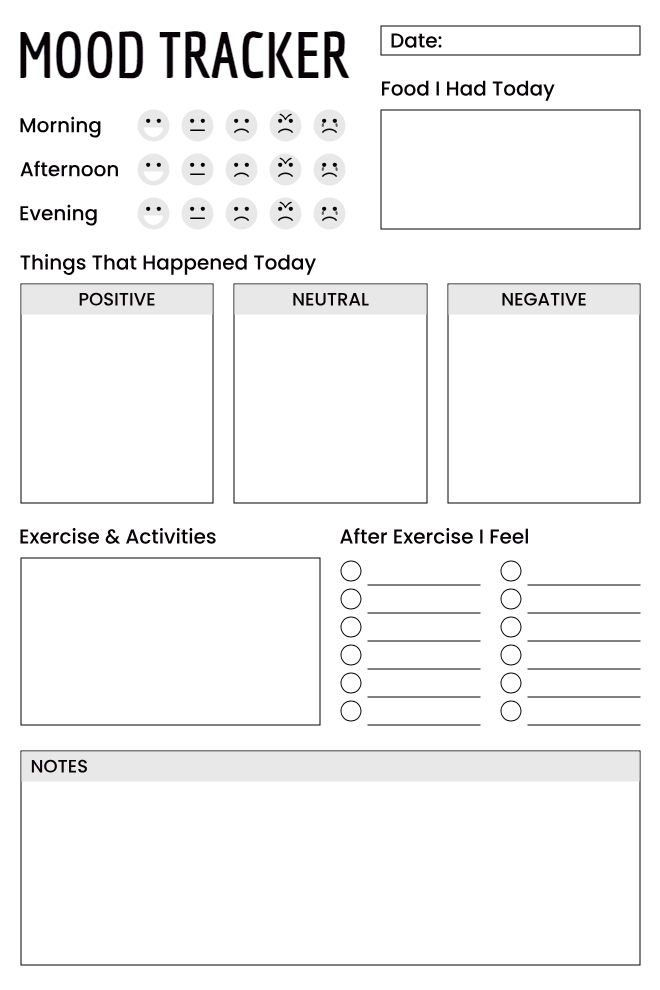
Holistic Daily Mood Tracker
This comprehensive tracker acknowledges that mood isn't random; it's connected to food, events, exercise, and everything else in your day. You track your mood three times daily (morning, afternoon, evening) with five emoji options, record what you ate in a dedicated box, categorize events as positive, neutral, or negative, and note your exercise plus how you felt afterward. The notes section at the bottom ties it all together. This is perfect for people who suspect their mood is connected to diet, activity, or specific events but want to actually prove it with data instead of just guessing.
Best For: People exploring mood-diet connections, those tracking exercise impact on mental health, wellness-focused individuals, or anyone who wants comprehensive daily mood data.
Use This Template →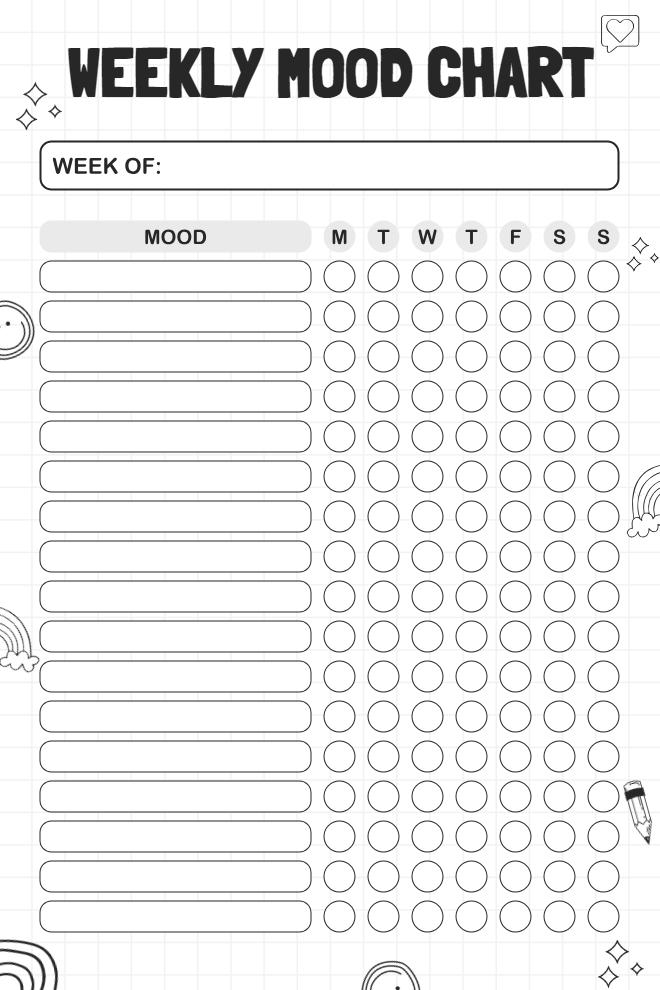
Customizable Weekly Mood Chart
This blank weekly mood chart gives you complete freedom to track exactly what matters to you. There are 17 blank rows where you can write whatever moods, feelings, or emotional states you want to monitor, then circle bubbles for each day of the week when you experience them. The hand-drawn doodles around the edges (rainbows, hearts, stars) give it a personal, journal-like feel. Since you define what goes in each row, this works whether you're tracking complex emotional states, simple good-bad-neutral days, or very specific feelings like "overwhelmed by work" or "peaceful." The flexibility is really the whole point.
Best For: People who want complete customization, those tracking uncommon or specific emotional states, bullet journal enthusiasts, or anyone who finds preset mood options limiting.
Use This Template →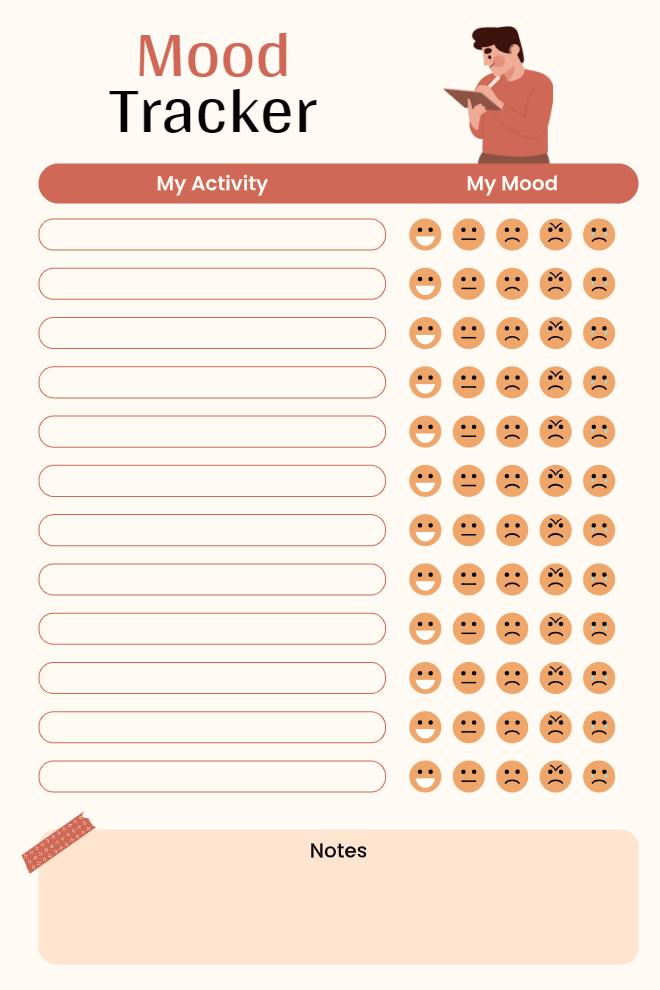
Activity-Mood Correlation Tracker
This warm-toned tracker with the person illustration at the top is designed specifically to help you see which activities consistently correlate with which moods. You write activities on the left in rounded boxes, then for each activity you circle one of five emoji faces showing how you felt (ranging from happy to angry/frustrated). The beige and coral color scheme is easy on the eyes, and having 12 rows gives you plenty of space for a full day's activities. The notes section at the bottom with the tape graphic is perfect for recording insights like "I always feel annoyed after scrolling social media" or "cooking makes me happy."
Best For: Visual learners tracking activity-emotion links, people trying to identify mood triggers, those building better routines, or anyone who wants to make choices based on what actually makes them feel good.
Use This Template →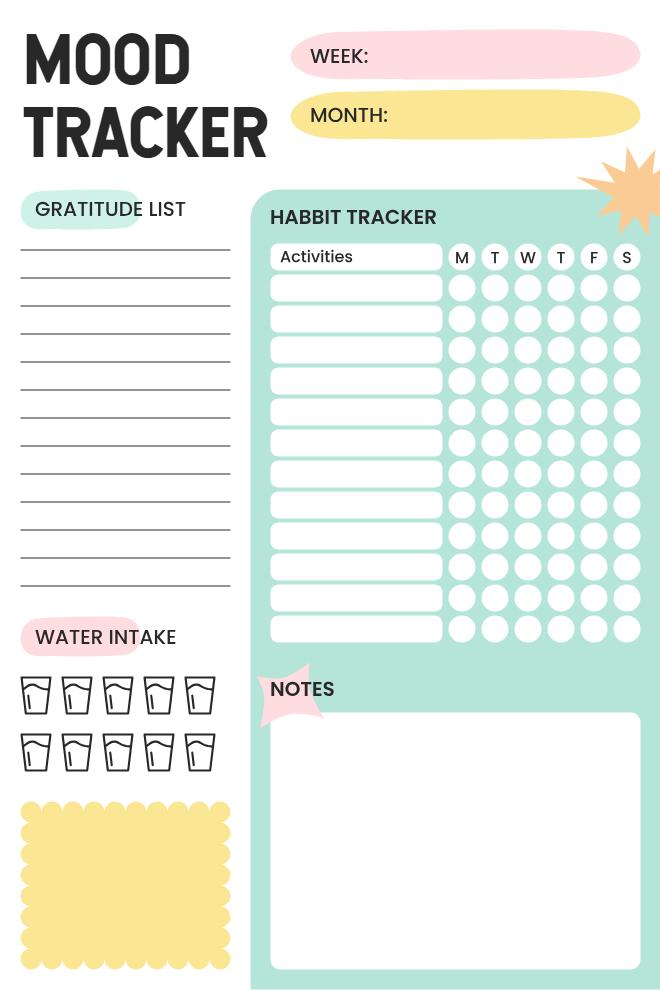
Integrated Mood and Wellness Tracker
This all-in-one tracker combines mood monitoring with gratitude practice, habit tracking, and water intake all on one colorful page. The left side has space for a gratitude list and ten water glasses to check off throughout the day. The right side features a weekly habit tracker with six days of bubbles plus a notes section. The pastel pink, yellow, and mint color scheme is cheerful and energizing. This setup acknowledges that your mood doesn't exist in isolation; it's tied to whether you're drinking enough water, completing your habits, and noticing things to be grateful for. Everything influences everything else.
Best For: People wanting comprehensive wellness tracking, those who believe in gratitude practices, habit builders tracking multiple areas, or anyone who likes seeing all their self-care data in one place.
Use This Template →What Happens on the Days You Do Not Want to Check In?
It is Thursday evening. You had a slow, draining day, not dramatically hard, just the kind that leaves nothing behind. You see the reminder and feel the small pull of resistance: not tonight, I do not want to look at how I feel and give it a number.
The weekly structure stays visible, and the record stays honest.
The hardest emotional moments are not at the start of a new habit. They are mid-week, when real life is harder than the plan assumed. The app was built to make those moments low-friction, not demoralizing. For users who want to go deeper on difficult days, our mindfulness journal templates offer a gentle way to process what came up.
"PlanWiz does not judge a missed day. Every check-in you complete is data. Every one you skip still tells you something."
How Do You Actually Start Using PlanWiz?
PlanWiz helps you choose a mood tracker template, customize it to your routine, and download or share your emotional data all in a single session.
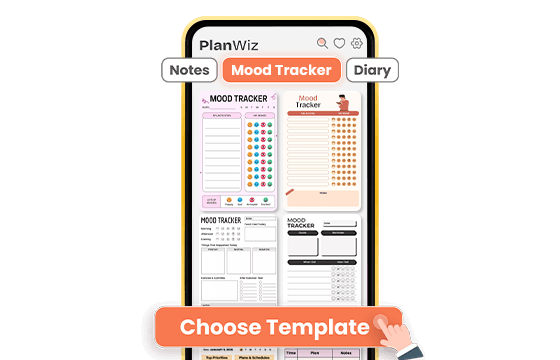
Choose a Mood Tracker Template That Fits How You Feel
Browse the available mood tracker templates, clean daily, minimalist, monochrome, doodle weekly, or wellness and mood pairing, and pick the one that matches how you want to start. Not sure? Start with the clean daily mood tracker template. The structure is already built; you are not starting from scratch.
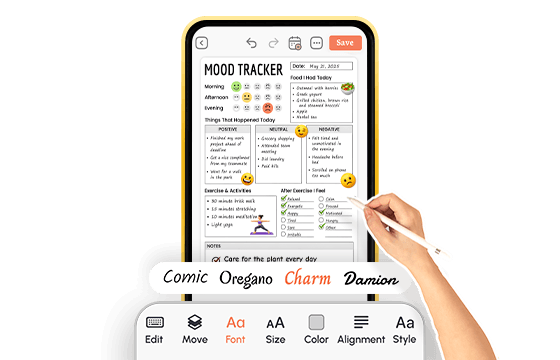
Customize Your Mood Tags and Reminder
Add context tags sleep, stress, exercise, or anything custom. Set one calm daily mood reminder at a time that fits your routine. Or leave every default exactly as it is. Your personalized mood tracking setup is ready in under two minutes.
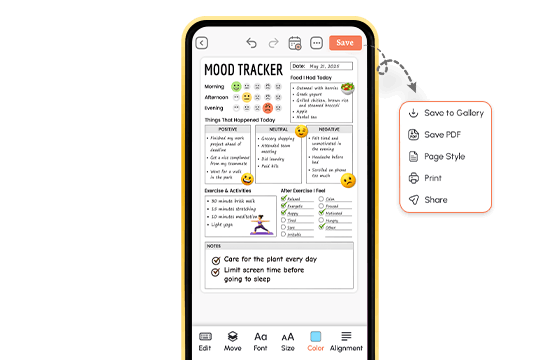
Download and Share Your Mood Data
Do not let your mood log live only inside the app. Download any mood tracker template as a PDF or share your weekly mood summary with a therapist, coach, or trusted person directly from the app in one tap. When a hard week hits, switch to the simpler template and keep the record going.
That is the whole system.
What Real People Say About This Mood Tracker App?
Ready to Try the Mood Tracker App That Works on Hard Days?
PlanWiz is a mood tracker app designed for real emotional lives, real schedules, and real hard days. If you are looking for the best mood tracker app to understand your emotional patterns, PlanWiz gives you self-awareness without complexity.
Free to start. No credit card. Ready in under three minutes.
Start Free → planwiz.app

Frequently Asked Questions
The best mood tracker app in 2026 makes daily logging effortless, captures context alongside mood scores, and presents data visually so patterns become clear over time. PlanWiz delivers all three with a 5-point sliding scale, customizable tags, and rolling 30, 60, and 90-day trend charts. Most users notice meaningful emotional patterns within the first two to four weeks.
Choose a mood tracker app based on five criteria: a daily check-in under 30 seconds, a nuanced mood scale, customizable context tags for sleep and stress, visual trend charts across at least 30 days, and gentle reminders that respect your routine rather than demanding daily perfection.
The best mood tracker app builds self-awareness by creating a consistent emotional record and presenting it visually so patterns become impossible to miss. Users consistently notice correlations between sleep and mood, high-stress weeks and emotional flatness, and exercise and a more stable baseline, with the biggest insights coming from the 30 and 60-day charts.
The easiest mood tracking app opens to a single check-in screen and logs a complete entry in under 20 seconds. It is set up in under three minutes with no onboarding, no required fields beyond the mood rating, and no decisions blocking your first entry.
Yes. A good emotional wellness app helps users notice what conditions tend to precede their most difficult days, not by treating stress, but by making the patterns behind it visible. It is a self-awareness tool, not a clinical resource, and works well for anyone managing ordinary life stress.